
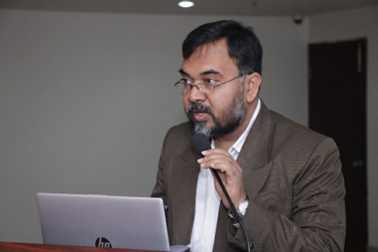
From completing PGDFM (2001–03) at IIFM to returning as a faculty member at the same institution, my journey has come full circle – driven by an enduring commitment to sustainable development, ecological stewardship, and community-centric natural resource management.
Over the last two decades, I have had the privilege of working across diverse ecological and socio-economic landscapes of India in the domains of forestry, climate change, biodiversity conservation, medicinal plants, watershed management, rural livelihoods, and impact evaluation of large-scale national and international development initiatives, including several JICA-assisted projects. My professional engagements with institutions such as Jadavpur University — particularly as Regional Director of RCFC-ER, NMPB and as Research Scientist at RC-NAEB and now with IIFM, have enabled me to collaborate with policymakers, forest administrators, researchers, international agencies, and grassroots communities alike.
IIFM has played a defining role in shaping my professional philosophy by strengthening my belief in participatory governance, interdisciplinary learning, and sustainable ecosystem management. Beyond professional milestones, I deeply value continuous learning, field immersion, cross-cultural experiences, and the human connections that make every journey meaningful and enriching.
Location: Bhopal, Madhya Pradesh, INDIA
LinkedIn : https://www.linkedin.com/in/dr-sanjay-bala-80516613/
Q. Tell us about your School and College before you came to IIFM. How was your experience there? And how did IIFM happen?
A. I completed my schooling in a small town of West Bengal through Bengali medium education, where I developed an early interest in science, mathematics, and environmental issues. My academic journey later took me to Jadavpur University, where I pursued Chemical Engineering. The university’s intellectually vibrant environment greatly shaped my analytical thinking, technical foundation, and social awareness. Exposure to diverse perspectives, academic debates, and a culture of innovation left a lasting impact on my worldview.
During my engineering studies, I gradually realized that my aspirations extended beyond conventional industrial careers. I found myself increasingly drawn towards environmental sustainability, rural development, and the relationship between communities and natural resources. This led me to the PGDFM programme at IIFM, whose interdisciplinary blend of management, ecology, forestry, livelihoods, and sustainability immediately resonated with me.
Joining IIFM in 2001 proved to be a transformative milestone in my life. The institute expanded my perspective from a purely technology-oriented approach to a deeper understanding of development, policy, environment, and people-centric governance. It also significantly strengthened my communication abilities in Hindi and English, ultimately shaping my long-term professional commitment towards natural resource management and sustainable development.
Q. How has been your journey from IIFM so far?
A. My journey after graduating from Indian Institute of Forest Management has been both enriching and deeply fulfilling. Over the past two decades, I have had the opportunity to work across diverse landscapes and communities of India in the areas of forestry, climate change, biodiversity conservation, medicinal plants, watershed management, rural livelihoods, and ecosystem restoration.
My professional path began with the Regional Centre of the National Afforestation & Eco-Development Board (RC-NAEB) at Jadavpur University, where I progressively evolved from a Junior Research Scientist to Senior Research Scientist, and later served as Regional Director of the Regional-cum-Facilitation Centre, Eastern Region under the National Medicinal Plants Board (NMPB), Ministry of AYUSH. These roles provided me extensive exposure to project planning, implementation, monitoring & evaluation, policy support, and capacity building across multiple states of India.
I have been fortunate to lead and contribute to several impactful national and international assignments, including Impact study of JICA-assisted forestry and biodiversity projects, climate resilience studies, ecosystem restoration initiatives, and community-based livelihood programmes. Alongside research and consultancy, teaching and mentoring students remained close to my heart through my engagements as visiting faculty at various institutions including Indian Maritime University, Kolkata.
Returning to IIFM as a faculty member has been particularly special for me. It feels like completing a meaningful circle – from being a student shaped by the institute to now contributing towards nurturing future professionals in the field of sustainable development and environmental management.
Q. What were some of the key milestones/learning in this journey that you would like to share with us?
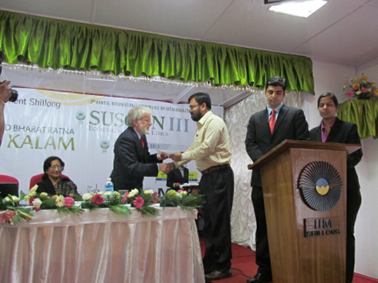
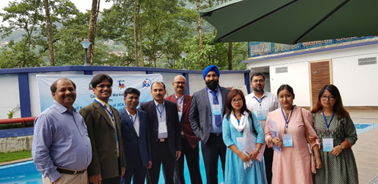
A. One of the most important lessons from my journey has been that sustainable development cannot be achieved through technical interventions alone; it demands meaningful community participation, institutional convergence, and long-term ecological vision. Working across forests, tribal landscapes, remote villages, and policy platforms throughout India helped me deeply appreciate the interdependence between livelihoods, ecosystems, and governance.
A major milestone in my career was my long association with Jadavpur University through the Regional Centre of the National Afforestation & Eco-Development Board (RC-NAEB) and later the National Medicinal Plants Board (NMPB). These engagements provided opportunities to work on large-scale initiatives related to afforestation, biodiversity conservation, medicinal plants, climate resilience, soil & water conservation, and livelihood enhancement. During this phase, I also completed my PhD on dynamic carbon sequestration and participatory forest management with perspectives on carbon trading. Leading and contributing to several JICA-assisted impact assessment studies across India further strengthened my understanding of ecosystem restoration and participatory development.
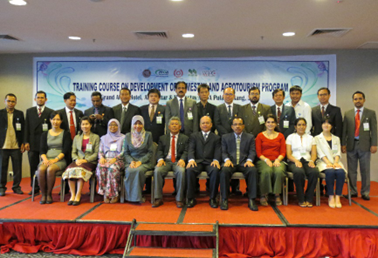
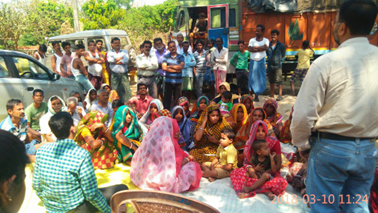
Another enriching milestone in my journey was representing India at an international programme on Homestay and Agritourism in Malaysia, attended by participants from 14 Asian countries. The programme provided me the opportunity to lead a multi-country team in collaborative learning, group assignments, and cross-cultural exchange, making it a truly memorable global learning experience.
Extensive field exposure – from metropolitan cities to some of the remotest villages of India – taught me humility, adaptability, and the value of indigenous knowledge systems. Returning to Indian Institute of Forest Management as a faculty member remains one of the most meaningful milestones of my journey, giving me an opportunity to contribute back to the institution that profoundly shaped my professional values and vision.
Q. How has been your experience in your current Organization? What all areas have you been working here?
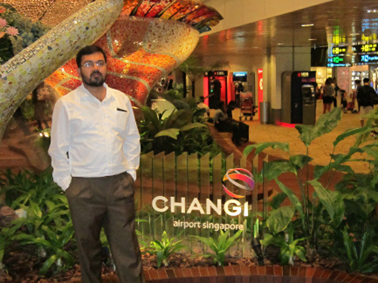
A. My experience at Indian Institute of Forest Management as a faculty member has been deeply enriching and professionally fulfilling. Returning to my alma mater in an academic role has given me the privilege of contributing to the very institution that shaped my professional outlook and values. The interdisciplinary environment at IIFM fosters innovation, field orientation, policy engagement, and meaningful collaboration among academia and practitioners.
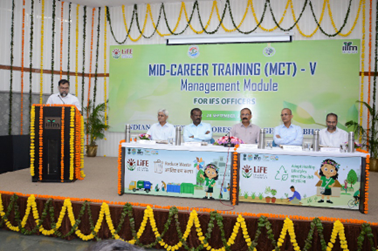
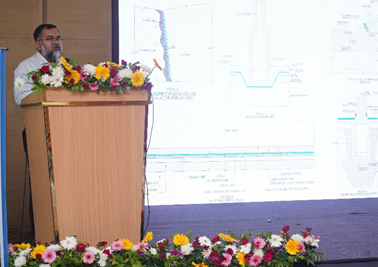
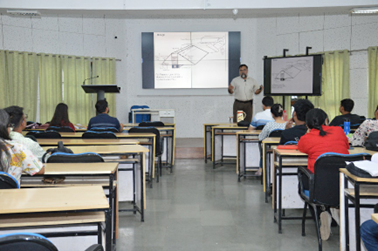
Currently, I am associated with the Ecosystem and Environment Management area, with teaching, research, and consultancy engagements. I teach courses such as Sustainable Energy Transition and Sustainable Management of Water Resources, while also mentoring students through practical, field-based learning supported by my two decades of experience in the forestry and development sector.
I am actively involved in research and consultancy projects, including serving as Principal Investigator for a pilot project on land degradation neutralization through eco-restoration of mine voids using red mud backfilling, and as Ecosystem Expert & Team Leader for the JICA-supported “Project for Forest and Biodiversity Conservation for Climate Change Response” in West Bengal. In addition to academics and research, my institutional responsibilities – including serving as Chairperson of the Centre for Forest Hydrology, In-charge of the Reprographic Cell, and member of various committees – have further enriched my administrative, leadership, and organizational experience.
Q. What is the most satisfying part in your career?
A. The most satisfying aspect of my career has been the opportunity to create meaningful impact at the intersection of environment, livelihoods, and community development. Whether working with policymakers, forest officials, researchers, or grassroots communities in remote villages, I have always found deep fulfillment in contributing towards sustainable solutions that positively influence both ecosystems and people’s lives.
One of the greatest satisfactions comes from witnessing how participatory approaches in forestry, watershed management, medicinal plants, and livelihood promotion can transform communities while conserving natural resources. Extensive field exposure across diverse regions of India has taught me that even small interventions, when implemented with sincerity and community ownership, can create long-term ecological and social value.
Another deeply rewarding dimension of my journey has been teaching, mentoring, and capacity building. From training villagers and frontline forest staff to interacting with IFS officers and now mentoring students at Indian Institute of Forest Management, the opportunity to share knowledge, inspire young professionals, and learn continuously from people across different backgrounds has been immensely fulfilling.
Returning to IIFM as a faculty member perhaps represents the most meaningful satisfaction of all – an opportunity to give back to the institution that shaped my professional identity and values.
Q. Has your learning at IIFM helped in shaping how you approach your professional roles?
A. Absolutely. My learning at Indian Institute of Forest Management has profoundly influenced the way I approach my professional responsibilities and decision-making processes. IIFM provided me not only with academic knowledge, but also with a holistic understanding of the interconnectedness between ecology, economy, communities, and governance.
The institute’s interdisciplinary approach helped me move beyond a purely technical mindset and develop a systems perspective towards sustainable development and natural resource management. The strong emphasis on field exposure, participatory learning, teamwork, and problem-solving enabled me to appreciate ground realities and the importance of community engagement in development interventions.
IIFM also played a crucial role in strengthening my communication, leadership, and managerial abilities. Interactions with peers from diverse academic and cultural backgrounds, along with extensive fieldwork and practical assignments, helped build adaptability, confidence, and collaborative thinking — qualities that have remained central throughout my career.
Even today, whether I am involved in teaching, research, consultancy, project management, or policy-related assignments, I find myself drawing upon the values, perspectives, and experiential learning that I gained during my time at IIFM.
Q. Who (or what) are the biggest influences or drivers in your careers? What would be your advice to freshers and IIFM graduates who are looking to choose similar sectors/roles.
A. One of the strongest influences in my career has been the opportunity to work closely with diverse communities, inspiring mentors, and experienced professionals across the forestry, environment, and development sectors. Interactions with forest-dependent communities in remote regions of India taught me empathy, participatory thinking, and the immense value of indigenous knowledge systems. At the same time, guidance from senior professionals and academicians helped shape my leadership, discipline, and long-term perspective towards sustainable development.
A major driving force throughout my journey has been the belief that environmental management is not only about conservation, but about harmonizing ecological sustainability with human well-being. This perspective motivated me to work across areas such as climate change, ecosystem restoration, medicinal plants, livelihoods, and community-based natural resource management. My journey at Indian Institute of Forest Management further strengthened my confidence to work across interdisciplinary domains.
My advice to freshers and IIFM graduates is to remain curious, attentive, and open to continuous learning — both inside and outside the classroom. The development sector demands patience, adaptability, integrity, and strong field orientation. Never hesitate to work in challenging areas or explore unconventional paths, because real learning often happens beyond comfort zones. Instead of waiting for opportunities, prepare yourself to recognize and seize them with dedication and sincerity. Most importantly, value time, relationships, and every learning experience, because even small moments can shape the course of one’s journey.
Q. How did you decide to go for higher studies post IIFM? And how was the experience?
A. After graduating from Indian Institute of Forest Management, my extensive engagement in field-based forestry and environmental projects gradually inspired me to pursue higher studies. While working on afforestation, climate change, and participatory forest management initiatives, I realized the growing importance of scientific research and evidence-based planning in addressing complex environmental challenges. This motivated me to pursue a PhD at Jadavpur University.
My doctoral research focused on dynamic carbon sequestration, participatory forest management, and carbon trading mechanisms in forestry systems. The experience was both challenging and enriching, as it allowed me to integrate field realities with scientific analysis and policy perspectives. It strengthened my research orientation, analytical abilities, and long-term understanding of sustainability and climate-related issues.
Balancing professional responsibilities with research was not easy, but the interdisciplinary foundation and field orientation developed at IIFM helped me immensely throughout the journey.
Q. What are your favorite memories during your IIFM days?
A. My days at Indian Institute of Forest Management remain among the most memorable and transformative phases of my life. Coming from a Bengali medium background and an engineering discipline, the initial transition was both challenging and exciting. Over time, the vibrant campus environment, hostel life, friendships, group assignments, field visits, cultural activities, and late-night discussions became an integral part of my personal and professional growth.
Some of my fondest memories are associated with field exposures and learning beyond the classroom, where we closely interacted with forest-dependent communities and understood the realities of natural resource management at the grassroots level. Those experiences taught us teamwork, adaptability, leadership, and empathy in ways that textbooks alone never could.
I also cherish the strong bonds developed with batchmates, seniors, juniors, and faculty members, many of which continue even today. The multicultural atmosphere at IIFM helped me improve my communication skills, broaden my outlook, and build confidence. Looking back, IIFM was not just an academic institution for me — it was a life-shaping experience that created lifelong friendships, unforgettable memories, and a strong sense of purpose.
Q. In hindsight, what was the biggest contribution or take away from IIFM that you think played a critical role in shaping you as an individual or professional?
A. In hindsight, the biggest contribution of Indian Institute of Forest Management was its ability to transform my perspective from being purely technology-oriented to becoming people-centric, interdisciplinary, and sustainability-driven. IIFM did not just provide academic learning; it nurtured a holistic understanding of the relationship between environment, livelihoods, policy, and management.
The blend of classroom learning, field exposure, case studies, group assignments, and interaction with faculty members and peers from diverse backgrounds played a defining role in shaping my professional outlook. The rigorous academic environment strengthened my analytical and managerial abilities, while field visits and practical engagements taught me the importance of ground realities, participatory approaches, and community engagement.
Equally important were the friendships, hostel life, and peer learning culture at IIFM, which fostered teamwork, resilience, communication skills, and lifelong relationships. Coming from a Bengali medium background, the multicultural environment of IIFM significantly enhanced my confidence and communication abilities in both Hindi and English.
Perhaps the greatest takeaway from IIFM was the confidence to work across disciplines, cultures, and challenging environments with sensitivity, adaptability, and purpose — values that continue to guide me throughout my professional and personal journey.
Q. The best buddies / seniors /faculty at IIFM? Some memorable tidbits that you like to share?
A. I was fortunate to have wonderful friends and seniors who constantly encouraged and supported me through academics, presentations, hostel life, field visits, and placements. Hostel discussions, late-night tea conversations, cultural programmes, and group assignments created memories that still bring a smile today. My roommate Ravi and I thoroughly enjoyed campus life in our own simple and disciplined way, without needing any artificial excitement.
I remain deeply grateful to the faculty members whose mentorship extended far beyond classrooms. Their emphasis on field realities, critical thinking, discipline, and professionalism profoundly shaped my approach towards life and career. Among them, Prof. C.S. Rathore remains one of my most admired teachers. I still fondly remember how my sincere effort in an MIS assignment led him to appreciate my work and gift me an important contemporary book — a gesture that left a lasting impression on me.
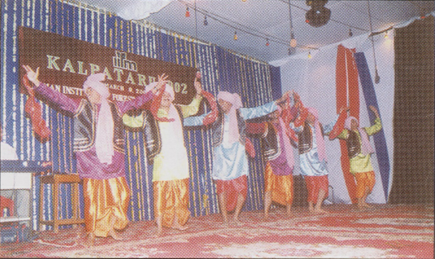
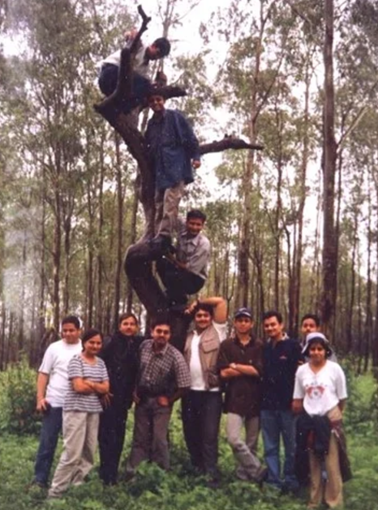
Field visits and study tours to places like Pachmarhi, Kanha, and Jabalpur were among the most memorable experiences, teaching us teamwork, adaptability, and grassroots realities beyond textbooks. Another unforgettable memory was performing Bhangra during Kalpataru — something completely outside my quiet personality at that time. Though I spoke less, my role as Mess Manager and the appreciation received for maintaining good food quality earned me the affectionate title of “Silent Worker” from juniors, a memory I still cherish warmly.
Q. As an alumni, what’s your advice to freshers or those are joining IIFM to get best out of the 2 years there?
A. My advice to freshers joining Indian Institute of Forest Management is to fully immerse themselves in the unique learning ecosystem that IIFM offers. These two years are not only about earning a degree, but about shaping your perspective towards life, leadership, sustainability, and society.
Be attentive and curious both inside and outside the classroom. Learn not only from faculty members, but also from peers, seniors, field visits, assignments, hostel life, and every interaction around you. IIFM provides a rare interdisciplinary platform where management, ecology, policy, livelihoods, and community engagement come together — make the most of it.
Do not hesitate to step out of your comfort zone. Participate in fieldwork, cultural activities, presentations, group discussions, and institute responsibilities, because these experiences build confidence, communication skills, teamwork, and leadership qualities that remain valuable throughout life.
Spend time in the library, engage deeply with field realities, and build meaningful relationships with batchmates, seniors, faculty, and alumni. The friendships and professional networks developed at IIFM often become lifelong assets. Most importantly, enjoy the journey with sincerity and balance. The two years at IIFM pass very quickly, but the learnings, values, and memories stay with you forever.
Q. What would be your advise for recent graduates who look for changing their sector after working for couple of years?
A. If you are not comfortable with your work or work environment, do not hesitate to make a change early. In my own journey, I moved on quickly from a few initial assignments that did not align with my aspirations, but later spent more than two decades at Jadavpur University under the mentorship of Prof. Asis Mazumdar — a phase that became the foundation of my professional growth.
For young professionals considering a sectoral shift, my advice is to view transition as an opportunity for growth and self-discovery. Choose your path based on values, learning, and long-term purpose rather than short-term trends. Keep upgrading your skills, remain adaptable, and value your previous experiences, as many competencies are transferable across sectors. Most importantly, while making career or location changes, give due importance to family and personal well-being along with professional aspirations.
Q. What is your typical day at the work? And how does it look like while you are on a break?
A. A typical workday for me at Indian Institute of Forest Management is a dynamic mix of teaching, student interaction, research, consultancy, project coordination, and administrative responsibilities. The day generally involves classroom sessions, academic preparation, meetings, report writing, research discussions, and interactions with stakeholders from government, academia, and field projects. I particularly enjoy connecting field experiences with classroom learning to make discussions more practical and meaningful for students.
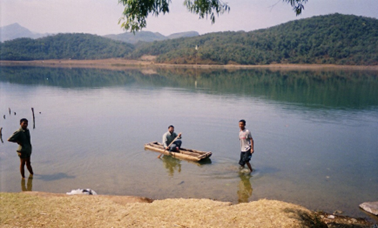
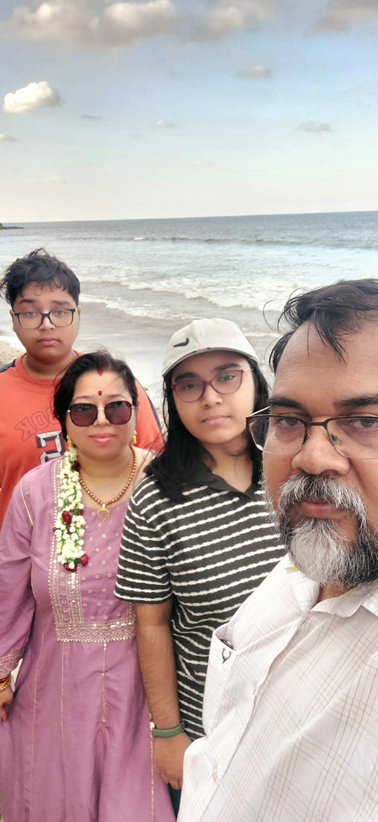
During breaks, I prefer spending quality time with family, travelling, exploring local culture and food, and reconnecting with nature. Recently, we had a memorable family trip to the tropical evergreen forests, crystal-clear waters, and serene beaches of the Andaman Islands. I remain grateful to Indian Institute of Forest Management for facilitating the extended LTC leave, and especially to our Director, Dr. K. Ravichandran, a proud IIFM alumnus, for his kind facilitation.

Q. And how about weekends, hobbies, family and anything else you want to add?
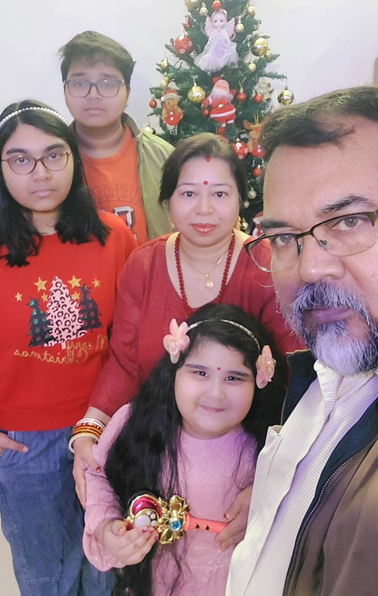
A. Weekends for me are primarily about family, reflection, and rejuvenation. I deeply cherish the time spent with my children — meaningful conversations with my elder daughter after her Class XII journey, casual outings and driving practice sessions with my son studying in Class VII, and the joyful moments shared with my youngest daughter, who fills much of my free time with innocence and energy. I feel truly blessed to have gentle, bright, and affectionate children, a caring and supportive wife, and the constant blessings of my mother for a peaceful and happy family life.
Despite professional commitments, I strongly believe in maintaining a healthy work-life balance. I enjoy travelling, interacting with people from diverse cultures, exploring nature-rich destinations, reading, mentoring students, and engaging in thoughtful discussions on environment, society, and development. Extensive field exposure across India has further deepened my appreciation for local traditions, indigenous knowledge, and community life.

Q. Favorite Books, movies, authors?
A. Favorite Books: Ikigai, Atomic habits, Psychology of money, Silent spring, 11 Rules for Life
Favorite movies: The Gods Must Be Crazy, Tuck Everlasting, Lagaan, 3 Idiots, Sharey Chuattar
Favorite authors: James Clear, Chetan Bhagat, Sarat Chandra Chattopadhyay
Q. IIFM is driven by alumni’s passion and commitments towards its goal. How would you like to contribute to IIFM or IIFM alumni, students?
A. As an alumnus of Indian Institute of Forest Management, I firmly believe that the institute’s greatest strength lies in its people — the students, faculty, and alumni who continue to contribute meaningfully across diverse sectors and geographies. Returning to IIFM as a faculty member has given me an opportunity not only to teach, but also to mentor, guide, and inspire future professionals in sustainability and environmental management.
Under the dynamic leadership of our distinguished alumnus and Director, Dr. K. Ravichandran, IFS, IIFM is passing through a transformative phase and continuously setting higher benchmarks for itself. As a member of the Career Development Committee, I actively participate in regular discussions and initiatives related to placements, internships, skill enhancement, and professional development of students. While placements in management institutes are largely student-driven, the institute continuously strives to create meaningful opportunities and strengthen industry and institutional linkages.
I strongly believe that sustained engagement among alumni, academia, industry, government, and communities is essential for keeping IIFM vibrant, future-ready, and impactful.
Q. What do you think is different at IIFM now vs when you studied there? When was the last time you visited IIFM?
A. IIFM today is far more diverse, technologically advanced, globally connected, and interdisciplinary compared to the time when we studied there during 2001–03. While the core values of sustainability, field orientation, and people-centric management remain unchanged, the institute has significantly expanded its academic reach, research engagement, infrastructure, industry interaction, and international collaborations. Students today have access to much wider opportunities in terms of analytics, technology, global exposure, consultancy, and interdisciplinary career pathways.
At the same time, I feel the spirit of IIFM – its closeness to nature, vibrant hostel life, field-based learning, and strong bonding among students and faculty – still remains intact. In many ways, the institute has evolved while preserving its soul.
Interestingly, my “last visit” to IIFM transformed into a permanent homecoming when I joined the institute as a faculty member in March 2024. Returning to my alma mater after more than two decades, this time as part of the faculty fraternity, has been an emotional and deeply meaningful experience for me.
Q. Any suggestions on who you want to get profiled/interviewed here?
A. I would particularly love to see profiles of alumni who have taken unconventional career paths, worked extensively at the grassroots level, contributed to community transformation, or emerged as leaders in sustainability and environmental governance. Such stories can greatly motivate students and young professionals by showing that meaningful impact often comes through persistence, humility, and field engagement rather than only through conventional definitions of success.
I would suggest to interview my batchmate Sachin Kumar, Director and CEO at Samavit Vikas Pvt. Ltd. and Dr. Anindita Bhattacharyya, MRM 2004-05, Freelance Lead Auditor – PRAMAN, FSC, PEFC and GSTC; and Technical Head (Accreditation), Willenskraft Business Services Pvt. Ltd.