
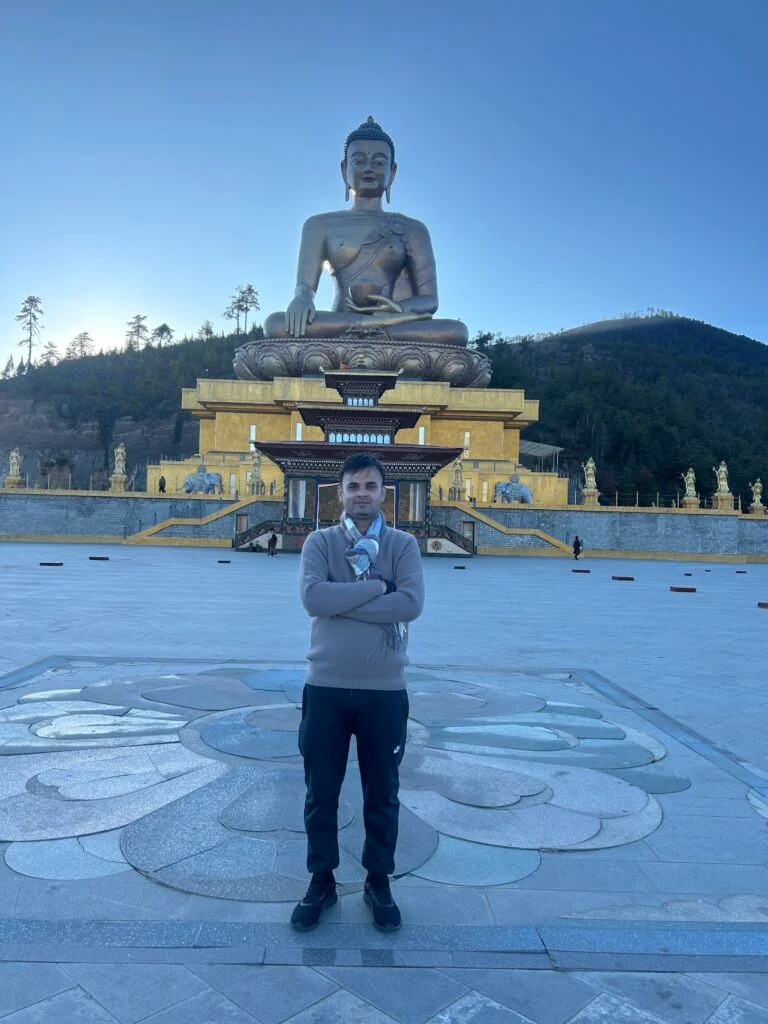
I completed my schooling from Salem English School, Raipur in 2004 and went on to pursue a Bachelor of Business Administration (BBA) from St. Vincent Pallotti College, Raipur, graduating in 2007. After graduation, I gained two years of professional experience in Business Development, which gave me early exposure to market dynamics, client handling, and execution-oriented roles.
With a growing interest in sustainability, policy, and development-oriented management, I joined the Indian Institute of Forest Management (IIFM) in 2009. The interdisciplinary academic environment at IIFM proved to be a turning point in my career.
Post IIFM, I worked with Axis Bank in the Agri-Business vertical for nearly 2 years, gaining exposure to agricultural finance and rural credit systems. I later joined Punjab National Bank as a Probationary Officer and progressed through various roles. Currently, I am posted in Bhutan as Chief Manager, working as the Chief Risk Officer at Druk Punjab National Bank.
Location: Bhutan
Linkedin : https://www.linkedin.com/in/shivoham-sharma-a3b0a016
Q. Tell us about your School and College before you came to IIFM. How was your experience there? And how did IIFM happen?
A. My schooling at Salem English School, Raipur, followed by my BBA from St. Vincent Pallotti College, Raipur, gave me a strong foundation in management and analytical thinking. After graduation, my two-year stint in Business Development provided hands-on corporate exposure. However, it also made me reflect on the larger role of management in sustainability, policy, and development. This reflection led me to choose IIFM in 2009, as it uniquely integrates management education with environmental and developmental perspectives.
Q. How has been your journey from IIFM so far?
A. My journey from IIFM has been steady and enriching. From agricultural finance at Axis Bank to public sector banking at PNB, I have worked across finance, analytics, risk, and leadership roles. The overseas posting in Bhutan added an important international dimension to my professional experience.
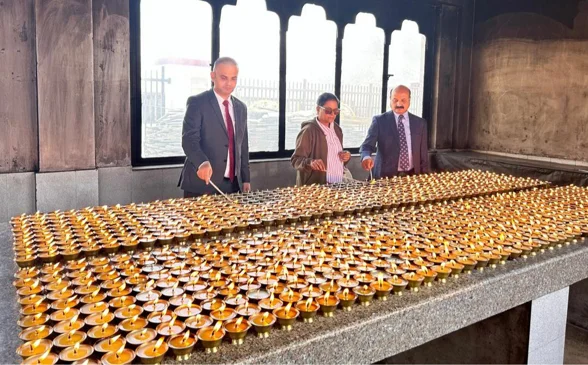 Offering 1000 Butterlamps at Buddha Dordenma Thimphu along with MD & CEO of PNB
Q. What were some of the key milestones/learning in this journey that you would like to share with us?
A. Key milestones include moving from business roles to development finance, getting exposure to analytics-driven decision-making, Application of AI & ML in Banking, selection for overseas posting, and eventually heading the Risk function of the Bank. Each stage reinforced the value of data, sustainability, and systems thinking.
Q. How has been your experience in your current Organization? What all areas have you been working here?
A. As Chief Risk Officer at Druk PNB, I am responsible for enterprise risk management, credit risk oversight, regulatory compliance, and institutional risk governance. I am also actively involved in drafting key policy documents related to ESG, climate risk, and sustainable finance.
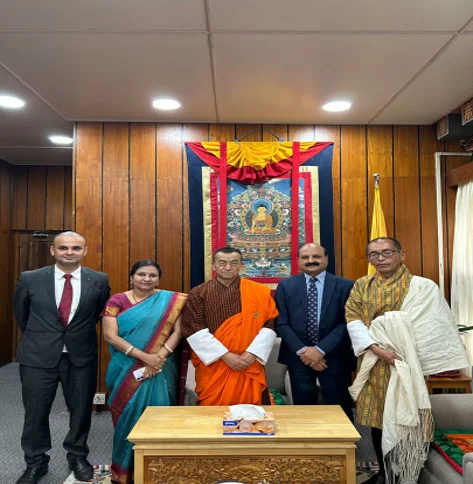 Meeting with Finance Minister of Bhutan, along with MD & CEO of PNB and CEO of Druk PNB
Q. What is the most satisfying part in your career?
A. The most satisfying part of my career is being able to apply analytical and sustainability-oriented thinking to real-world banking and risk challenges, particularly in roles that contribute to financial stability and inclusive growth.
Q. Has your learning at IIFM helped in shaping how you approach your professional roles?
A. I have been immensely benefited from my education at IIFM, and whatever I learned there continues to be harnessed for my professional growth even today. The analytical frameworks, sustainability orientation, and systems-thinking approach I gained at IIFM are deeply embedded in my day-to-day professional work.
A special mention must be made of the elective courses taught by CSR Sir and CVRS Sir. Their subjects significantly shaped my understanding of risk, governance, sustainability, and policy-driven decision-making, and continue to influence my professional judgment.
That said, my learning journey also had its lighter—and humbling—moments. Although I opted for Advanced Data Analytics (ADA), I honestly struggled and at times found it difficult even to secure passing grades. Rohan and Sanjay quite literally saved me during ADA, and Smita supported me immensely, often doing far more than her share of work. This experience highlighted one of IIFM’s greatest strengths—the culture of peer learning and collaboration. I deeply admire my friends, and a large part of whatever I achieved academically is because of them.
Ironically, and importantly, ADA turned out to be a defining choice. It led to my shortlisting for the Analytics Centre of Excellence at PNB, which subsequently played a role in my overseas posting, and eventually in my current responsibility of heading the Risk function of the Bank. In hindsight, without ADA, I would most likely have remained in continuous field postings. Today, I am also directly involved in drafting the Environmental, Social and Governance (ESG) Policy and the Climate and Sustainability Finance Policy of the Bank—using IIFM learning every single day.
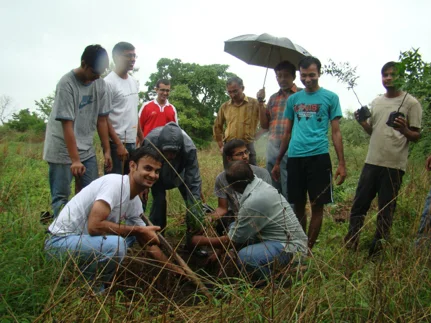 Plantation Drive organized by Nature Club at IIFM
Q. Who (or what) are the biggest influences or drivers in your careers? What would be your advice to freshers and IIFM graduates who are looking to choose similar sectors/roles.
A. My biggest influences have been my teachers, peers, and professional experiences. My advice to IIFM graduates is to focus on fundamentals, embrace interdisciplinary learning, and not fear courses or roles that seem difficult initially—they often prove the most rewarding.
Q. What are your favorite memories during your IIFM days?
A. Ironically my favorite memory at IIFM is unique 😊 It happened post completion of course at IIFM!! I got to know of convocation day being on 4th of April and 2011 cricket world cup final was scheduled for 2nd of April 2011. In anticipation of India being in finals and me not stuck in travel on the match day, I reached IIFM campus two days before the convocation day and reminiscence my IIFM days along with watching India lift the world cup on TV at my very own room at Transit Hostel where I stayed for one year during my time at IIFM. The memory is itched forever in my mind.
Q. In hindsight, what was the biggest contribution or take away from IIFM that you think played a critical role in shaping you as an individual or professional?
A. I personally believe the exposure of diverse people is what made the biggest contribution in my personal growth, be it friends, colleagues or faculties. I feel privileged to had the company of people who were there in my batch and variety of perspective they brought, which ultimately shaped my thought processes. I would also like to mention the invaluable contribution of faculties specially Chinmay S Rathore Sir, Manmohan Yadav Sir & Ashutosh Verma Sir. And IIFM gave that Interdisciplinary thinking, sustainability orientation, and a strong analytical mindset.
Q. The best buddies / seniors /faculty at IIFM? Some memorable tidbits that you like to share?
A. IIFM gave me more than a degree—it gave me people who shaped how I think. CSR Sir and CVRS Sir pushed us beyond textbooks. Rohan and Sanjay saved me more than once during tough courses, and Smita showed what real teamwork looks like. The lessons (and friendships) stuck longer than any exam ever did.
I do recall one phrase from Ashutosh Verma Sir during one of routine test. He just made a comment “If I feel you are cheating, you are cheating, even if you are not cheating”. The comment seemed funny at that time but every passing second it felt like a word of wisdom from a very learned man.
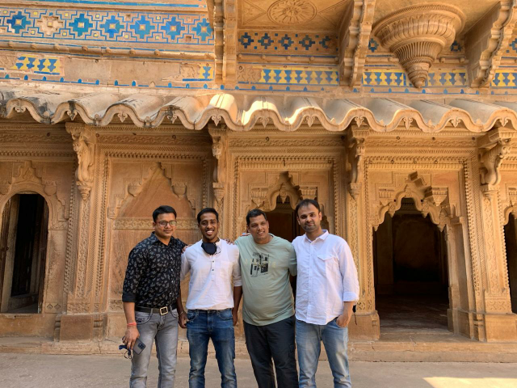 Get together with Nikhil, Neelakshya & Rajesh during Umesh’s Wedding
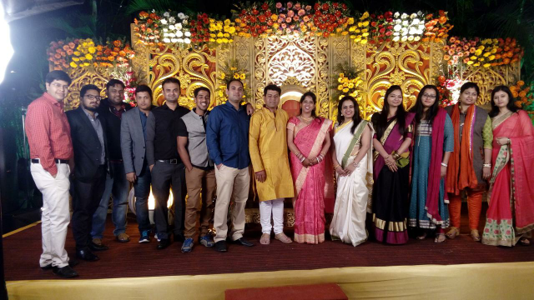 During Ruchita’s Wedding, a mini reunion with Achal, Karan, Siddharth, Rajesh, Shivoham, Neelakshya, Sahil, Richa, Apoorva.(L to R)
Q. As an alumni, what’s your advice to freshers or those are joining IIFM to get best out of the 2 years there?
A. Use the two years to explore deeply, learn collaboratively, and build a long-term perspective rather than chasing short-term outcomes. For me choices of electives proved to be decisive to my professional career. I hope electives are still being offered and industry relevant.
Q. What would be your advise for recent graduates who look for changing their sector after working for couple of years?
A. Identify transferable skills, invest in learning, and be open to resetting your career trajectory. Basically, embracing dynamic nature of professional life requires openness to realities of everchanging environment and then adjusting and aligning ourselves to the needs of the hour. Skills acquired, aptitude for embracing change would be helpful in any sector, jobs or profession. So, I personally think change of sector or Job is part of individual growth and interest alignments.
Q. What is your typical day at the work? And how does it look like while you are on a break?
A. Work starts with early morning meetings, then review of changes in any important parameters related to Risk Management of the Bank, some work on policy matters, reporting, compliance and adhering to regulators guidelines, advisory, meetings etc. In between, there is also guiding and training of staffs, preparing ppts for presenting to management, regulators and few other forums till late evening.
When in break, mostly spending time with family answering to non-stop questions from my 9-year-old son Neo (Named him after main protagonist of Matrix movie series).
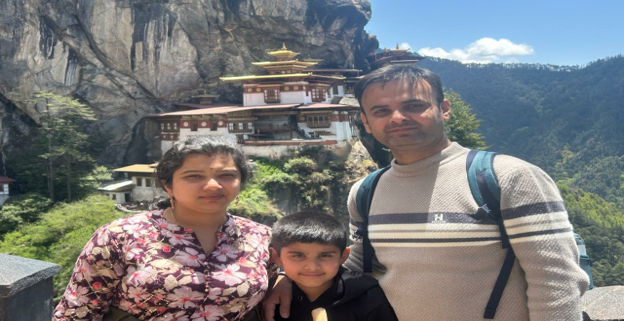
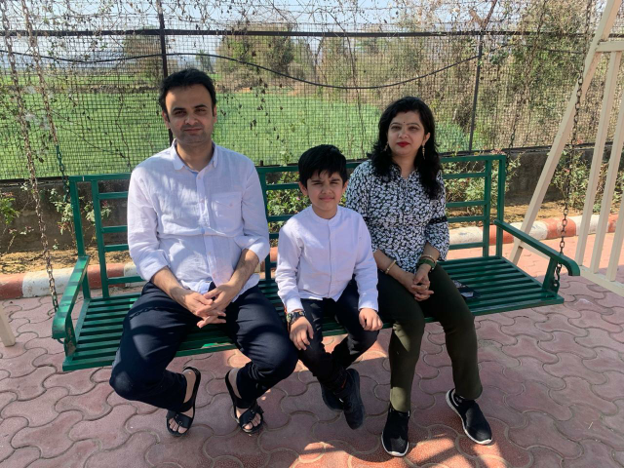 With my wife Anumeha Sharma and our son Neo Sharma
Q. And how about weekends, hobbies, family and anything else you want to add?
A. Weekends-Little bit of Investment advisory to friends & relatives. Since in Bhutan presently, going for hiking, trekking & excursions. Also play badminton 2-3 day every week.
Q. Favorite Books, movies, authors?
A. Books: Mrityunjaya – By Shivaji Sawant, Art of War-By Sun Tzu & Life 3.0-By Max Tegmark
Q. IIFM is driven by alumni’s passion and commitments towards its goal. How would you like to contribute to IIFM or IIFM alumni, students?
A. I would be happy to contribute through mentoring, student interactions, sharing practical insights from banking and risk management, and supporting placement or academic initiatives.
Q. What do you think is different at IIFM now vs when you studied there? When was the last time you visited IIFM?
A. I have not been to IIFM after my convocation so 2011, but I intend to get my next posting in Bhopal to reminiscence. I do see lot of visibility of IIFM compared to my time, lot more interaction among alumni through WhatsApp group and other social platforms.
Q. Any suggestions on who you want to get profiled/interviewed here?
A. Smita, Neelaskshaya, Siddharth, Ruchita, Shayandeep, Vinisha, Gurshabadjeet.