
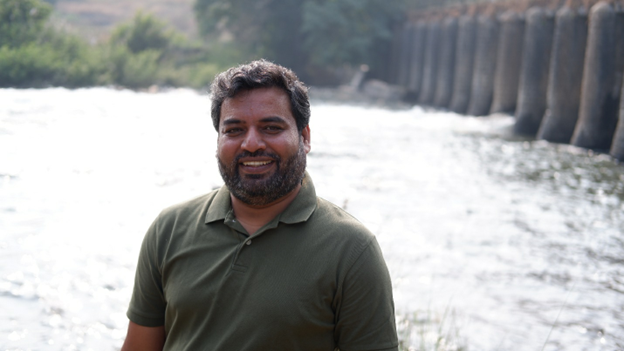
I am a development and natural resource management professional with over 20 years of experience across livelihoods, sustainable agriculture, forestry, landscape restoration, disaster response, and climate action. My work has taken me through grassroots NGOs, government systems, donor-supported programs, international organizations, and now the nature-based carbon sector. Across these roles, I have worked closely with communities, civil society organizations, government agencies, and technical agencies in different parts of India.
Currently, I work with NatureCo, where I support the development of large-scale nature-based carbon projects in South Asia. My role focuses on partnerships, feasibility, capacity building, stakeholder engagement, and project readiness, with the aim of linking communities with long-term climate and conservation goals.
What has remained constant throughout my journey is a strong belief that lasting impact comes from grounded field understanding, strong institutions, local participation, and practical solutions that work for both people and nature.
Location: Pune, Maharashtra, India
Linkedin : linkedin.com/in/cdeokar
Q. Tell us about your School and College before you came to IIFM. How was your experience there? And how did IIFM happen?
A. Before coming to IIFM, my academic journey had already started moving towards land, livelihoods, and the environment. I did my B.Sc. in Agriculture from the College of Agriculture, Pune, which gave me a strong grounding in farming systems, soils, crops and the realities of rural life. After that, I completed my M.Sc. in Environmental Sciences from the University of Pune. That expanded my perspective and helped me look at ecology, natural resources, and the relationship between people and the environment in a wider and more connected way.
Both stages were important for me. Agriculture kept me rooted in field realities, while environmental sciences helped me think more broadly. Over time, I felt the need for a space that could bring together natural resources, people, institutions, and management. That is how IIFM happened.
IIFM felt like the natural next step because it connected forestry, environment, livelihoods, and management in one place. For me, it was not just another degree. It was where my interests started coming together in a more meaningful and professional way, and where I began to see more clearly the kind of work I wanted to do in life.
Q. How has your journey from IIFM been so far?
A. My journey from IIFM has been rich in learning, varied in experience, and deeply shaped by the realities of the sectors I have worked in.
I began with natural resource management and rural development, and over time my work expanded into livelihoods, sustainable landscapes, forestry, disaster response, institutional development, and now nature-based carbon projects. Along the way, I have had the opportunity to work with communities, grassroots organizations, government systems, donor-supported programs, international organizations, and private-sector partners. In many ways, my career has also moved with the changing development landscape of the last two decades, from grants and CSR-supported work to climate and carbon-linked approaches.
What this journey has taught me most is that meaningful work in this space needs both field grounding and institutional understanding. It is not enough to know the technical side; one also has to understand people, policy, partnerships, and the larger sector context. That is why, even as my roles have grown more strategic over time, I have always tried to stay connected to communities and ground realities. Today, my work at NatureCo brings together many of the threads that have shaped my journey so far : environment, livelihoods, partnerships, and climate action.
Looking back, I feel IIFM gave me the foundation to build a career where education, purpose, and professional work could stay closely aligned.
Q. What were some of the key milestones/learning in this journey that you would like to share with us?
A. Some of the key milestones in my journey have been the gradual shift from field-level work to larger program, partnership, and strategy roles. My early years in natural resource management and livelihoods taught me the most important lesson first: any idea is only as good as its relevance on the ground. Working closely with communities helped me stay practical, patient, and solution oriented.
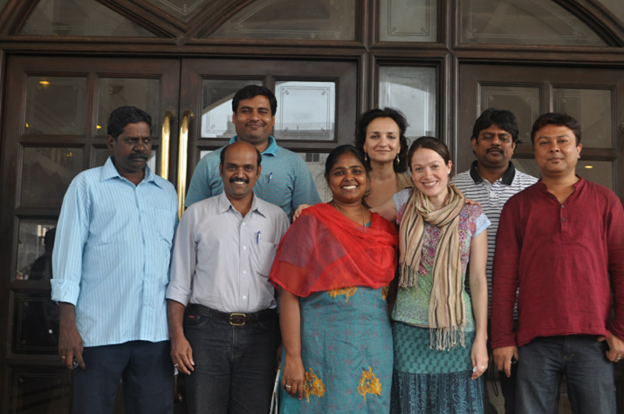
A second major milestone was getting the opportunity to work with larger institutions such as Oxfam, Maharashtra State Rural Livelihoods Mission, Rainforest Alliance, and now NatureCo. These roles expanded my understanding from implementation to program design, systems, partnerships, and long-term strategy. They also taught me how to work across different contexts, from communities and civil society organizations to government departments, donors, and technical teams.
One important personal learning also came from a difficult phase, when I tried freelance consulting. It did not work out in the way I had expected, but it taught me something valuable about risk, timing, and self-awareness. Not every phase has to look successful from the outside to become useful later.
If I had to sum up the biggest learning from the journey, it would be this: development work is never only technical. It is built on trust, relationships, local understanding, and the ability to connect livelihoods, institutions, and sustainability. In many ways, my current work in nature-based carbon projects brings all these strands together.
Q. How has been your experience in your current Organization? What all areas have you been working here?
A. My experience in my current organization, NatureCo, has been both enriching and professionally meaningful. It has given me the opportunity to work at the intersection of climate action, natural resource management, community engagement, and strategic partnerships. What I value most is that the work is not only about ideas on paper. It involves building practical pathways through which climate finance can support long-term conservation, restoration, and community development together.
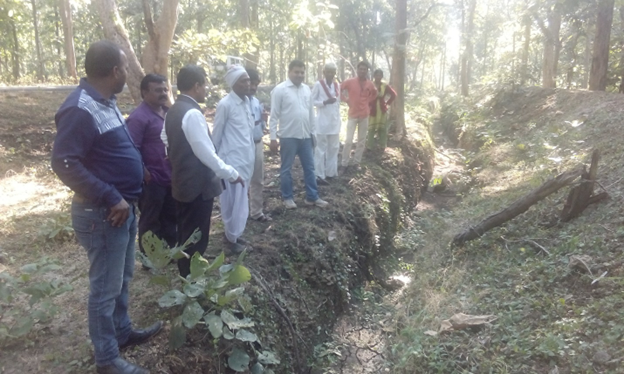
At NatureCo, I have been working mainly on the development of large-scale nature-based carbon projects, especially in afforestation, reforestation, revegetation, and mangrove restoration. My role includes partnership development, feasibility assessments, stakeholder engagement, coordination with local organizations and government bodies, and support for project readiness. I also contribute to capacity building, project design discussions, due diligence, and the effort to align carbon standards with local realities on the ground.
What makes this role especially meaningful for me is that it brings together many strands of my earlier experience, including livelihoods, forestry, institutions, and sustainability, in one integrated space. It has been an important learning phase and a natural progression in my career.
Q. What is the most satisfying part in your career?
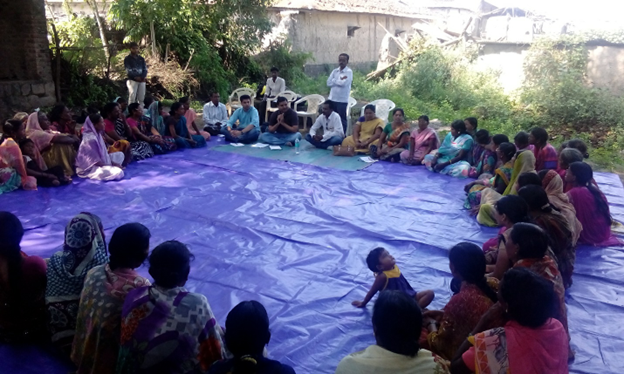
A. The most satisfying part of my career has been the chance to work on issues that matter to both people and nature. I have always found meaning in work that improves livelihoods, strengthens community institutions, and supports better management of land, water, and forests. What gives me the deepest satisfaction is when the work does not remain only at the level of planning, but leads to visible and lasting change on the ground.
I also value the fact that my journey has allowed me to work with many kinds of institutions, from village-level groups to government systems, civil society organizations, and international partners. It has helped my continued learning while contributing in different ways across implementation, program design, partnerships, and strategy. But in the end, the real satisfaction comes from staying connected to real people and real landscapes, and from knowing that some of the work continues to create value even years after one has moved on from a project. That is what makes the journey meaningful for me.
Q. Has your learning at IIFM helped in shaping how you approach your professional roles?
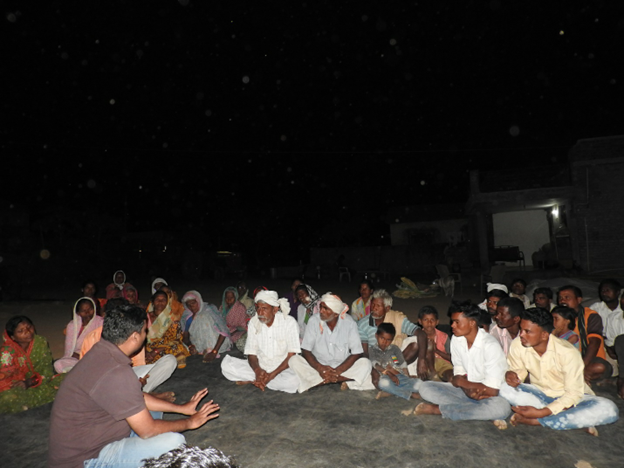
A. Yes, very much. IIFM shaped not only what I learned, but also how I think. One of its biggest contributions to my professional life was giving me an interdisciplinary lens. It helped me understand that natural resource management is never only about ecology or technical solutions. It is equally about people, institutions, livelihoods, policy, and long-term sustainability. That way of thinking has stayed with me in every role I have taken up.
IIFM also taught me to respect field realities. It showed me that even the best ideas have little value unless they are practical, socially rooted, and workable on the ground. Along with that, the management orientation at IIFM helped me move beyond concepts and focus on implementation, partnerships, and systems. Whether I was working in livelihoods, watershed development, forestry, disaster response, sustainable landscapes, or carbon projects, this integrated approach has guided the way I understand problems and make decisions.
Another lasting value has been the IIFM network. Over time, I have realized that the alumni connection is not only emotional, but also professionally meaningful. It creates an immediate sense of trust and shared understanding, and that can be a real strength throughout one’s career.
Q. Who (or what) are the biggest influences or drivers in your careers? What would be your advice to freshers and IIFM graduates who are looking to choose similar sectors/roles.
A. The biggest influences in my career have been a combination of people, field experience, and the purpose of the work itself. Working closely with rural communities, farmers, forest-dependent families, and local institutions shaped me deeply. Field experience teaches you things no textbook can fully teach: how to listen, how to build trust, how to stay patient, and how to respect local realities. Along the way, I have also learned a great deal from seniors, mentors, colleagues, and partner organizations. At different stages, a few people helped shape the way I think, make decisions, and see the sector more clearly.
What continues to drive me is the sense that this work has real purpose. Whether it is livelihoods, forests, water, climate, or community institutions, I have always been drawn to roles that create practical and lasting value for people and ecosystems. That sense of purpose has helped me stay aligned even as the sector itself has changed over time.
My advice to freshers and IIFM graduates is to build strong field grounding early in your career. Salaries and designations are important, but field understanding is the base that stays with you for life. Try to understand communities, institutions, policy, and implementation, not just the technical side. Be open to difficult locations, diverse roles, and sectors that may not look glamorous at first, because that is often where the real learning happens. At the same time, invest in writing, communication, and partnership skills. In this space, credibility comes not only from what you know, but from how you work with people. And if possible, find a good mentor. The right guidance at the right stage can save you years of confusion.
Q. How did you decide to go for higher studies post IIFM? And how was the experience?
A. I did not go for further formal higher studies after IIFM. At that stage, I felt a stronger pull toward field practice and professional learning. IIFM had already given me a strong interdisciplinary foundation, and I wanted to build on that through real work rather than move straight into another academic program. So I chose to enter the development sector and learn by working closely with communities, institutions, and different kinds of programs.
Looking back, I feel that was the right decision for me. The years after IIFM became a different kind of higher education in themselves. I learned through field assignments, program management roles, partnerships, humanitarian work, and engagement with government systems and donor-supported programs. Each stage added depth, confidence, and a much more practical understanding of how natural resource management and development actually work on the ground.
So while I did not pursue another formal degree after IIFM, I have continued learning throughout my career. In that sense, my higher learning came through practice, responsibility, and constant exposure to new challenges. And I remain open to further learning, if I feel the need for it at the right stage.
Q. What are your favorite memories during your IIFM days?
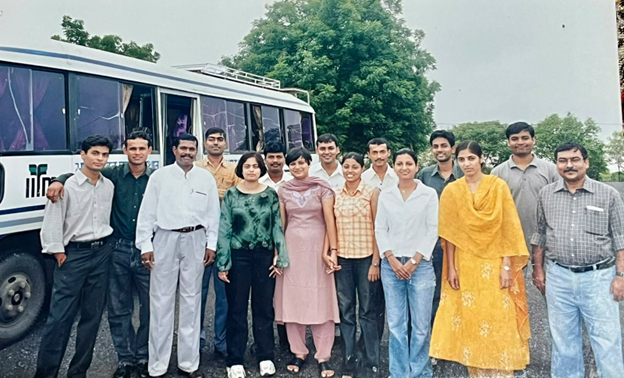
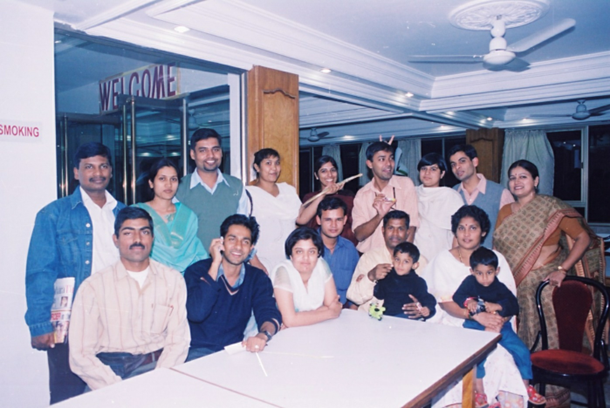
A. My favorite memories from IIFM are less about one big event and more about the overall experience of learning, friendship, and growing up together. I remember the campus life, long discussions with classmates, group assignments, exam preparations, and those small trips and shared moments that made student life special. What made it memorable was the mix of people and perspectives. We came from different backgrounds, but were brought together by a common interest in environment, forestry, and development, and that created a very special atmosphere.
I also remember that learning at IIFM was never limited to the classroom. A lot of it came through field-oriented thinking, informal conversations, and the everyday exchange of ideas with friends, seniors, and faculty. Looking back, what stays with me most is the combination of seriousness, simplicity, and camaraderie. There was academic pressure, of course, but there was also humour, belonging, and a strong sense of togetherness. That is why those memories still feel warm even today.
Q. In hindsight, what was the biggest contribution or take away from IIFM that you think played a critical role in shaping you as an individual or professional?
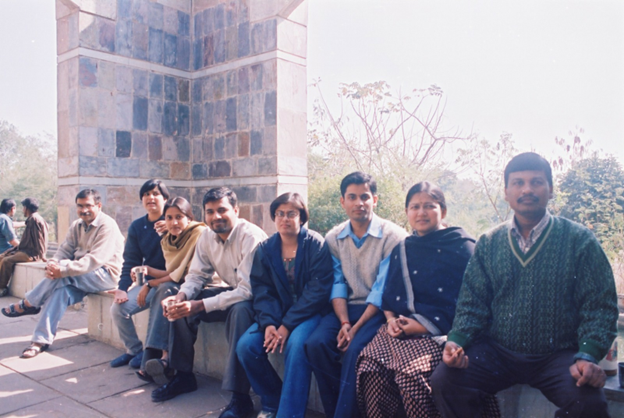
A. In hindsight, the biggest contribution of IIFM was the way it shaped my thinking. It helped me look at natural resource issues in an integrated and grounded manner, not as isolated technical problems. The real takeaway for me was that ecology, livelihoods, institutions, management, policy, and people’s realities are all connected. That perspective has stayed with me throughout my career and has influenced how I approach every role.
If I had to go beyond one course or one component, I would say the biggest value came from the overall environment. Faculty, friends, classmates, and the wider learning culture all contributed in different ways. The faculty helped deepen seriousness and perspective, while peers and friends broadened understanding and made the learning journey more human and memorable. In many ways, IIFM gave me not only knowledge, but also balance, humility, curiosity, and a practical way of looking at problems. That has been its biggest contribution in shaping me both as a professional and as a person.
Q. The best buddies / seniors /faculty at IIFM? Some memorable tidbits that you like to share?
A. One of the best parts of my IIFM journey was the people. On the faculty side, I remember with gratitude teachers such as Parul Rishi Ma’am, M. D. Omprakash Sir, Amitabh Pandey Sir, P. K. Biswas Sir, Dr Yogesh Dubey Sir, Debashish Debnath Sir, Kotwal Sir, Rekha Singhal Ma’am, and Madhu Verma Ma’am. Each of them influenced me in a different way. Some helped deepen my academic thinking, some brought seriousness and perspective, and some left behind advice that stayed with me long after I left campus. The note does not describe each person separately, but it is clear that they collectively made a lasting difference in shaping how I think and learn.
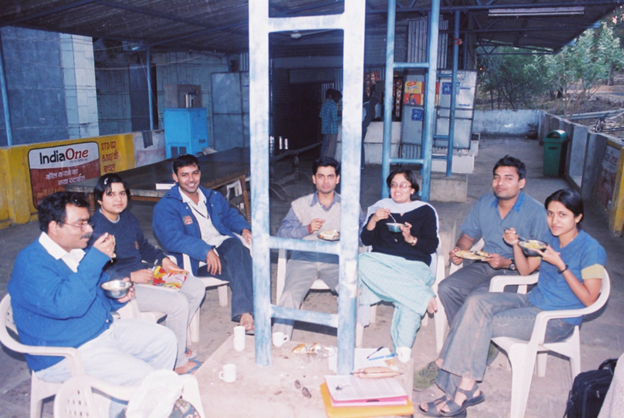
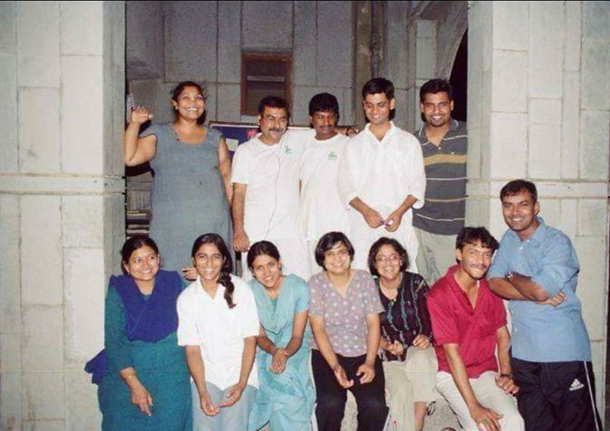
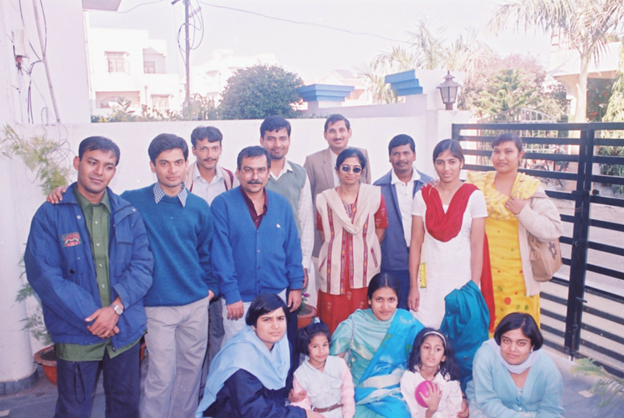
Among friends and batchmates, I fondly remember Bishnu Parida Ji, Jayantha da, Anurag, Indrani, Mr Rao, Smita, Anandita, Nahar, Rajesh, Sudeshna Ma’am, Pathak Ji, Suresh, Sachin Patil, Subhro, Shweta, and Nandini. There were few members from PFM batches also who connected and reconnected while working with different organisations. They made the learning journey easier, warmer, and much more enjoyable. What stands out even today is the spirit of camaraderie. We came from different backgrounds, had different strengths and personalities, but there was always support, humour, and a sense of growing together. Even after 2 decades, that connection still carries warmth.
Some of the most memorable tidbits are very simple ones: long hostel and campus conversations, shared stress before submissions, group study and assignments, and those nights when whole groups stayed awake in the computer lab till around 3 am trying to finish work!! Looking back, those moments were tiring then, but they are among the fondest memories now. They remind me that IIFM was not only a place of learning, but also a place of friendship, support, and shared becoming…
Q. As an alumni, what’s your advice to freshers or those are joining IIFM to get best out of the 2 years there?
A. My advice to freshers joining IIFM is to use these two years with curiosity, openness, and seriousness. IIFM offers much more than a degree. It gives you a chance to understand how different subjects and thematic areas connect in the real world. So do not limit your learning to classes and exams alone. Learn from the campus, the field exposure, the library, the faculty, your batchmates, and your seniors.
I would especially suggest building a strong field perspective. Read well, ask questions, and keep testing theory against what actually happens on the ground. At the same time, use these two years to strengthen your writing, communication, teamwork, and analytical thinking. These skills stay useful throughout your career, whatever path you choose. Also, build your network early and try to find mentors. The right people can shape your thinking and support your growth in ways you may only realize later.
Most importantly, do not spend the entire two years worrying only about placements. Placements matter, of course, but the bigger goal is to become a thoughtful, grounded, and capable professional. If you use IIFM well, the opportunities will follow.
Q. What would be your advise for recent graduates who look for changing their sector after working for couple of years?
A. My advice to recent graduates who are thinking of changing their sector after a few years of work is to first understand why they want to make the shift. A sector change should not come only from frustration or short-term pressure. It should come from a clearer sense of purpose, interest, and the kind of work and life they want to build over the long term. For me, it helps to think of a balance between three things: meaningful work, reasonable growth, and long-term fit. If a new sector gives you that balance, the shift can be worth making.
At the same time, changing sectors is very much possible, and often valuable. Many skills travel well across sectors, especially communication, project management, analytical thinking, stakeholder engagement, and the ability to learn quickly. The key is to identify what in your past experience still has value and how it connects to the new space you want to enter. So do not think your earlier years were wasted. Very often, they give you maturity, perspective, and discipline that become your strength in the next role.
My suggestion is to make the transition thoughtfully. Read seriously, speak to people already working in that sector, understand the ground realities, and be willing to begin again with humility if needed. A good mentor can help a lot in this phase. Sector change is not a problem in itself. The real question is whether you are changing with clarity, preparation, and commitment.
Q. What is your typical day at the work? And how does it look like while you are on a break?
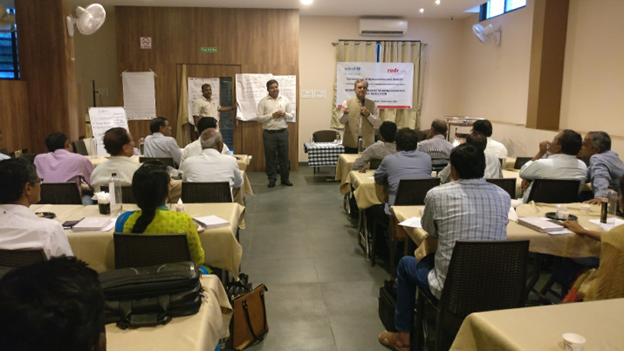
A. My typical workday is usually a blend of coordination, thinking, writing, and conversations with different people. In my current role, I work closely with partners, technical teams, and colleagues on project development, stakeholder engagement, feasibility, and readiness-related work. A normal day may involve reviewing or drafting documents, joining calls with partners, following up on project actions, and thinking through how different workstreams can move forward in a practical way. There is also some travel to project locations and stakeholder meetings, although lesser compare to some of my earlier roles. One thing I value is that learning remains part of the job even now.
No two days are exactly the same. Some days are more focused on strategy and writing, while others are about coordination, problem-solving, and discussions across institutions and geographies. When field travel happens, the rhythm changes completely and the work becomes much more direct, with closer interaction with partners, communities, and local realities.
When I am on a break, I prefer a quieter and simpler pace. I like spending time with family, travelling when possible, and being close to nature. Wildlife, birding, mountains, beaches, old temples, and new places all help me slow down and reconnect. Sometimes the best break is simply stepping away from structured work and letting the mind reset. That pause helps me return with a fresher perspective.
Q. And how about weekends, hobbies, family and anything else you want to add?
A. On weekends, I usually prefer a slower and more personal rhythm. I value simple time with family, some rest, and stepping away from the regular pace of work. Family time is important to me because it brings balance and perspective, and it helps me stay grounded. Sometimes that also means a small outing or just spending relaxed time together.
One of my biggest interests outside work is travelling. I have always enjoyed visiting different places, meeting people from different regions, and understanding local culture, landscapes, and history. I am especially drawn to places connected with nature, archaeology, and heritage. Those experiences have taught me a lot, and they have made me more curious, humble, and respectful of the diversity of people and ecosystems.
I also enjoy being outdoors and observing nature. In many ways, my personal interests and professional life connect quite naturally. If I were to add one more thing, I value simple experiences, meaningful conversations, and continuous learning, both within work and beyond it.
Q. Favorite Books, movies, authors?
A. I do not follow favourites in a very fixed way, but I am generally drawn to books, films, documentaries, and authors that stay close to nature, human journeys, society, history, and real-life experiences. I enjoy reading work that helps me understand people, places, and the relationship between human life and the natural world. I am also especially interested in history from the perspective of ordinary people, not only kings and famous figures. Biographies and travel writing also appeal to me because they often carry both insight and simplicity.
In films and visual content, I usually prefer meaningful cinema, some thrillers, documentaries, and nature or wildlife-based storytelling. I like content that is thoughtful, grounded, and stays with you after watching it, rather than only serving as entertainment. Among public figures whose work I have admired, David Attenborough stands out for the way he presents the natural world with knowledge, clarity, and humility. Steve Irwin also left a strong impression through his energy and passion for bringing wildlife closer to people. I have also long been fascinated by Jim Corbett, Chhatrapati Shivaji Maharaj, and the stories of freedom fighters. Overall, I value books and films that deepen understanding, widen perspective, and keep one connected to both people and nature.
Q. IIFM is driven by alumni’s passion and commitments towards its goal. How would you like to contribute to IIFM or IIFM alumni, students? Your engagement with IIFM Placement or OT/SI?
A. I would like to contribute to IIFM in ways that are practical, honest, and useful for students and the alumni community. Over the years, I have benefited from the learning, values, and relationships that came from IIFM, so I see giving back not only as a good gesture, but as a responsibility. It does not always have to be formal. Even small, meaningful engagement can make a difference.
I would be glad to support students through career conversations, mentoring, guest interactions, and by sharing practical experience from sectors I have worked. I feel students often benefit most from grounded discussions on how work actually happens in the field, how institutions and partnerships function, and what skills matter in the real world beyond academics.
I would be happy to contribute to placements and OT/SI where possible by interacting with students, helping them understand role expectations, and connecting them to emerging areas of work. Subject to organizational needs and fit, I would also be open to exploring internships or professional engagement opportunities in relevant areas. More broadly, I would like to remain connected to IIFM as a supportive alumnus who can contribute through time, experience, and sincere guidance.
Q. What do you think is different at IIFM now vs when you studied there? When was the last time you visited IIFM?
A. When I studied at IIFM, the institute already had a very strong learning environment, especially in terms of ideas, field orientation, and interdisciplinary thinking. From what I understand now, IIFM has expanded further in terms of exposure, networks, professional opportunities, and the range of sectors students can enter. Today’s students seem to have wider access to newer areas such as climate, sustainability, ESG, carbon markets, and broader development and policy roles, along with stronger alumni connectivity and industry engagement.
At the same time, I feel the core strength of IIFM remains unchanged. Its real value still lies in the way it connects natural resources with people, institutions, and practical field realities. That grounding is what makes IIFM distinctive, and I believe that spirit continues even as the opportunities around it have grown.
The last time I visited IIFM was in 2018. It was a low-key visit, and I was not able to meet many people then, but going back still brought back a lot of memories. It also reminded me that while the institution has evolved over time, its core character has remained intact.
Q. Any suggestions on who you want to get profiled/interviewed here?
A. Subhro Sen, Sumit Roy, Bishnu & Anurag if not already featured here!