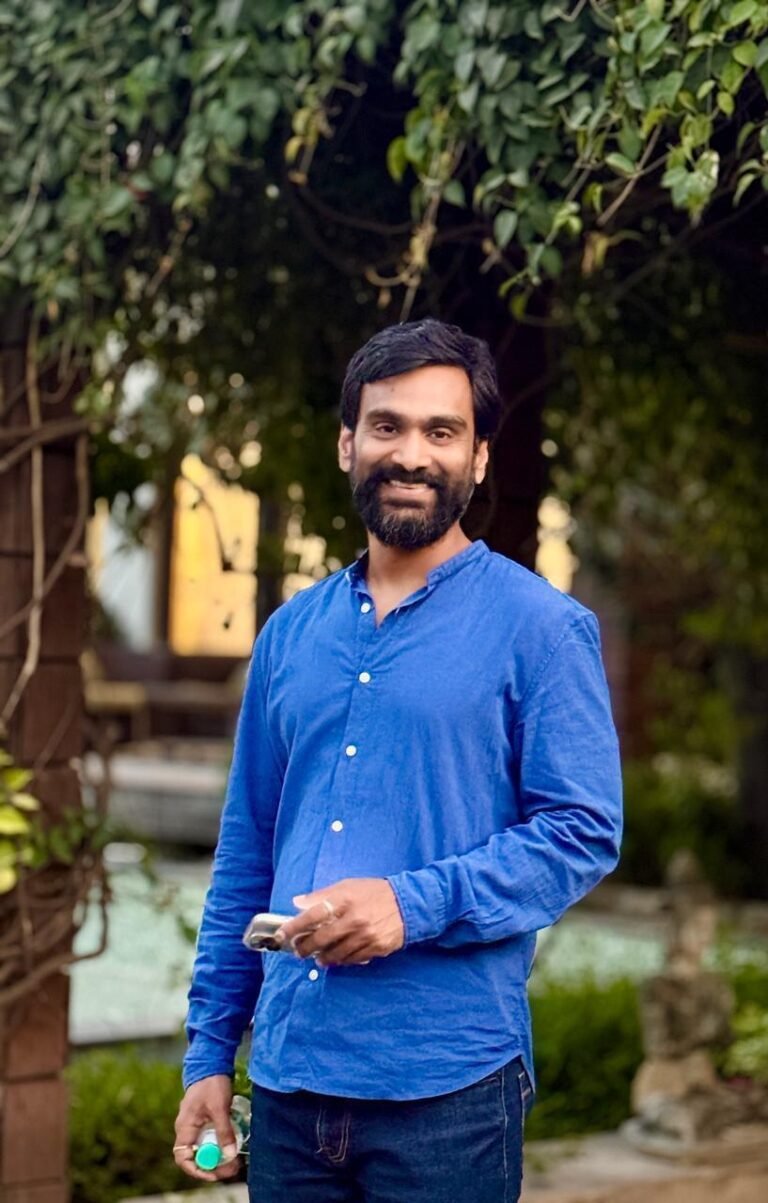
Koyel believes in the power of institutions in building a future that is climate- and nature-friendly and creates shared prosperity. He has devoted most of his career in creating and strengthening institutions and supporting the people who lead them.
This is less advice for freshers and IIFM graduates than a reminder to himself: identify the parts of your work that genuinely excite you, work hard, dream big, and stay open to what comes your way.
LinkedIn: Koyel Mandal | LinkedIn
Location: London, England
Q. Tell us about your current role, how you got there, your learnings, and what advice you would have for those who are seeking similar career trajectory.
A. Hello everyone! It’s a privilege to be able to share my story with you all. Thanks to Rishi’s persistence I am finally putting words to my thoughts.
I currently work as the Global Director of Climate Change at the Children’s Investment Fund Foundation (CIFF). CIFF is a private philanthropy based in the United Kingdom that works on improving the lives of children across the world. Climate being one of the most imminent threats to Children’s lives, we spend a significant share of our Foundation’s resources on tackling climate change. For much of the developing world, addressing climate change is no longer a moral imperative, it is an economic growth, competitiveness, and security issue. In my current role, I work with governments, businesses, and civil society organizations in Emerging Markets and Developing Economies (EMDEs) to accelerate clean and resilient growth.
Shifting economies and societies away from extractive models of growth toward climate- and nature-friendly pathways that create shared prosperity is essential, but far from easy. It requires overcoming deep inertia and resistance. Throughout much of my career, I have worked toward this goal, and my biggest learning has been that strong, capable institutions are critical to making such a future possible. Building credible institutions, especially in EMDEs, takes time, patient capital, and talented people committed to the cause. The most rewarding part of my current role is doing exactly that: creating and strengthening institutions and supporting the people who lead them, some of whom I am proud to say are fellow IIFMights. It gives me immense joy to see these institutions shape policies and markets in ways that create lasting impact.
Looking back, it may be tempting to connect the dots and present my career as carefully planned. In reality, it has been shaped by a series of choices, many of them somewhat random. There are too many to recount, so I will focus on two defining moments—the “forks in the road.” The first was my decision to join IIFM. It introduced me to environment and natural resource management as both an academic discipline and a career path. Beyond the fun and lighter moments on campus, the debates on development models, class assignments, and internships made me question—though I did not fully admit it then—our prevailing growth paradigm and the roles that markets, governments, and societies should play in reshaping it. That curiosity has stayed with me ever since. The second defining moment was my decision to leave my job in the USA and return to India. Like many of my life decisions, it was not carefully thought through. Yet it led me to one of the most interesting organisations, the Institute for Financial Management and Research, at one of the most exciting times—2009—to work on climate and development issues in India. IFMR attracted talent and ideas from around the world and encouraged innovation. Our Director would often say in team meetings that constructive criticism was the only kind of criticism allowed. I had the freedom to design and lead my own research, and I spent more time at IFMR than at any other organization to date. Some of my best work was done there, and that experience has grounded all my subsequent work in academic rigor and policy relevance.
If you are still reading, this should come as no surprise. This is less advice for freshers and IIFM graduates than a reminder to myself: identify the parts of your work that genuinely excite you, work hard, dream big, and stay open to what comes your way. These, I have learned, are among the best ways to build a fulfilling career.
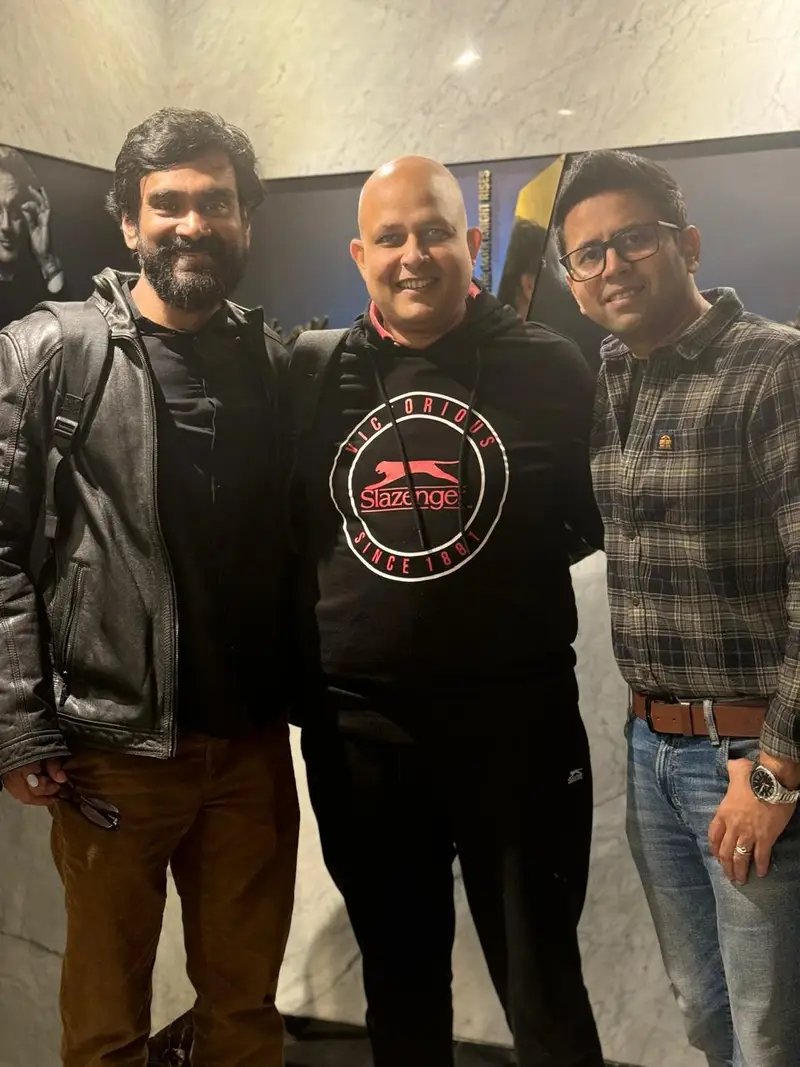
Q. What are your favourite memories from IIFM? Who were your best buddies? And what’s your advice to freshers or those joining IIFM to get the best out of the two years there?
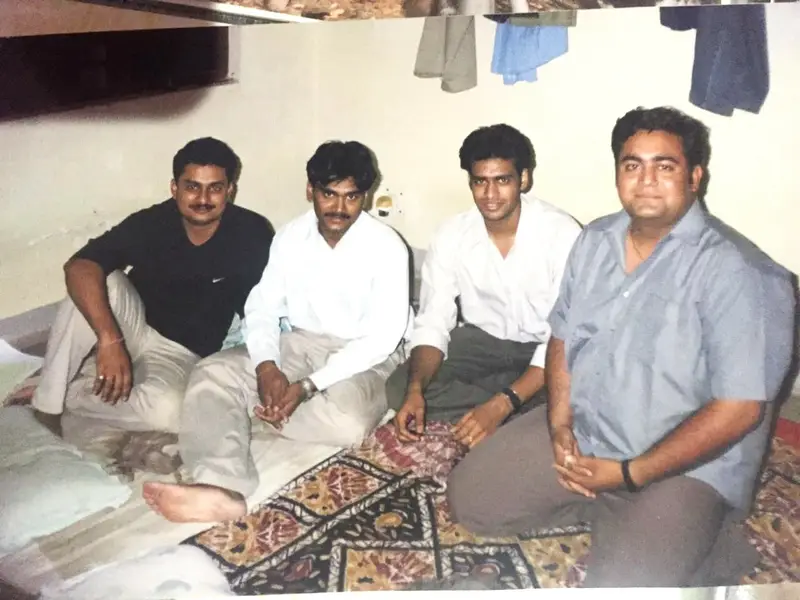
A. This is a tough one, and I am not sure I have a good answer. How do I separate the lousy food in the mess from the heavenly pakodas in the canteen; the endless bamboosa parties from late-night Maggi and coffee; my professor saying, “duniya gol hai, hum sab goalie” (what did that even mean?); “but sir vyyy”; the safest answer always being “Sir, it depends” (how?); missing breakfast every single day (I need that kind of consistency back in my life); and Nishant somehow always being at Mata Mandir whenever you called him (speaking of consistency)? The list goes on. When I look back at those years, it is not the individual memories that stand out, but everything coming together into one inseparable thing called IIFM. It was a feeling, a vibe, and something words can never fully capture. I still remember my last day at IIFM, just before I was leaving for my train. Nishant and Aiyush went up to my room and started throwing my notes, documents, and everything else off the balcony until the entire entrance to the building was covered with them. That is how upset we were that our time there had come to an end.
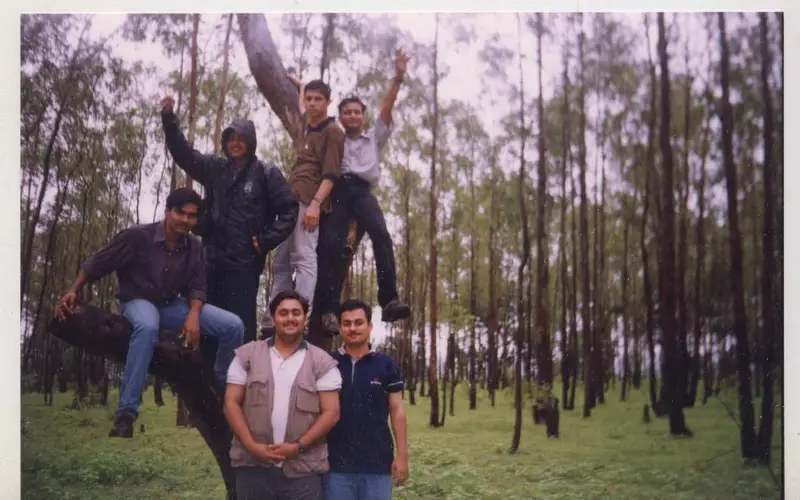
Needless to say, I made friends for life. Like many of you, I had my own gang within the larger one. You already know two of those characters. Shailesh, my roommate, along with Rachit and Aashish completed the gang. We moved in a group, ate in a group, watched movies in a group; in fact, there were only a handful of things we didn’t do in a group (which I’m glad about).
Nishant is no longer with us; he passed away recently after a serious illness. He was, as people say, the life of the party, and we all miss him deeply. His passing is also a reminder of how fragile life can be. If I had to say something to my younger self—and you may have gathered by now that I am not very fond of giving advice—it would be to be kinder and more generous to everyone. IIFM is a professional school, and it is natural for us to compete for grades and jobs. That competition can be healthy, but it is equally important to look out for those who may be struggling or who may not have had the same opportunities.
Q. Tell us more about yourself – your typical day at work, your weekends, favourite books, authors?
A. There are two things I look forward to every day: my morning coffee and my evening run, swim, or gym session. Since I moved to London at the beginning of this year, the quality of both have improved significantly. My morning coffee gives me clarity of thought, the energy to take on the world, and the belief that a better world is possible. That effect lasts for about two hours before it begins to fade—but fortunately, there is usually a run or swim around the corner. And so the day passes, before a new one begins.
The weekend is not too different. Instead of reading articles on geopolitics and energy transition, I might read a fiction. When it comes to books and authors, it’s hard to pick favourites. If you put a gun to my head, I would probably say Haruki Murakami is my favourite author and “Never Let Me Go” (Kazuo Ishiguro) is my favourite book. There’s something about Japanese and Japanese-origin authors that draws me to their writing. In fact, I am typing this on my flight back from Tokyo. I visited some of the places that Murakami writes about in his books and maybe that gave me the inspiration to finally write this after almost two years of pestering by Rishi!
Q. When was the last time you visited IIFM? How would you like to contribute to IIFM?
A. I haven’t been to IIFM in a while. Just writing these answers and going down that memory lane made me nostalgic. The flight attendant must have thought I was crazy smiling at myself. In case my gang is reading this – let’s meet soon guys!
I have done campus recruitments from IIFM in the past. I don’t have that option in my current job, but I am always happy to contribute to IIFM in other ways. Please feel free to reach out in case there’s anything.