
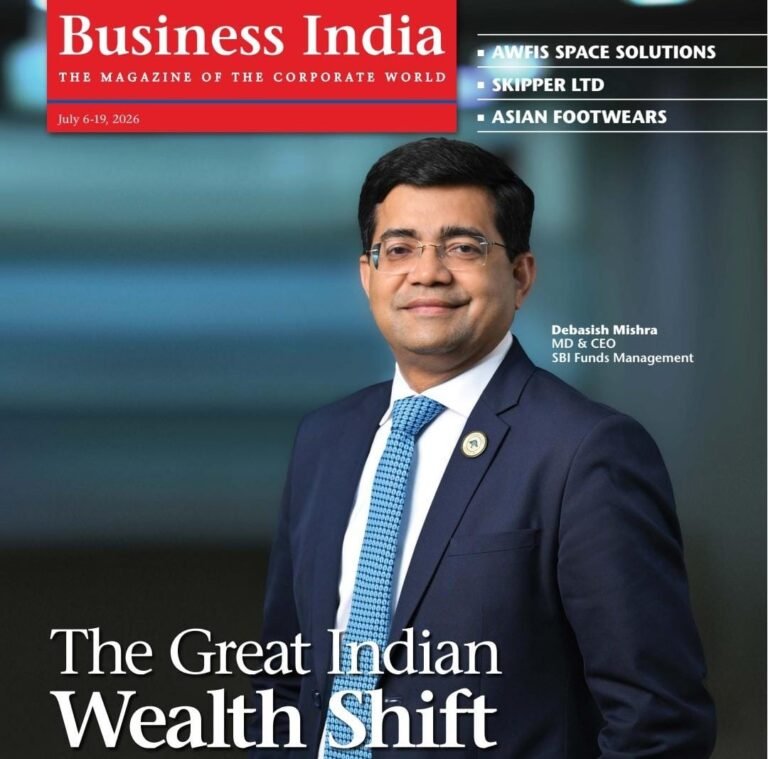
Debasish Sir brings over three decades of leadership experience in banking, business strategy, technology, and financial services. Prior to this appointment as MD & CEO at SBI Mutual Fund, he served as Deputy Managing Director at State Bank of India, where he operated at the director level, contributing to the bank’s strategic leadership and business transformation initiatives.
During his distinguished 16-year tenure at State Bank of India, Debasish Sir held several senior leadership positions. As Chief General Manager, he led the Delhi NCR, Uttarakhand, and Western Uttar Pradesh business, overseeing a portfolio serving 370 million customers, managing an US$82 billion business book, more than 1,600 branches, and a workforce of 17,000 employees. Earlier, as General Manager – Business Solutions, he led business transformation initiatives, while as Deputy General Manager, he headed the MSME business. He also served as Assistant General Manager and earlier as Head – Systems and IT, gaining extensive experience across business operations, technology, digital transformation, and banking leadership.
Debasish Sir is a Chevening Scholar and attended The London School of Economics and Political Science (LSE), where he participated in programs focused on Globalisation and Leadership.
Location: Mumbai
Linkedin:https://www.linkedin.com/in/debasish-mishra-a0256354/
Q. Could you tell us about your school and college life before IIFM, and how you came to join IIFM?
A. My school life was simple. I studied at a school near my native place and received a scholarship that allowed me to stay in the hostel free of cost. I later attended one of the leading colleges in Odisha and completed my B.Tech. at the Odisha University of Agriculture and Technology. During engineering, I became interested in management and began appearing for management entrance examinations. IIFM was on my list because my background in agriculture and technology had made me curious about how environmental and natural-resource management worked in practice. I ultimately chose to pursue the management programme at IIFM.
Q. What have been the major highlights of your professional journey since graduating from IIFM?
A. After IIFM, I joined JK Corp Ltd. through campus placement. Following an orientation in Delhi, I moved to the company’s paper mill at Rayagada. Because I knew the local language, I was assigned responsibilities connected with farm forestry. I travelled across several districts, identified suitable land, met farmers, and explained the economic potential of growing trees on wastelands. I also helped secure a State Bank of India project to finance participating farmers. The role gave me a valuable understanding of the paper-production cycle and its dependence on raw materials from the surrounding catchment area. I spent approximately two years and three months at JK and was doing well there.
While I was at JK, my father informed me that I had received an appointment letter to join State Bank of India as a probationary officer. I had taken the examination while studying at IIFM, but the result was delayed for nearly three years because of a court case concerning the previous batch. I carefully compared the advantages and disadvantages of remaining with JK and joining SBI. Although JK encouraged me to stay and offered a better package and designation, my analysis favoured SBI. I therefore joined SBI in 1995.
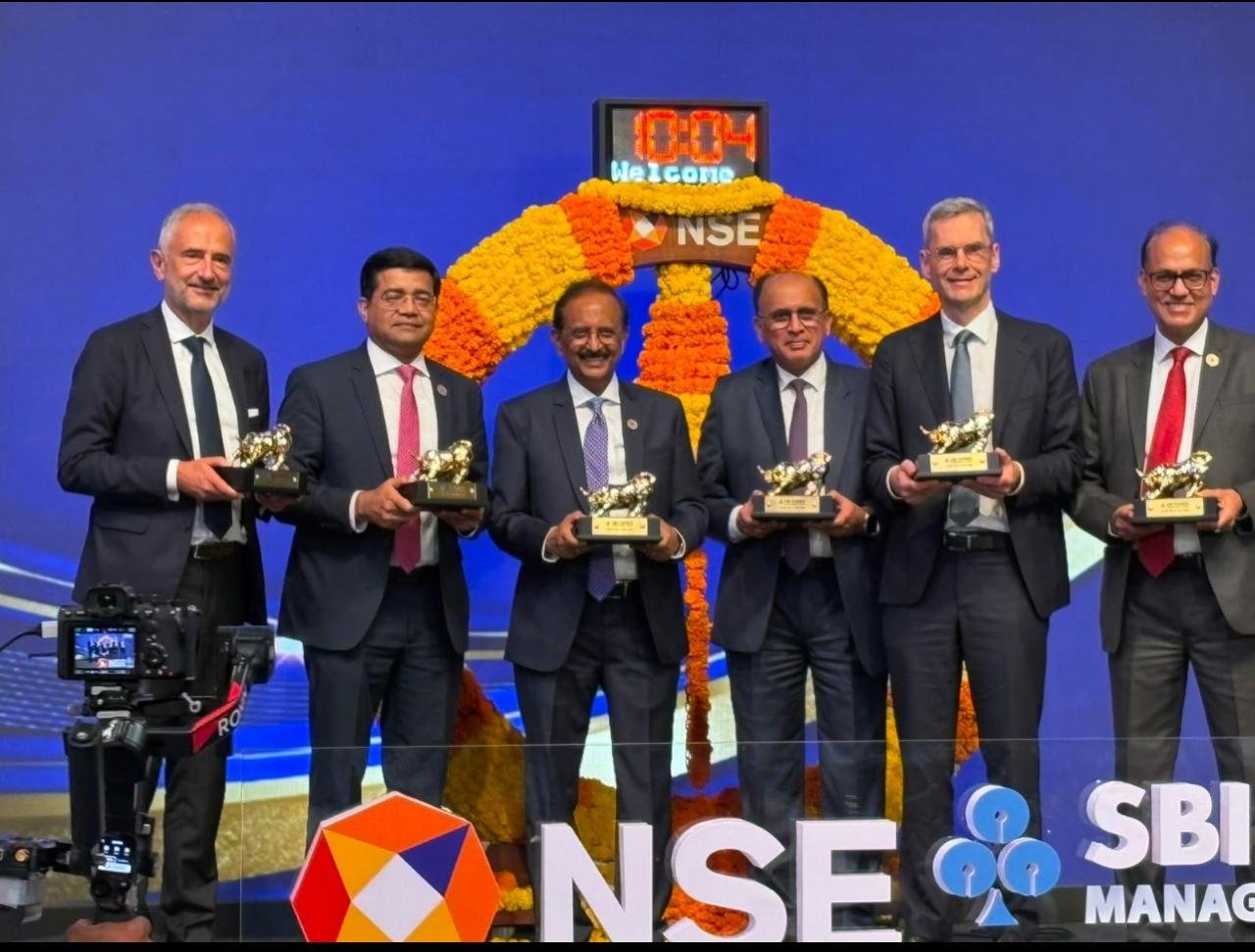
My journey with SBI has been deeply enriching. I have worked across operations, credit, information technology, human resources, SMEs, and high-value credit. This broad exposure prepared me for leadership. I now serve as the Managing Director and CEO of SBI Mutual Fund, which manages one of India’s largest asset portfolios. Looking back, the past three decades have been a continuous learning curve, and my present role is another important stage in that journey.
Q. How do you approach important career and family decisions?
A. I generally make my own career decisions after careful analysis. Decisions concerning the family and children, however, are taken jointly.
Q. What has been the most satisfying part of your career?
A. The most satisfying part has been the combination of continuously learning new things, gaining experience in new areas, and being recognised for my work. SBI has provided all three throughout my career. I became a member of the Chairman’s Club in 2005, received a Chevening Gurukul Fellowship in 2006, and later completed a five-year assignment with SBI’s UK operations in London. The leadership positions entrusted to me have been challenging but highly rewarding. The bank has supported my career, and I have received timely opportunities for advancement.
Q. How did your learning at IIFM shape the way you approach professional roles?
A. IIFM reshaped both my thought process and my mindset. It expanded my ambitions and introduced me to leadership, ownership, motivation, and the management of large teams. It also broadened the way I viewed the world through interactions with diverse classmates and faculty members.
One faculty member once challenged me directly by asking whether I intended to waste my father’s money. The comment affected me deeply and made me realise that I needed to work much harder. Over five semesters, my class position improved steadily—from 18th to 16th, 11th, 5th, 3rd, and finally 2nd. I graduated as the silver medallist of our batch. That experience taught me the value of honest feedback, discipline, and sustained improvement.
Q. What are some of your favourite memories from your IIFM days?
A. One of my favourite memories is what I call participatory reading. A small group of friends would sit together, divide the chapters among themselves, and explain their assigned portions to the others before examinations. We discovered that the method helped us learn and remember one another’s points. I later adapted the same principle as a brainstorming technique at work: when I face a major problem, I invite a small group of team members to explain how they would solve it and note the ideas that emerge.
I also remember our early fascination with computers and computer games. That exposure strengthened my interest in technology, and I later spent around nine years in different roles within the bank’s IT department. Group projects at IIFM also helped me develop ownership and leadership because I often took responsibility for ensuring that the team completed its work.
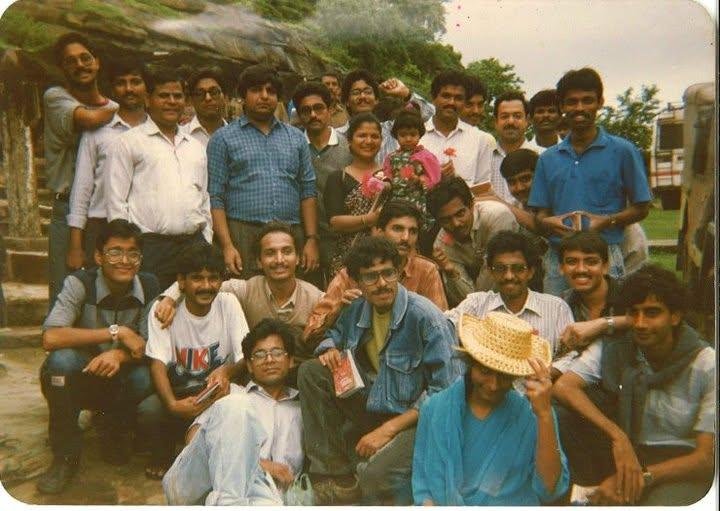
Standing L to R: Nikesh Sinha, Varadarajan (dropped out to join Pondicherry University), Varun Singh, Navin Kapoor, Debashish Mishra (behind Dr. Rekha Singhal), R Narayanaswamy, R Srinivasan (face alone), Mr Singhal, K Ravichandran
Next Row: some random forest officer, random forest officer, Dr. Rekha Singhal, Diksha Singhal, Dr Rajpuri Sunder Singh (bent over), Rajesh Rajagopalan (face alone visible), Ranjit Panda (blue shirt)
Next row (sitting): Sujoy Banerjee, Pravakar Sahoo (dropped out, and now Chief Manager, Indian Bank, at Bhopal), Atul Sirsikar, Ravi Vishwas, Ajith Chandran, Suvendu Pati
Front row (sitting): Atul Srivastava (dropped out to join Excise Dept, in UP), Puneet Budhiraja, Vanita Suneja, Atul Misra
Q. In hindsight, what were the biggest contributions or takeaways from IIFM in shaping you as an individual?
A. There were three major takeaways. First was leadership, developed through group discussions, group projects, internships, and field training. Second was ownership: whenever I received a task, I learned to accept full responsibility and accountability for its execution. Third was etiquette and personal presentation. Over my two years at IIFM, my appearance, communication, and way of presenting myself changed considerably. Much of this learning happened subconsciously through my interactions with friends and faculty, but it was genuinely transformative.
Q. Who were your closest friends, seniors, and faculty members at IIFM? Are there any memorable incidents you would like to share?
A. I was friendly with everyone and did not limit myself to one particular group or society. I naturally spent more time with my roommate and the friends who lived nearby, but I remained close to the entire batch and am always happy to receive a call from any batchmate.
I also remember several faculty members with affection. One particularly memorable incident occurred when a professor showed one of my papers to the class and read a few lines as an example of good writing. Small moments of appreciation like that strengthened my confidence and encouraged my interest in subjects such as emotional intelligence.
Q. What advice would you give freshers so that they can make the best use of their two years at IIFM?
A. I would advise students to focus on four dimensions—the Four Ds: discipline, decision-making, drive, and delivery.
Discipline means developing good habits in study, relationships, and conduct with classmates, seniors, and peers. Decision-making means consciously practising how to assess options, whether choosing a topic, a game, a career path, or a course of action. Drive means motivating yourself toward a goal and steering your career with consistent energy. Delivery means taking responsibility, remaining accountable, presenting work authentically, and completing what was promised on time. People remember those who deliver consistently, and that reliability builds professional credibility.
Q. What does a typical working day look like for you?
A. My office day begins at 9:00 a.m. I usually leave around 8:30 a.m. and return at approximately 7:00 or 7:15 p.m. Much of my time is spent in brainstorming sessions, board meetings, and decision-making meetings. I also reserve between half an hour and an hour for independent thinking—particularly about the future of the company—and for discussions focused on long-term possibilities.
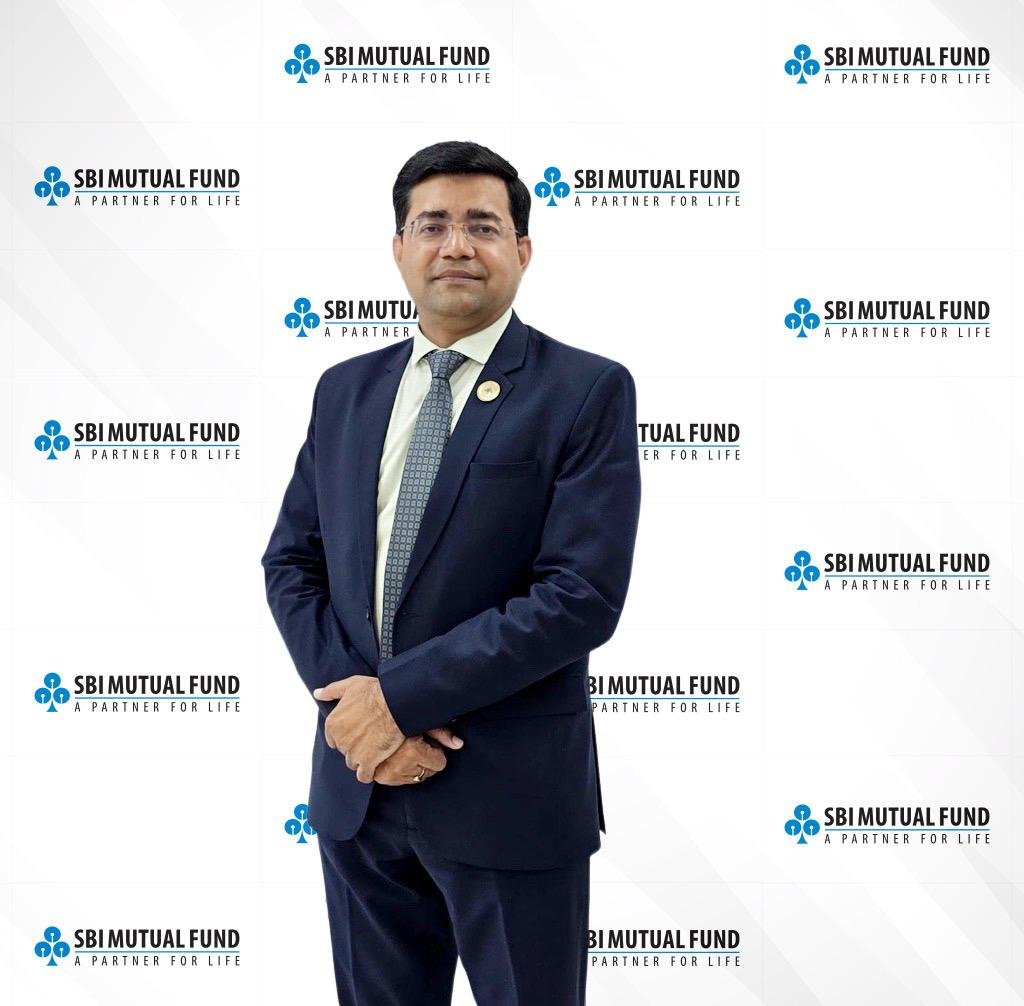
Q. How do you spend your weekends, and what are your hobbies?
A. I spend time with my family. My wife is a homemaker, and we have two children. My elder son studied at BITS Pilani’s Hyderabad campus and joined an AI start-up for an internship; my younger child is in Class 12 and preparing for medical studies now.
Photography is my main hobby. I have owned several cameras, although I now mostly use a high-definition mobile phone. I also enjoy singing, reading, and writing whenever time permits. In addition, I am pursuing an executive PhD programme in finance..
Q. How would you like to contribute to IIFM, its alumni, and its students? Could you support placements or summer internships?
A. I have previously visited IIFM to deliver a lecture to a new batch. Within SBI or my present organisation, we may be able to arrange internships, subject to the applicable guidelines. Direct placement support may be more difficult, but internship opportunities can certainly be explored.
Q. What differences did you notice when you revisited IIFM compared with your student days in 1991–93?
A. The first difference was the number of students. Our batch was very small, whereas the institute now has a much larger student body, which is a positive development. The infrastructure has also improved significantly; the auditorium, in particular, is impressive. I also observed far more engagement among alumni, faculty members, and students, with many people reaching out for different purposes.
Q. If this interview series continues, whom would you recommend for a future profile?
A. I would recommend featuring other accomplished IIFM alumni, including a distinguished member of my batch-Shri Suvendu Pati and a leader associated with the Aavishkaar Foundation– Shri Vineet Rai.