
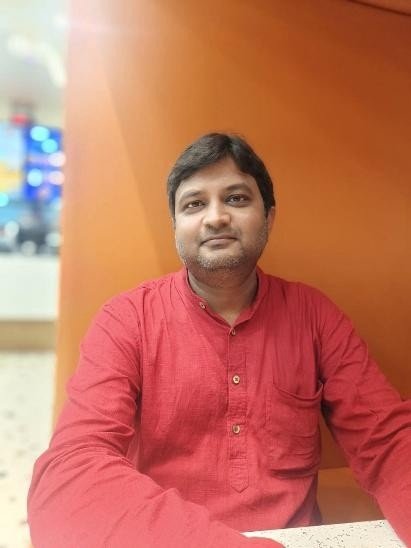
Vikash Anand is a 2011 alumnus who began his career with the Development Support Agency of Gujarat (D-SAG), Tribal Development Department, Government of Gujarat. In this role, he gained hands-on exposure to grassroots monitoring and evaluation, managing projects across tribal welfare initiatives in skill development, agriculture, animal husbandry, and area development. This experience laid a strong foundation in the development sector.
Over the years, and through his transition to EY, Vikash has progressively taken on roles that blend strategic planning, policy formulation, and program implementation, contributing to transformative projects in infrastructure, sustainability, and economic development.
Location: Gandhinagar, Gujarat
Linkedin : Vikash Anand | LinkedIn
Twitter : vikashforanand
Q. Tell us about your School and College before you came to IIFM. How was your experience there? And how did IIFM happen?
A. I completed my schooling from Project Central School, Kiriburu, in Chaibasa district of Jharkhand, nestled in the serene Saranda Forest. Growing up in such a natural setting was a unique experience and played a significant role in shaping my outlook from an early age. After school, I pursued my graduation in Physics (Honours) from Ranchi College.
During my college years, my interest in management education grew, driven by the diverse career opportunities offered by leading B-schools. While exploring institutions, I came across IIFM and was immediately drawn to its distinctive focus on environment and development. Visiting the campus during the Group Discussion and Personal Interview process was a defining moment. The vast, lush green, and exceptionally well-maintained campus, combined with its academic ethos, left a lasting impression. The environment resonated deeply with me, and I knew this was where I wanted to pursue my MBA.
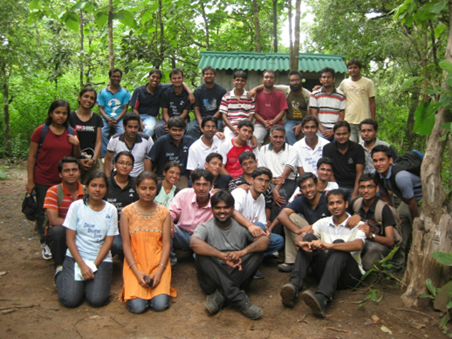
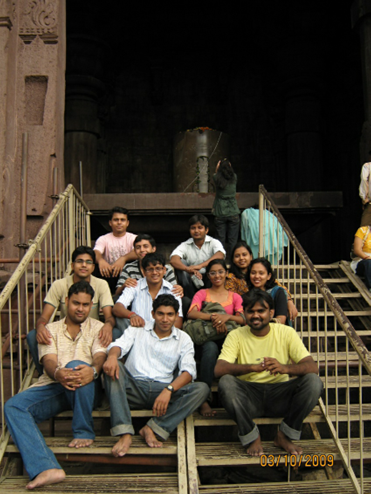
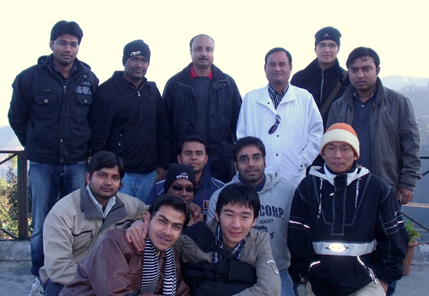
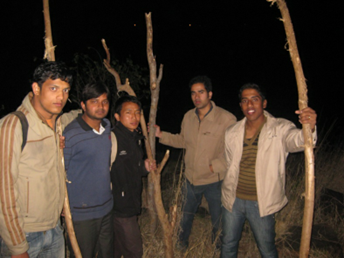
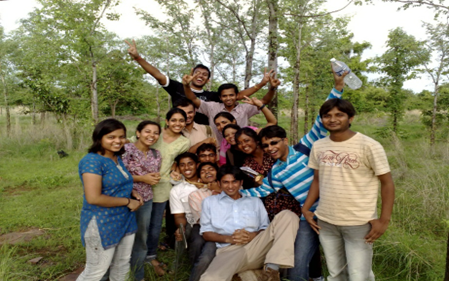
Vikash along with his batchmates.
Whispers of trees, Echoes of dreams.
Q. How has your journey from IIFM been so far?
A. My journey since graduating from IIFM has been both enriching and transformative. The learnings at IIFM played a significant role in building my confidence and shaping my approach to professional challenges. Being part of a batch consisting of people from diverse backgrounds and different parts of the country was deeply enriching. I always felt I was in the company of people destined to achieve great success, and that environment was incredibly motivating.
The faculty were instrumental in shaping this journey. Mentors like Prof. P.K. Biswas, Dr. C.S. Rathore, Captain Anil Khare, Prof. Amitabh Pandey, Prof. Yogesh Dubey, Prof. Manmohan Yadav, and others left a lasting impression. Their guidance went beyond academics, instilling values and perspectives that continue to influence my decisions today.
The interdisciplinary approach and multidisciplinary learning at IIFM equipped me with a unique blend of management, environment, and development insights that have been extremely beneficial in my career.
My professional journey began with the Development Support Agency of Gujarat (D-SAG), under the Tribal Development Department, Government of Gujarat. My first year in Vansda, Navsari district, involved grassroots monitoring and evaluation, providing hands-on exposure to project management across tribal welfare initiatives in skill development, agriculture, animal husbandry, and area development. This experience laid a strong foundation by offering real insights into implementation architecture and on-ground challenges. Subsequently, moving to the head office in Gandhinagar added a new dimension, exposing me to policy-level decision-making and the management of large-scale skill development programs for tribal welfare. There were both ups and downs, but these experiences helped me build resilience and confidence.
I later transitioned to Ernst & Young, where the journey continues through engaging and diverse assignments, ranging from museum development and cultural tourism initiatives to strategic policy advisory, infrastructure planning to policy designing. Each role has added new layers to my understanding of development and governance, and throughout this journey, the foundation laid at IIFM has remained central to my growth.
Q. What were some of the key milestones/learning in this journey that you would like to share with us?
A. One of the earliest milestones in my journey was my field posting in Vansda, where I learned that the success of any development program depends less on intent and more on execution, project design & structure. That phase taught me humility, patience, and the importance of understanding grassroots realities before designing solutions.
Moving from field roles to the state headquarters in Gandhinagar, exposed me to policy formulation, institutional decision-making, and the inherent complexity of scaling programs. During this phase, I gained a deeper understanding of how governance systems function, and why robust project structures, strong institutions, and well-defined processes are essential for achieving sustainable outcomes.
Q. How has been your experience in your current Organization? What all areas have you been working here?
A. My experience at Ernst & Young has been professionally enriching and intellectually stimulating. The organization has provided exposure to complex, high-impact assignments that require strategic thinking, planning, practical implementation and proactive coordination with multiple stakeholders.
My work spans a range of areas including infrastructure planning, strategic policy formulation, governance and institutional reforms, cultural and museum development, and tourism-related initiatives. These assignments involve developing policy frameworks, designing procurement strategies, preparing detailed reports and presentations, and supporting implementation through close coordination with government departments and other stakeholders. A key part of my role also involves assisting in the planning, review, and monitoring of deliverables of implementing agencies to ensure alignment with defined project milestones and timelines.
The diversity of projects has allowed me to apply development-sector insights within a structured consulting environment while continuously learning and adapting.
Q. What is the most satisfying part in your career?
A. The most satisfying part of my career has been the way the initial challenges shaped and strengthened me as a professional and as an individual. The early years were demanding and required sustained effort, patience, and resilience, but they helped build a strong foundation that continues to support me today.
I strongly believe that hard work does pay off, sometimes with a time lag. Staying committed to one’s values, maintaining integrity, and consistently putting in the effort may not yield immediate results, but in the long run, it creates credibility, confidence, and lasting growth.
Q. Has your learning at IIFM helped in shaping how you approach your professional roles?
A. IIFM’s multidisciplinary approach shaped how I analyze problems, always balancing economic, social, environmental, and institutional dimensions. This perspective has been invaluable to me.
Q. Who (or what) are the biggest influences or drivers in your careers? What would be your advice to freshers and IIFM graduates who are looking to choose similar sectors/roles.
A. Long-term thinking has been my biggest driver.
My advice to freshers and IIFM graduates is to avoid chasing short-term things. It can distort the approach and overall thought process. Build depth, understand systems, and be patient.
Q. What are your favorite memories during your IIFM days?
A. Living in the IIFM campus itself is one of my fondest memories, it was like being in the middle of nature, surrounded by greenery and tranquility. The hostel life was vibrant and full of energy, and living in the transit hostel during the first year added its own unique flavor to the experience. Midnight birthday bashes were a tradition.
The cultural events, sports tournaments, adventure activities, and the celebration of all festivals added so much color to campus life. Field visits were equally memorable, they were not just academic exercises but real-life experiences that taught us teamwork, adaptability, and humility.
Q. In hindsight, what was the biggest contribution or take away from IIFM that you think played a critical role in shaping you as an individual or professional?
A. The biggest takeaway from IIFM was the confidence the institute instilled in me, the resilience to navigate challenges, and the ability to appreciate diverse perspectives. These qualities have been instrumental in shaping both my professional journey and personal growth.
Q. The best buddies / seniors /faculty at IIFM? Some memorable tidbits that you like to share?
A. I was fortunate to have wonderful friends in Umesh, Rajesh, Neel, Shivoham, Wapang, Niumai, Abhishek and others, and wonderful faculty members like Prof. P.K. Biswas, Dr. C.S. Rathore, Captain Anil Khare, Prof. Amitabh Pandey, Prof. Yogesh Dubey, Prof. Manmohan Yadav, and others.
Q. As an alumni, what’s your advice to freshers or those are joining IIFM to get best out of the 2 years there?
A. Make the most of these two years. Explore, experiment, and engage deeply—with faculty, peers, alumni, and field realities. Use IIFM not just to build a career, but to shape your worldview.
Explore your interests, experiment with new ideas, and discover what truly excites you. IIFM offers a unique ecosystem to learn, network, and grow, so take full advantage of it. Engage actively with faculty and alumni, participate in diverse activities, and use this time to shape not just your career but your perspective on life.
Q. What was your typical day at the work? And how does it look like while you are on a break?
A. A typical workday usually involves a mix of planning and strategizing, preparing reports and presentations, reading and analyzing data, and reviewing initiatives, coordinating with stakeholders to ensure smooth implementation.
Q. And how about weekends, hobbies, family and anything else you want to add?
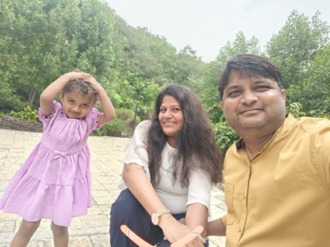
A. Reading books on diverse topics ranging from Public Policy, Economics, Investing to Biographies etc that offers fresh perspectives on public policy, governance, finance and decision making. I also enjoy exploring and learning equity investment strategies and opportunities, which keeps me intellectually engaged and financially informed.
Q. Favorite Books, movies, authors?
A. Economics in One Lesson by Henry Hezlit, In Service of the Republic by Vijay Kelkar and Ajay Shah Republic.
Q. IIFM is driven by alumni’s passion and commitments towards its goal. How would you like to contribute to IIFM or IIFM alumni, students?
A. I am always happy and open to support IIFM, its alumni, and students in any meaningful way that may arise.
Q. What do you think is different at IIFM now vs when you studied there?
A. I think one of the biggest differences at IIFM now compared to when I studied there is the enhanced alumni engagement and the leadership and vision of Director Dr. K. Ravichandran and his passion towards taking the institute to new heights. There seems to be a stronger focus on connecting alumni with current students, creating a vibrant network that benefits the entire IIFM. The institute has also evolved in terms of infrastructure, while retaining its core ethos of sustainability and development-focused education.
Q. Any suggestions on who you want to get profiled/interviewed here?
A. Neel, Rajesh, Umesh, Shivoham, Siddharth, Robin, Abhishek, Wapang, Shyam Chand C, Kuldeep and many others from 2009-11 batch.