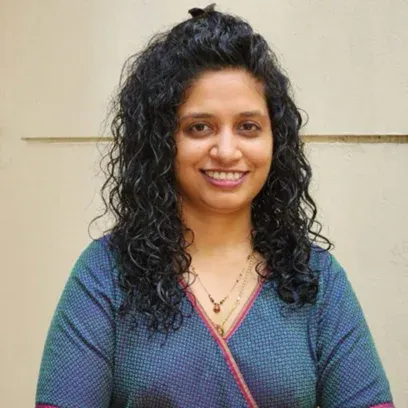
Rupali Patil is the Founder and Group Chief Impact Officer of Global Synergizers Group, an ecosystem of organizations working at the intersection of climate, livelihoods, entrepreneurship and sustainable development. Over the last 17 years, she has worked across research, corporate leadership and entrepreneurship, bringing together governments, corporates, communities and innovators to design solutions that create long-term impact.
An M.Phil. (Natural Resource Management) from the Indian Institute of Forest Management (IIFM), Bhopal, Rupali believes that meaningful change is built through collaboration, curiosity and continuous learning. She has represented India at international platforms, serves as Global Co-Chair of GCPIT and is a Board Member of GCPIT Japan. In 2026, she was selected for the Goldman Sachs 10,000 Women Programme at IIM Lucknow.
Beyond her professional journey, Rupali is a lifelong learner, an ecosystem builder and a proud mother who believes that the most meaningful impact begins by listening, learning and bringing people together.
Location: Bengaluru, Karnataka
Q. Tell us about your College before you came to IIFM. How was your experience there? And how did IIFM happen?
A. Whenever someone asks me about IIFM, I instinctively smile.
It’s difficult to explain, but even today, the word IIFM brings back a feeling of warmth before it brings back memories. It feels less like talking about a college and more like talking about a place that quietly changed the direction of my life.
Before coming to IIFM, I completed my Master’s in Biotechnology from Bangalore University. I enjoyed science and was fascinated by the possibilities it offered. But during my internship, I had a moment of quiet clarity. I realized that while I loved understanding science, I didn’t see myself spending my life inside a laboratory. It wasn’t dissatisfaction; it was simply the realization that my calling lay elsewhere.
During the fourth semester, I found myself asking questions that no textbook could answer. What kind of work would make me excited to wake up every morning? Where do I truly belong?
I didn’t have the answers yet. I only knew one thing with certainty—I wanted to work with people.
That search led me to the Indian Institute of Forest Management.
Looking back today, I often say there is a difference between studying and learning. Before IIFM, I was studying. At IIFM, I truly began learning.
It wasn’t just the curriculum. It was the conversations that continued long after classes ended, the field visits that helped us see development through people’s lives rather than reports, the faculty who encouraged us to question instead of memorize, and friends who came from different parts of the country, each bringing a new perspective. Somewhere in those two years, I didn’t just discover a profession—I discovered myself.
It was also during those years that another quiet thought took root. I knew that someday, perhaps within the next ten years, I wanted to build my own consultancy. I had no business plan, no roadmap, and honestly, no idea what that consultancy would eventually become. But I had found direction. Sometimes, knowing the direction is enough; the destination reveals itself along the way.
Years later, in 2016, I took my first real step towards that dream. Looking back now, I realise that dream wasn’t born in an office or a boardroom—it was born on the IIFM campus.
For me, IIFM was never just a place where I earned a degree. It was where I fell in love—with learning, with people, and with the idea that meaningful change happens when we bring the two together. Everything I have built since then, in one way or another, traces its roots back to those years.
Q. How has been your journey from IIFM so far?
A. When I look back, I don’t see my journey as a series of jobs or designations. I see it as a series of classrooms.
IIFM was the first classroom that helped me discover my purpose. Everything that followed taught me how to bring that purpose to life.
Unlike many of my batchmates, I didn’t sit for campus placements. It wasn’t an easy decision. My parents wanted me to return to Mumbai, and I knew that I needed to balance my aspirations with my responsibilities towards my family. I joined Nielsen, where I spent a year working on research studies. It was a fascinating introduction to understanding people through data, asking the right questions, and making sense of complex information. Looking back, I realise those skills continue to influence how I approach every project even today.
The next turning point came when I joined Hitech Group. Initially, I was part of the team that was setting up the organization’s skill development vertical. It was exciting to build something from the ground up. After a couple of years, I had the opportunity to work directly with the Managing Director’s Office. That phase became my second great classroom after IIFM.
For nearly five and a half years, I had a front-row seat to understanding how businesses are built, how decisions are made, how organizations grow, and perhaps most importantly, how leaders think. It was an education no textbook could have offered, and I remain deeply grateful for that experience.
All this while, a quiet dream stayed with me. During my time at IIFM, I had promised myself that within ten years, I would build my own consultancy. I didn’t know what shape it would take, but I consciously chose every opportunity that would prepare me for that journey. Every role became less about the designation and more about the learning it offered.
In 2016, I took my first entrepreneurial step by co-founding a consulting firm. The business did well from the very beginning, but within a year, my co-founder and I realized that our values and long-term aspirations were not aligned. It wasn’t an easy decision, but we chose to part ways respectfully rather than continue building something that didn’t feel right. Looking back, I see that decision not as a failure, but as one of the most important lessons in courage and integrity. Sometimes, walking away from something good creates the space for something better.
That space eventually became Global Synergizers.
I started it as a proprietorship in 2018, working entirely on my own. There were no grand announcements or big teams—just a belief that meaningful impact is created when people and institutions work together rather than in silos. Slowly, interns joined. Then came our first full-time employee. Every new person brought fresh energy, ideas, and possibilities.
Another beautiful chapter unfolded around the same time. I had met my future co-founder through LinkedIn. What started as occasional conversations gradually grew into a friendship built on mutual respect and a shared curiosity to solve problems. For years, we simply helped each other think. When the time felt right, I invited him to join the journey. He first became a sounding board, then a collaborator, and eventually my co-founder. Looking back, that journey reminds me that some of the strongest professional partnerships are built on trust long before they are built on business.
In 2020, I also became a mother. My son is undoubtedly the greatest joy of my life. Motherhood has taught me lessons that no leadership programme ever could—it has made me more patient, more present, and constantly reminded me that success means little unless it can be shared with the people who matter most.
In 2024, Global Synergizers took another significant step. What began as a one-person consultancy evolved into Global Synergizers Group, with multiple purpose-driven organisations working across sustainability, entrepreneurship, climate action, food systems, and impact advisory. Sometimes people ask me if this growth was always part of the plan. The honest answer is no.
The dream was never to build multiple companies.
The dream was always to keep learning, keep serving, and keep building institutions that outlast individuals.
Everything else has simply been a consequence of that journey. And if I trace that journey back to where it truly began, I always find myself walking through the gates of IIFM once again.
Q. What were some of the key milestones/learning in this journey that you would like to share with us?
A. When I look back, I realise that every milestone opened a new chapter of learning. Some came through opportunities, some through difficult decisions, and some through unexpected moments in life.
2007–08 | Indian Institute of Forest Management (IIFM)
My year at IIFM laid the foundation for everything that followed. Being awarded a scholarship and graduating as a Silver Medallist were certainly proud moments, but what I value even more is that this was the year I discovered my purpose. I left IIFM with far more than an M.Phil. degree—I left with a direction for life.
2010 | Nielsen
My first professional role introduced me to the discipline of research, evidence-based decision-making, and understanding people through data. It gave me a strong analytical foundation that continues to influence my work today.
2011–2016 | Hitech Group
Joining Hitech Group became one of the defining chapters of my career. I was fortunate to work on establishing the organization’s Skill Development vertical before moving to the Managing Director’s Office. My responsibilities expanded to include senior management relationships, mergers and acquisitions (M&A), and Personal Social Responsibility (PSR) initiatives. More importantly, I had the privilege of learning closely from business leaders and understanding how organizations are built from the inside. I have worked in all departments briefly except accounts. Since it was a plastic manufacturing organization, I also spent time on the shop floor to understand the business because I believed that before asking difficult questions, I had to understand the realities of the business myself. Was part of the Change management team, which was an excellent learning experience.
June 2016 | Co-founded Alstonia
This was my first entrepreneurial venture. Although the partnership eventually came to an end because our long-term vision and values differed, it reinforced an important lesson—that choosing the right people and shared purpose is more important than pursuing growth at any cost. We were finalists of the eBay Foundation Pitch competition program.
January 2018 | Founded Global Synergizers
I started Global Synergizers as a one-person consultancy with a simple belief that meaningful impact is created through collaboration. Looking back today, it is humbling to see how that small beginning has grown into a larger ecosystem of organizations and partnerships.
September 2020 | Becoming a Mother
The birth of my son, Rudransh, changed my perspective on leadership and life. He has been my greatest joy and a constant reminder that while we build organizations for today, we are ultimately building a better future for the next generation.
June 2024 | Global Synergizers Group
What began as a proprietorship evolved into Global Synergizers Group, bringing together multiple purpose-driven organisations working across sustainability, entrepreneurship, climate action, food systems, and impact advisory. This transformation reflected not just organisational growth, but the power of building with the right people.
2025–2026 | Representing Indian impact ecosystems globally
The past two years have brought opportunities that I cherish deeply. Moderating a panel at the AfriLabs Annual Gathering in Nairobi, speaking at a European forum on women in agriculture in Brussels, being elected as Global Co-Chair of GCPIT, joining the Board of GCPIT Japan, and being selected for the Goldman Sachs 10,000 Women programme at IIM Lucknow have all been meaningful recognitions. More than personal achievements, I see them as opportunities to represent the work being done by Indian entrepreneurs and the development sector on global platforms.
Looking back, every milestone has reinforced one belief: success is rarely the result of one defining moment. It is built through hundreds of small decisions, continuous learning, and the people who choose to walk alongside you. I feel incredibly grateful to everyone who has been part of this journey.
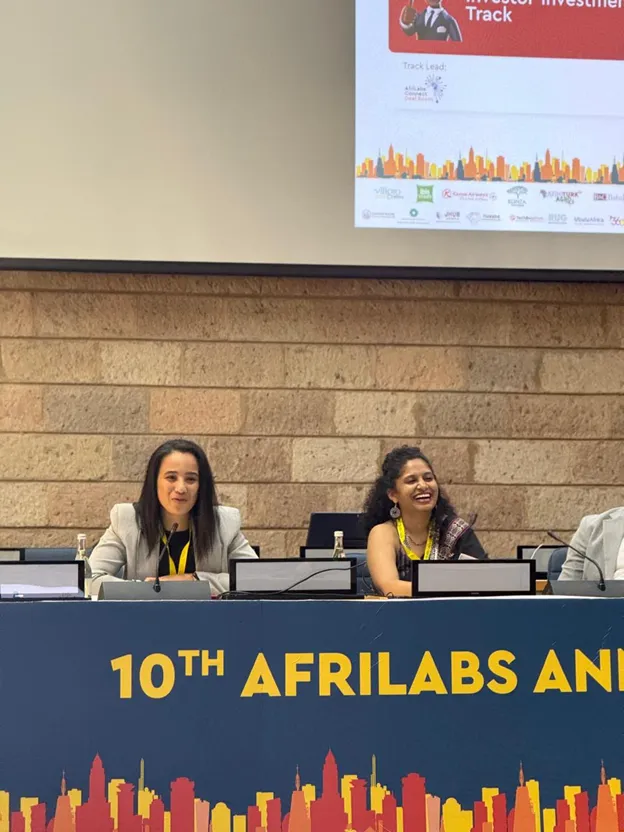
10th Afrilabs Annual Gathering at UNON Office, Nairobi
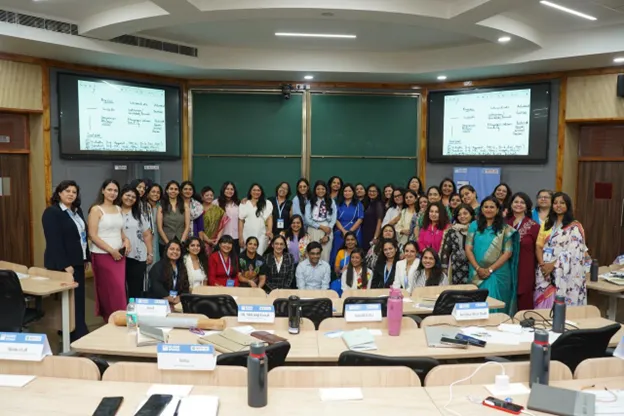
Goldman Sachs 10K Women program, IIM Lucknow
Q. How has been your experience in your current Organization? What all areas have you been working here?
A. One of the things I enjoy most about my current role is that no two days are ever the same—and I hope they never are.
Today, through Global Synergizers Group, I have the privilege of working across multiple organisations that are united by a common purpose: building systems that create meaningful and lasting impact. Our work spans sustainability, climate action, entrepreneurship, agriculture, livelihoods, CSR, impact advisory, and market systems. While these may appear to be different sectors, I have always believed that the most meaningful solutions emerge when we connect them rather than work within silos.
As the Founder and Group Chief Impact Officer, my role is to ensure that the organization continues to move in the right direction. A large part of my time is spent on strategy, nurturing partnerships, mentoring our leadership team, exploring new opportunities, and strengthening the organizational culture that we are consciously trying to build. At this stage of our journey, I also oversee the financial management of the Group, which has given me a much deeper appreciation of the balance between purpose and sustainability.
Even today, I consciously stay close to the ground. I spend time visiting the geographies where our programes are implemented, interacting with Self-Help Groups, Farmer Producer Organizations, entrepreneurs, government officials and implementation teams. While our COO now leads much of the relationship management and execution, I believe these field visits help me stay connected to the realities that should shape our decisions.
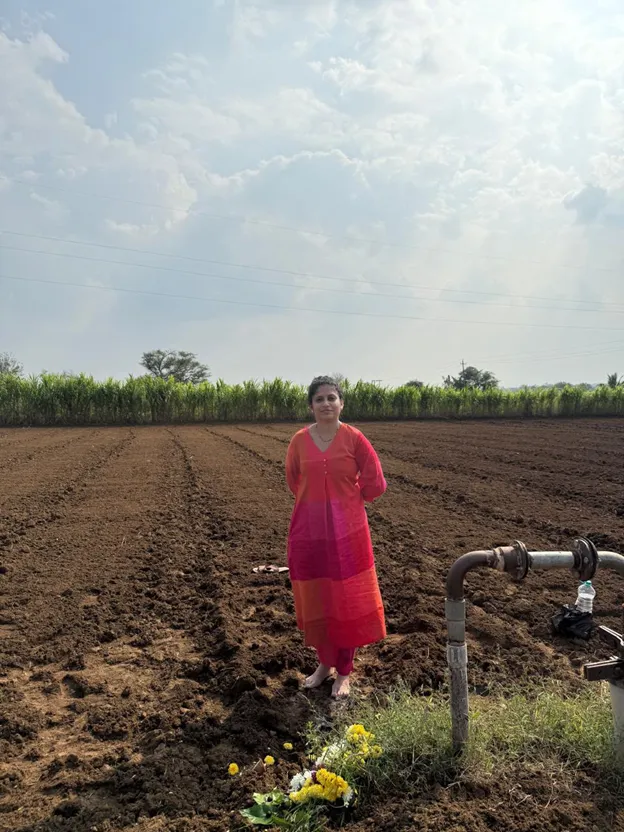
Field visits are valuable
Designing programmes around climate resilience, livelihoods and entrepreneurship continues to be one of the most fulfilling parts of my work. I also dedicate about a week every month to mentoring entrepreneurs, because I genuinely enjoy helping founders think through challenges, refine ideas and build stronger organizations.
Increasingly, my work also extends beyond India. Through GCPIT and other global engagements, I have had the opportunity to interact with entrepreneurs, ecosystem builders and thought leaders from across the world. Whether I am participating in international forums or representing Indian organizations on global platforms, I see these opportunities not merely as professional milestones but as a chance to build meaningful collaborations and bring global perspectives back into our work.
What keeps me excited is that every engagement teaches me something new. Whether I am sitting in a village meeting, a government office, a corporate boardroom or an international conference, I find myself asking the same questions: How do we build trust? How do we create institutions that outlast projects? And how do we ensure that the impact we create continues long after we have left?
People sometimes ask me which industry I work in, and I usually smile because I genuinely don’t know how to answer that in a single word.
I don’t think we work in one sector.
I believe we work at the intersection of people, purpose, partnerships and possibility.
And that intersection continues to inspire me every single day.
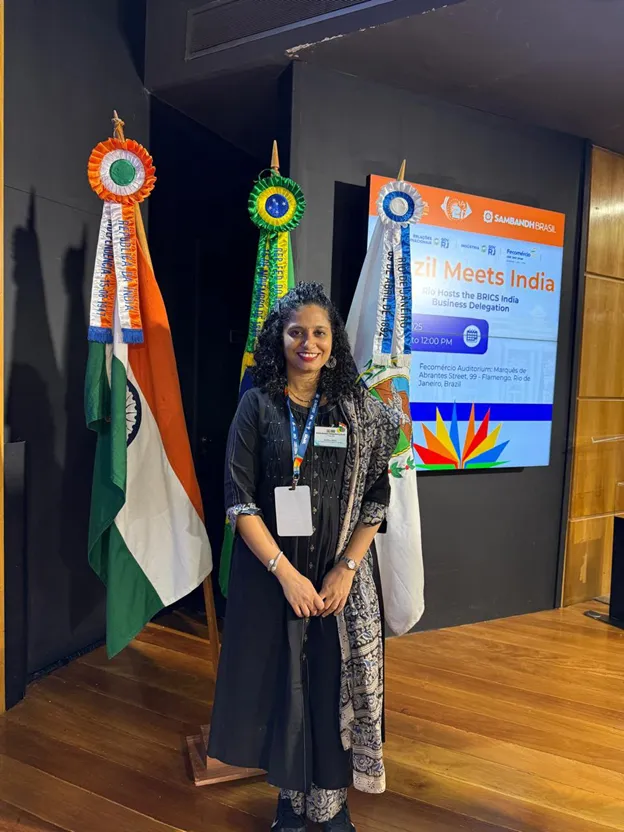
@BRICS Business Forum in Brazil, 2025
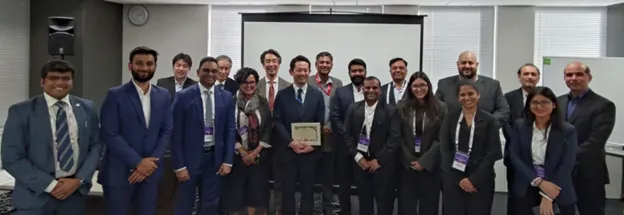
Business Delegation representing India for the Joint Crediting Mechanism (JCM) in Tokyo, Japan with FICCI & A6IP/IGES
Q. What is the most satisfying part in your career?
A. If you had asked me this question ten years ago, my answer would probably have been very different.
Today, the most satisfying part of my career isn’t launching a new initiative, signing a partnership, or seeing an organization grow. Those moments certainly bring happiness, but they are not the ones that stay with me.
What stays with me are people.
One of those people is Aadrika. She joined us as an intern in 2021 and, after completing her Master’s, became part of the Founder’s Office. Over the years, I have had the privilege of watching her grow—not just in capability, but in confidence and ownership. Today, as she prepares for the next phase of her journey, I feel a sense of pride that is difficult to describe. Leaders often talk about building organizations, but I believe one of the greatest privileges is helping people discover their own potential, even if their journey eventually takes them beyond your organization.
I experience a similar feeling when I see entrepreneurs succeed. One of our earliest investments was in an LGBTQ+ startup. Watching the founders navigate challenges, grow steadily, and stay committed to their purpose has been deeply fulfilling. It reminds me that impact investing isn’t just about capital; it’s about believing in people before the rest of the world does.
Through Shuddha Space, we now work with more than 1,000 Farmer Producer Organizations across 16 states. The journey has not always been smooth. There have been moments of uncertainty, difficult decisions, and phases where creating sustainable impact felt much harder than we had imagined. But when we see an FPO access better markets, build stronger businesses, and become more confident in its future, those challenges suddenly feel worthwhile.
Over the years, I have come to believe that organizations don’t create impact—people do. Organizations simply create an environment where people can learn, grow, and achieve more than they thought possible.
That is why mentoring has become one of the most meaningful parts of my work. Whether I am working with my team, entrepreneurs, students, or young professionals, I genuinely enjoy asking questions, listening carefully, and helping people think differently. In many ways, I realize I am simply passing forward what my teachers and mentors once gave me.
Another source of satisfaction is seeing ideas grow into institutions. Many of our initiatives begin as simple conversations over a cup of tea or scribbles on a notepad. Watching those conversations gradually evolve into organizations, programes, partnerships, and ecosystems that continue creating value long after they begin is incredibly fulfilling.
If there is one thing my journey has taught me, it is that success becomes meaningful only when it creates opportunities for someone else.
Perhaps that is why I still look forward to Monday mornings. Every week brings new people, new questions, and another opportunity to learn while helping someone else move one step forward.
Q. Has your learning at IIFM helped in shaping how you approach your professional roles?
A. Without a doubt, yes.
But perhaps not in the way most people would expect.
When I joined IIFM, I thought I was coming to study Natural Resource Management. What I actually learnt was how to think.
IIFM taught me that every problem has multiple dimensions. A challenge is rarely only about technology, policy, finance or communities. More often than not, it is about how all these pieces interact with one another. That systems perspective has stayed with me throughout my career and continues to influence every decision I make.
Whether we are designing a climate resilience programe, strengthening Farmer Producer Organizations, building entrepreneurship ecosystems, advising CSR initiatives or developing market linkages, I find myself asking the same question: What is the system behind this problem? That habit of looking beyond the obvious is something I carry with me from my days at IIFM.
Equally important was the exposure to people. IIFM brought together students from diverse academic backgrounds, experiences and parts of the country. The classroom discussions, field visits and informal conversations challenged many of my assumptions. They taught me to listen before forming an opinion and to appreciate that there are often multiple ways of looking at the same issue.
Our professors also played a significant role in shaping my thinking. Prof. HS Gupta’s warmth and encouragement made his office feel like a place where every question was welcome. Prof. M.M.Y.’s detailed feedback taught me that good work can always become better with thoughtful reflection. I still remember Prof. C.V.R.S. asking me why I had scored 39 out of 40 instead of a full 40. At the time, it felt like a simple question; today I realize he was teaching us not to become complacent and to always strive for excellence.
One thing I particularly cherish even today is the IIFM alumni community. Every Sunday, I look forward to reading the alumni stories that are shared in IIFMIGHT series. Whenever I read about someone’s journey or see an alumnus doing remarkable work on LinkedIn, I don’t just celebrate their success—I find myself wondering what they did differently, what they learnt, and what I can learn from them. In many ways, IIFM never stopped being a classroom; it simply expanded into a lifelong community of learners.
Looking back, I don’t think IIFM prepared me for a specific job.
It prepared me for a way of life.
A way of staying curious, asking better questions, respecting different perspectives, and remembering that meaningful development is never created in isolation—it is always built through people, partnerships and patience.
Even today, whenever I find myself facing a complex decision, I realize I am still drawing upon lessons that began in those classrooms, on those field visits and in countless conversations across the IIFM campus.
Perhaps that is the greatest gift my alma mater gave me. It didn’t just educate me for a career; it gave me a way of thinking that continues to evolve with every experience, every conversation, and every fellow IIFM alumnus whose journey inspires me to keep learning.
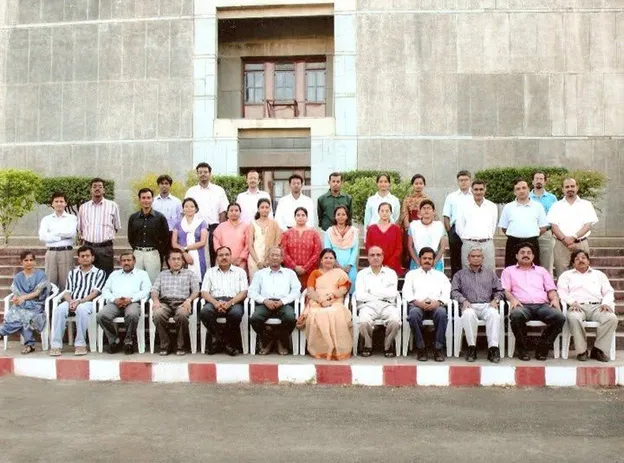
Our batch (MRM 2007-08) with Professors
Q. Who (or what) are the biggest influences or drivers in your careers? What would be your advice to freshers and IIFM graduates who are looking to choose similar sectors/roles.
A. Looking back, I realize that I have been incredibly fortunate to have different mentors at different stages of my life. Each of them shaped a different aspect of who I am today.
The strongest influence in my life has always been my father. He taught me values that no classroom could ever teach—integrity, resilience, humility and, above all, the courage to take risks. When I decided not to follow a conventional career path and eventually started my own venture, it never felt like an impossible decision because I had grown up believing that failure is only a stepping stone to learning.
IIFM shaped the way I think. My professors encouraged us to question assumptions, look beyond the obvious and understand the interconnectedness of social, environmental and economic systems. Those lessons continue to guide every programme I design and every strategic decision I make.
My corporate journey at Hitech Group introduced me to another extraordinary mentor—Mr. Malav Dani, Managing Director of the Hitech Group. Working closely with him gave me a front-row seat to how businesses are built, how leaders make difficult decisions, and how relationships are nurtured over the long term. Even today, there are moments when I hear myself speaking to my own team and realise that the way I frame a problem or communicate a decision resembles him. I smile when that happens because I know some of his leadership has quietly become a part of mine.
When I was at a crossroads, contemplating whether I should leave the comfort of a corporate career and start on my own, I met Dr. Niru Salvi, who was then leading SOSVA. At a time when I was questioning myself more than anyone else, she gave me confidence. She helped me believe that my ideas had value and that I was capable of building something meaningful. Sometimes, one conversation at the right time can change the direction of an entire career, and for me, she was one of those people.
A few years later, while I was advising corporates on their CSR strategies, I had the opportunity to work closely with Ms. Krantipriya Mitra. What I admire most about her is her wisdom and her remarkable ability to articulate complex ideas with clarity and conviction. Watching her engage with corporate leaders taught me that expertise alone is not enough—you must also be able to communicate your thoughts in a way that inspires confidence and action. She encouraged me to think bigger, carry myself with confidence, and trust the value of my own voice.
If there is one piece of advice I would give to freshers and fellow IIFM graduates, it is this: invest in people before you invest in positions.
Look for mentors whose values you admire, not just whose titles impress you. Learn from people who challenge your thinking, encourage you to take on responsibilities beyond your comfort zone, and believe in your potential even before you fully believe in yourself.
At the same time, remember that mentors will guide you, but they cannot walk the journey for you. Stay curious, spend time on the ground, keep asking questions, and never stop learning. Careers are rarely built in straight lines, and that is perfectly okay. Every experience, every mentor and every challenge adds another layer to the person you eventually become.
As I look back today, I realise that my greatest privilege has not been the opportunities I received—it has been the people who shaped me along the way. If I can do the same for even a handful of young professionals and entrepreneurs in the years ahead, I would consider that one of my greatest achievements.
Q. What are your favorite memories during your IIFM days?
A. This is probably the easiest question in the entire interview—and also the most difficult!!
Easy because I have countless memories.
Difficult because choosing just a few feels almost impossible.
When I think of IIFM, I don’t immediately think of classrooms or examinations. I think of people, laughter, long conversations and a campus that slowly became home.
I still remember our field visits, travelling together in the Tempo Traveller, singing, laughing, discussing assignments and sometimes simply enjoying the journey more than the destination. On more adventurous days, some of us even climbed onto the roof of the vehicle, convinced that the view was better from there. Looking back, I wonder how our professors tolerated us!
Then there were our little adventures around campus. Climbing over the wall to reach the marshland, taking long walks that started as casual conversations but somehow turned into discussions about life, careers and dreams—those moments built friendships that have lasted far beyond our time at IIFM.
Being part of the Mess Committee also has a special place in my memories. I still smile when I think about helping prepare masala milk for everyone. It may sound like a small thing, but it was one of those experiences that brought all of us together beyond academics.
The festivals made campus life even more memorable. Navratri celebrations, hostel life, late-night conversations, endless laughter and simply being surrounded by friends made IIFM feel less like an institute and more like a family.
And then there are the people.
Shweta, Rimjhim, Debo, Nipun, Devendra, Samata, Taib, Rohit, Rohan and so many others who became an inseparable part of my IIFM memories. Even today, whenever we reconnect, it never feels like years have passed. We simply pick up the conversation where we left it.
Looking back, I realize that while IIFM gave me an education, it also gave me friendships, stories and memories that continue to bring a smile to my face.
Whenever someone asks me about my time at IIFM, these are the moments I remember first.
Not the grades.
Not the assignments.
Just a beautiful year spent with wonderful people.
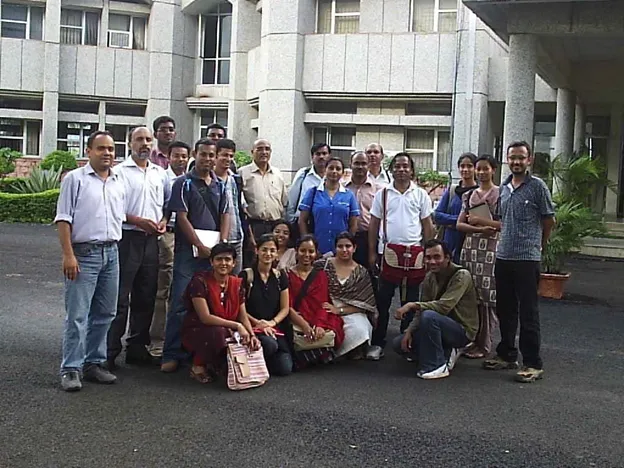
Soil Institute Field Trip
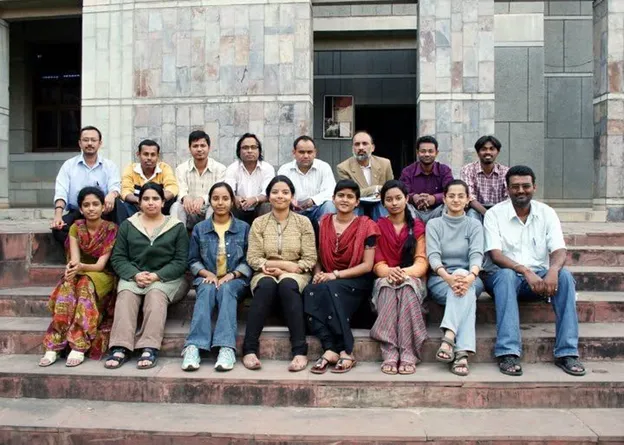
MRM 07-08 batch professional picture
Q. In hindsight, what was the biggest contribution. or take away from IIFM that you think played a critical role in shaping you as an individual or professional?
A. If I had to choose just one contribution of IIFM, it would be this—it completely changed the way I understood the world.
I was born and brought up in Mumbai. While I had experienced village life during family visits, I had never really understood rural India through the lens of development. Coming to IIFM introduced me to an entirely different world. Through rural development, forestry, field visits and discussions, I began to understand the realities, complexities and strengths of communities that I had never truly appreciated before.
Looking back, I often feel that it wasn’t just a subject I was studying.
It was a world that was calling me.
And somewhere during that one year, I realized that this was the world I wanted to be part of.
Another important contribution was the people around me. Many of my classmates came from forestry, environment and natural resource backgrounds. They thought differently, questioned differently and viewed development through perspectives that were completely new to me. Our conversations—both inside and outside the classroom—constantly challenged my assumptions and expanded my thinking. I learnt as much from my peers as I did from my coursework.
Our professors played an equally important role. Prof. Gupta’s office was always a welcoming space, and our conversations over tea and biscuits are memories I still cherish. Prof. M.M.Y. pushed me to think deeper. Prof. C.V.R.S., in his own unique way, reminded us never to become complacent, he encouraged us to always strive for excellence.
And then there was the campus itself. The library, the long walks, the field visits, the friendships, and countless conversations all became part of the learning experience. IIFM never made learning feel limited to the classroom. Learning happened everywhere.
Today, when I look at my work, I can still trace so much of it back to IIFM. Whether it is designing programes for rural communities, working with Farmer Producer Organizations, building entrepreneurship ecosystems, or bringing together governments, corporates and communities, the foundation was laid during that one year.
People often ask me why I have stayed in the development sector for so long.
I think the answer is simple.
I didn’t choose this sector.
Somewhere during my time at IIFM, this sector chose me.
Q. The best buddies / seniors /faculty at IIFM? Some memorable tidbits that you like to share?
A. This question brings a smile to my face because it reminds me how fortunate I was to be part of a batch of just around twenty students. We spent so much time together that, in many ways, everyone became part of each other’s journey.
If I had to begin with one person, it would be Shweta Dua. She has been my heart-and-soul friend ever since IIFM. She is one of the most compassionate, grounded and kind-hearted people I have ever met. Ours is the kind of friendship where years may pass between conversations, but nothing really changes.
My roommate, Rimjhim, was another blessing. Calm, thoughtful and wise beyond her years, she always had a way of bringing balance to every situation. Living together taught me that friendships are often built in the smallest everyday moments rather than the big occasions.
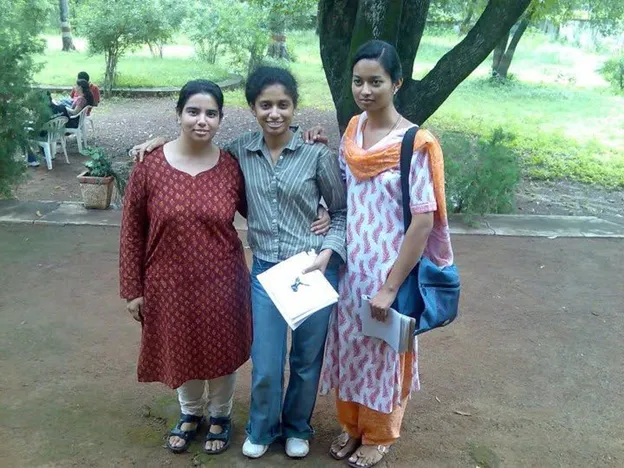
Shweta Dua on my left and Rimjhim on my right
Then there were Kamla, Debo, Nipun, Devendra, Samata, Taib, Sushrut and so many others who made every day memorable. From the PFM batch, I also shared wonderful camaraderie with Rohit Modh, Rohan, Lakshya and many others. Looking back today, I realise how lucky we were to have such a close-knit community where everyone genuinely celebrated each other’s successes. Every time we reconnect, it simply feels as though time has stood still.
Among the faculty, Prof. H. S. Gupta will always hold a very special place in my heart. His office was never intimidating; it was welcoming. Many of my conversations with him happened over a cup of tea and biscuits, and I often felt like I was talking to my father rather than a professor. He had an incredible ability to make every student feel heard, encouraged and capable of achieving more.
Prof. Manmohan Yadav challenged me in a completely different way. His detailed feedback taught me that good work deserves thought, rigour and reflection. That habit of not settling for the first draft has stayed with me throughout my professional life. What has stayed with me even more, however, is the relationship beyond the classroom. When he moved to Bengaluru, he took the time to call me personally and let me know. It was such a simple gesture, but one that meant a lot. I am still guilty of not having met him despite promising myself that I would. Yet, that one phone call instantly took me back to being a student again. It reminded me that some teacher-student relationships never really end.
Then there was Prof. C.V.R.S. Vijaya Kumar. In his class, I was like a competitive child who always wanted to solve the equations first. He understood that spirit and encouraged it. I still remember one examination where I had lost just one or two marks. Instead of simply telling me the score, he asked me to meet him and patiently explained where I had gone wrong. Looking back, I realize it was never about the marks. He was teaching me to pursue excellence while remaining open to learning.
I would also like to mention Prof. Biswas, who was also our hostel warden and stayed on campus in those days. He was always approachable, and students never hesitated to reach out to him. Even today, years later, I occasionally meet him at conferences. What amazes me is that he still remembers us. There is never a need to introduce myself. He remembers our names, asks about our lives with genuine warmth, and speaks to us exactly the way he did back then. It is a small gesture, but one that reflects the kind of lasting relationships IIFM has always nurtured.
If I had to choose one memory that captures the spirit of IIFM, it would probably be serving on the Mess Committee. It sounds simple, but trying to create a menu that kept around 120 students happy was one of the toughest management lessons I have ever learnt! Helping in the kitchen, making masala milk, and sharing those everyday responsibilities made campus life feel less like a hostel and more like a family.
Whenever people ask me what I remember most about IIFM, I rarely begin with the curriculum.
I begin with the people.
Because long after you leave a campus, it is the people who continue to make you feel that you still belong there.
And for that, I will always remain grateful.
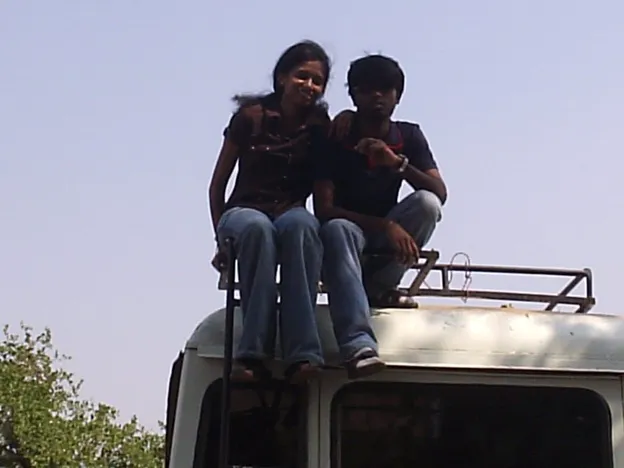
Field study, Nipun and Me
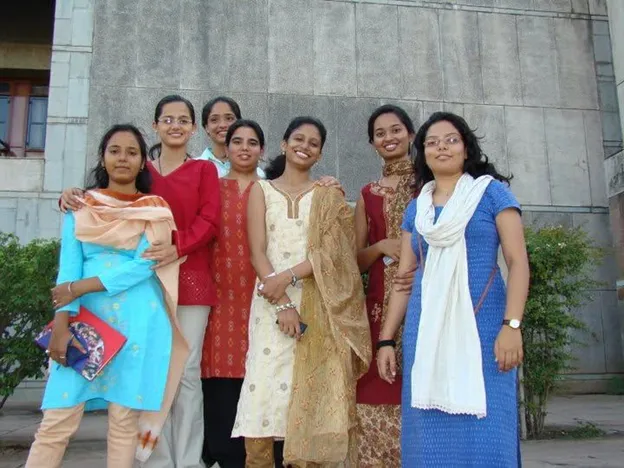
MRM girls
Q. As an alumni, what’s your advice to freshers or those are joining IIFM to get best out of the 2 years there?
A. If I could give just one piece of advice, it would be this:
Don’t spend your time at IIFM only earning a degree. Allow it to shape the way you think.
IIFM is not a conventional management programe, and that is its greatest strength. It is designed to expose you to people, communities, institutions and realities that cannot be understood from textbooks alone. The classroom, field visits, internships, discussions, group work and interactions with faculty are all parts of one integrated learning experience. The more you immerse yourself in it, the more you will discover about yourself.
When I came to IIFM, I thought I was joining another academic programe. I soon realized that it was much more than that. It challenged my assumptions, exposed me to completely new perspectives, and introduced me to a world that eventually became my life’s work.
Take your field visits seriously. Go with an open mind. Listen more than you speak. Some of the most important lessons you’ll learn at IIFM will come from conversations with people in villages, communities and organizations, not just from case studies or lectures.
I would also encourage every student to make the most of the internship opportunities. Don’t think of internships as academic requirements or résumé-building exercises. Treat them as experiments to understand yourself. My Biotechnology internship taught me what I didn’t want to do for the rest of my life. Every experience after that helped me move closer to what I truly wanted to do. Use your internships to explore, ask questions, observe closely and discover the kind of professional you aspire to become. They are stepping stones to your future, not just milestones to complete.
At the same time, don’t confine your learning to the classroom. Volunteer for committees. Participate in cultural events. Spend time in the library, but also spend time on the library steps. Some of the best conversations of my IIFM journey happened outside classrooms. Serving on the Mess Committee, interacting with faculty beyond lectures, taking long walks across campus and simply spending time with classmates from different backgrounds taught me lessons that I carry even today.
Build relationships with your professors. They are not just exceptional academicians; they are wonderful human beings who genuinely care about their students. Years later, you will realize that these relationships become one of the most valuable parts of your IIFM journey.
Finally, don’t rush through your time at IIFM.
One day, you’ll leave the campus believing that life is finally beginning.
Years later, you’ll realise that some of the most beautiful years of your life were the ones you spent there.
You don’t realise it now, but one day you’ll miss walking through the Big IIFM Gate on way to mess, sitting on the library steps, bumping into friends in the corridors, and those conversations that seemed ordinary at the time. Don’t wait until you leave to appreciate those little moments.
The assignments will eventually be forgotten.
The grades will slowly fade from memory.
But the people, the experiences, the learning and the feeling of belonging will stay with you for a lifetime.
So don’t just study at IIFM.
Live it 😊
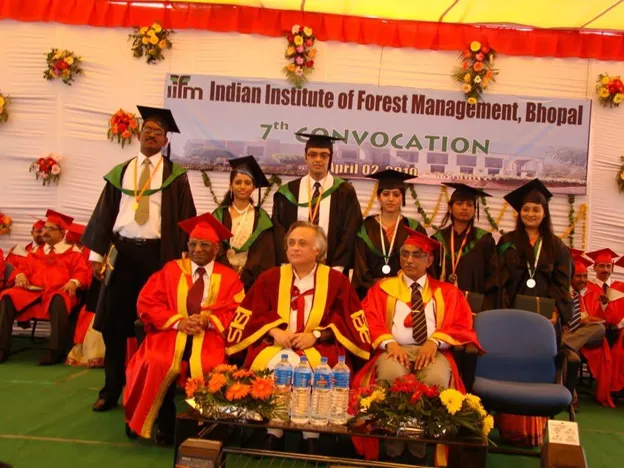
Convocation of 3 batches together
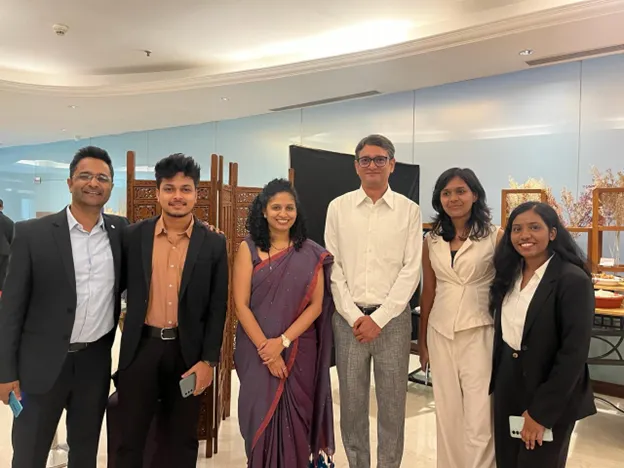
IIFMites across batches
Q. What would be your advise for recent graduates who look for changing their sector after working for couple of years?
A. My first advice would be to understand why you want to make the change.
Are you moving away from your current sector because of temporary dissatisfaction, or are you moving towards something that genuinely excites and fulfils you? There is an important difference between the two.
Since this interview is for IIFM, let me specifically speak about the development sector.
From the outside, the development sector often looks deeply fulfilling—and it truly can be. You have the opportunity to work with communities, influence public systems, collaborate with governments, corporates and civil society, and contribute to meaningful change.
But it is also one of the most demanding sectors to work in.
Real change takes time. Progress is often slow. You work with multiple stakeholders who may have different priorities, limited resources and complex realities. Success is rarely immediate, and the impact you dream of creating often requires years of patience, collaboration and persistence.
That is why I believe purpose matters.
If your purpose is genuinely aligned with the sector, these challenges become part of the journey. If it isn’t, the same challenges can quickly become frustrating.
At the same time, I don’t believe purpose alone is enough.
The development sector also needs professional excellence, financial discipline and sustainable institutions. We often speak about purpose, but purpose without sustainability cannot create lasting impact. Over the years, I have come to believe that profit and purpose are not opposing ideas—they must move hand in hand. Sustainable organisations are ultimately able to create sustainable impact.
If you do decide to change sectors, don’t assume your previous experience has no value. Every role teaches you something. My background in research strengthened my analytical thinking. My corporate experience taught me business, leadership and institution building. My work in the development sector gave me perspective and purpose. Today, all those experiences come together in the work I do.
So, don’t chase sectors.
Chase meaningful work.
When your values, your strengths and your purpose come together, you’ll find yourself not just building a career, but building a life that feels authentic to you.
Q. What is your typical day at the work? And how does it look like while you are on a break? And how about weekends, hobbies, family and anything else you want to add?
A. One of the things I enjoy most about my work is that there is no such thing as a typical day.
Some days begin with strategy discussions, while others are spent reviewing proposals, meeting entrepreneurs, interacting with government officials, visiting communities or travelling to different parts of the country. Every day brings a different conversation, a different challenge and a different opportunity to learn. That variety keeps me energised.
I also value quiet thinking time. Some of my best ideas have not come from meetings, but from sitting with a notebook, reflecting on conversations and slowly connecting the dots. I have learnt that creating space to think is just as important as staying busy.
Because my work involves frequent travel, I have also learnt to value my time at home much more.
Weekends in our house are usually decided by a five-year-old.
My son, Rudransh, has a wonderful ability to remind me that life doesn’t always have to be about plans and deadlines. We color together, build block towers (which he builds much better than I do!), play games where he has one very important rule—that he must always win—and spend hours talking about his little adventures.
One of my favorite conversations with him is about my travel. He often asks, “Why can’t I come with you for meetings?” I usually tell him, “Someday soon… but not today.” In his mind, meetings are exciting because they involve travelling, and I quite enjoy seeing the world through his eyes.
I also love travelling, not just to visit new places but to understand people, cultures and different ways of thinking. Every journey, whether to a village in India or a conference abroad, leaves me with a new perspective.
When I am home, I enjoy the simple things. We live in a quiet neighborhood surrounded by trees and open spaces, and I often find myself looking out of the window or going for a walk. Nature has a calming effect on me and helps me slow down after a busy schedule.
Over the years, I have realized that work and life don’t need to compete with each other—they complement each other. My work constantly reminds me why families and communities matter, and my family reminds me why the work matters in the first place.
If there is one thing that keeps me grounded, it is knowing that while organizations may grow and milestones may change, the greatest joy still comes from the people you return home to.
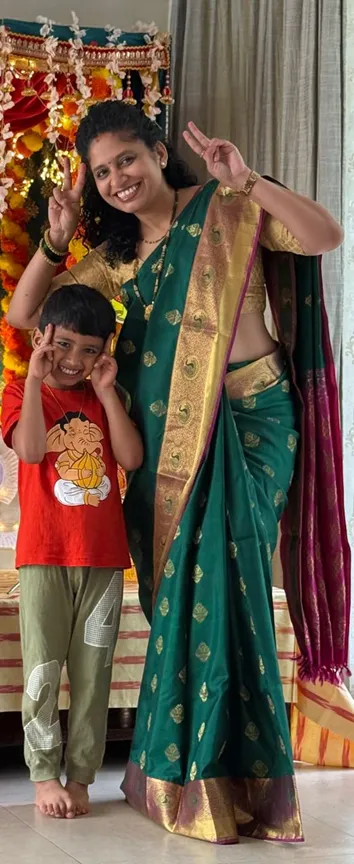
With my son
Q. Favorite Books, movies, authors?
A. I enjoy books that make me think differently. Some of my favorites include Shunya, The Difficulty of Being Good, The Ride of a Lifetime by Bob Iger, The Infinite Game by Simon Sinek, and Amish Tripathi’s The Immortals of Meluha. I also enjoy the warmth and storytelling of Nicholas Sparks.
I’m not much of a movie buff, but if I’m watching something, it’s usually a good comedy. And yes, I do hope to get back to reading more consistently!
Q. IIFM is driven by alumni’s passion and commitments towards its goal. How would you like to contribute to IIFM or IIFM alumni, students? Your engagement with IIFM Placement or OT/SI?
A. Over the last few years, we have had the opportunity to engage with IIFM students through internships as well as placements, and I would love to continue doing that.
I also enjoy interacting with students, especially on careers, entrepreneurship and the realities of working across the corporate and development sectors. If my experiences can help someone make a more informed career decision, I would be happy to share them through guest lectures or student interactions whenever possible.
One area I feel particularly passionate about is internships. I believe internships should be much more than a mandatory academic requirement. They are often the first opportunity to understand yourself, your interests and the kind of work you genuinely enjoy. I would be happy to contribute towards helping students think differently about internships—how to choose them well, how to prepare for them, and how to make the most of the experience rather than simply completing it.
IIFM has given me a great deal, and if I can contribute in even a small way towards creating meaningful opportunities and learning experiences for the next generation of IIFMites, it would always be a pleasure.
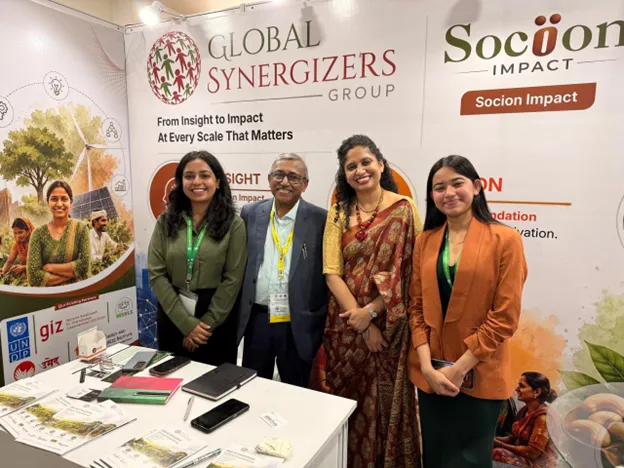
With Prof. Biswas and recent graduates who have joined the team
Q. What do you think is different at IIFM now vs when you studied there? When was the last time you visited IIFM?
A. I was at IIFM a few months ago while I was in Bhopal for meetings with government officials. I had the opportunity to briefly meet some of my professors and interact with a few students. It was wonderful to be back. The campus has changed significantly, and it was lovely to see how it has evolved over the years.
Since I haven’t closely followed the academic curriculum, I wouldn’t be able to comment on how the programe itself has changed. However, I do hope that as IIFM continues to evolve with a rapidly changing world, it continues to preserve what has always made it unique.
Today, the world demands new skills—technology, AI, climate intelligence, global perspectives and interdisciplinary thinking. I hope IIFM embraces all of these wholeheartedly. At the same time, I hope it never loses the qualities that have always distinguished it: learning through the field, understanding communities with empathy, and developing the patience to work with complex social and environmental challenges where meaningful change takes time.
There are many excellent management institutions in the country. What has always made IIFM special is that it develops professionals who understand both institutions and communities. I sincerely hope that this distinctive identity continues to remain at the heart of the IIFM experience.
I believe the future belongs to professionals who can combine modern management with deep human understanding. IIFM has always been uniquely positioned to nurture exactly that kind of leadership.
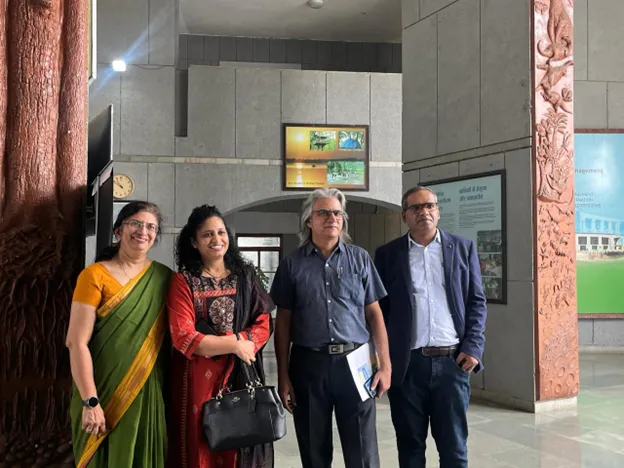
Visit to the campus, 2025
Q. Any suggestions on who you want to get profiled/interviewed here?
A. I would love to read about the journeys of Sudeep Kodialbail, Shweta Dua and Kamla Khanal. Sudeep’s experience of building an entrepreneurial journey and then successfully transitioning back into the corporate world offers a unique perspective. Shweta’s work with GIZ reflects a different and inspiring career path in international development. Kamla’s curiosity, fellowships and diverse experiences in the development sector would undoubtedly offer valuable insights to students and fellow alumni alike.