
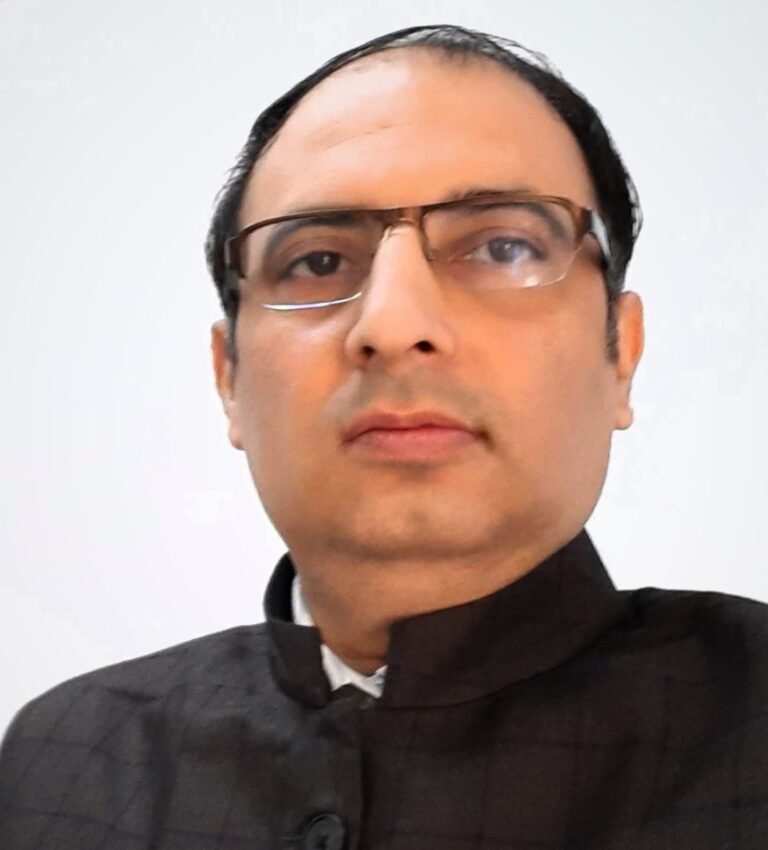
Rohit Magotra is Deputy Director of Integrated Research and Action for Development (IRADe), one of South Asia’s leading think tanks on climate, energy, and sustainable development. With over 24 years of professional experience, he works at the intersection of urban climate adaptation, disaster resilience, sustainable energy transition and gender.
He is widely recognised as a global pioneer on heat adaptation. He is a founder of the South Asia Heat Health Information Network (SAHHIN), accredited by the WHO and the WMO. He is also co-founder of South Asia Think Forum for Regional Co-operation (TTF).
In 2025, he was selected as an Expert Reviewer for the IPCC Special Report on Climate Change and Cities. He is also an Associate with the University of Reading, UK. He is a member of the National Disaster Management Authority’s technical committee for framing Heat Wave Mitigation guidelines.
He has published more than 100 research reports, technical papers and policy briefs in international and national journals in diverse areas related to climate change, environment, agriculture, sustainable urban development, and energy transition. He regularly contributes to global climate forums.
Location: New Delhi
Linkedin : (3) Rohit Magotra | LinkedIn
Q. Tell us about your College before you came to IIFM. How was your experience there? And how did IIFM happen?
A. I was enrolled in a Master’s course in Environmental Science at the University of Jammu, J&K when I applied for the entrance test of IIFM. From the very beginning, given my interest in the environment stream I got interested in PGDFM course at IIFM. I still remember appearing for IIFM entrance test in the scorching summer of Chandigarh. A visit to IIFM for group discussion and interview with panel of IIFM faculties and then selection happened in a quick succession. I still remember meeting so many aspirants who appeared multiple times for admission. It was a thrilling moment to make it to IIFM.
Q. How has your journey from IIFM so far? What were some of the key milestones/learning in this journey that you would like to share with us?
A. I got placed with Bharat Yuva Shukti Trust, Delhi from IIFM, however I had to leave this opportunity to complete my dissertation for MSc Environment Sciences. In 2001, I began my career as Management Executive at EDA Rural Systems, a leading management consulting firm based in Gurugram, researching financial services for the urban poor, supporting SIDBI’s microenterprise and rural industries programmes across multiple states. Further I went to Mumbai to set up Business Development Support Services Unit in Aga Khan Economic Planning Board for small businesses. Supporting new businesses set up by microentrepreneurs, and helping them in capacity building, marketing access, human resource management and retail management put all the management pieces together. It was an overwhelming experience managing this programme and supporting more than 50 businesses in the span of one year. EDA provided a highly professional environment and exposed me to multiple projects.
During 2003, my batchmate and friend founded ekgaon technologies, a path-breaking social enterprise for enabling technologies for rural development. I decided to join him in this journey as a Founding Director. It became an award-winning enterprise for its innovative technologies which included introduction of QR codes for record keeping and cloud-based microfinance software for Self Help Group Federations and Microfinance Institutions. I led national work on medicinal and aromatic plants, including World Bank and Oxfam-supported value-chain studies, multi-stakeholder platforms like MAPSCON, and innovative information services such as a helpline and market intelligence for Medicinal and Aromatic Plants farmers. As COO of ekgaon technologies, I also helped build ICT-enabled solutions for SHGs, microfinance, remittances and entitlement tracking, and worked on financial inclusion and climate-linked livelihood resilience projects in India and South Asia.
I got interested in toying with the idea of digital agriculture to provide competitive and accessible farming services to rural India and moved on to co-found Inext Retail Services which focused on agribusiness and last-mile service delivery, designing INEX – an Agribusiness Information Exchange shortlisted for the World Bank Global Development Marketplace – and co-developing the pioneering Green Card multi-brand farmer loyalty programme, supported by global partnerships with the World Bank, FAO, IIED, Rainforest Alliance and others. Unfortunately, the regulatory framework for taxation for e-commerce of agri-fertilisers prohibited us and we had to shut down the operations.
In 2013, I joined Integrated Research and Action for Development, IRADe a reputed global think tank based in New Delhi working in area of Energy, Environment and Climate Change. I was involved in management of South Asia Regional Initiative for Energy Integration – SARI/EI which became a flagship initiative of IRADe. I also led South Asia Think Tank Forum on Energy Co-operation engaging policymakers, media, parliamentarians and civil society to advance the agenda of cross-border electricity trade. Over the years, I have helped shape policies on climate adaptation, disaster resilience, smart cities and cross-border energy trade in South Asia, working directly with national government, sub national and regional stakeholders. Knowing that my work has fed into real public policies and contributed to new paradigms for climate action globally is both humbling and deeply motivating for me personally.
Q. How has your experience been in your current Organization? What all areas have you been working here?
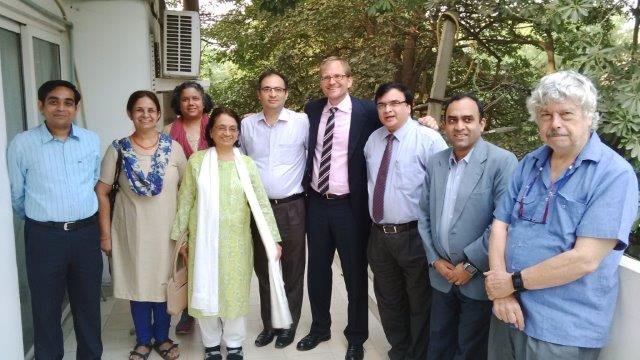
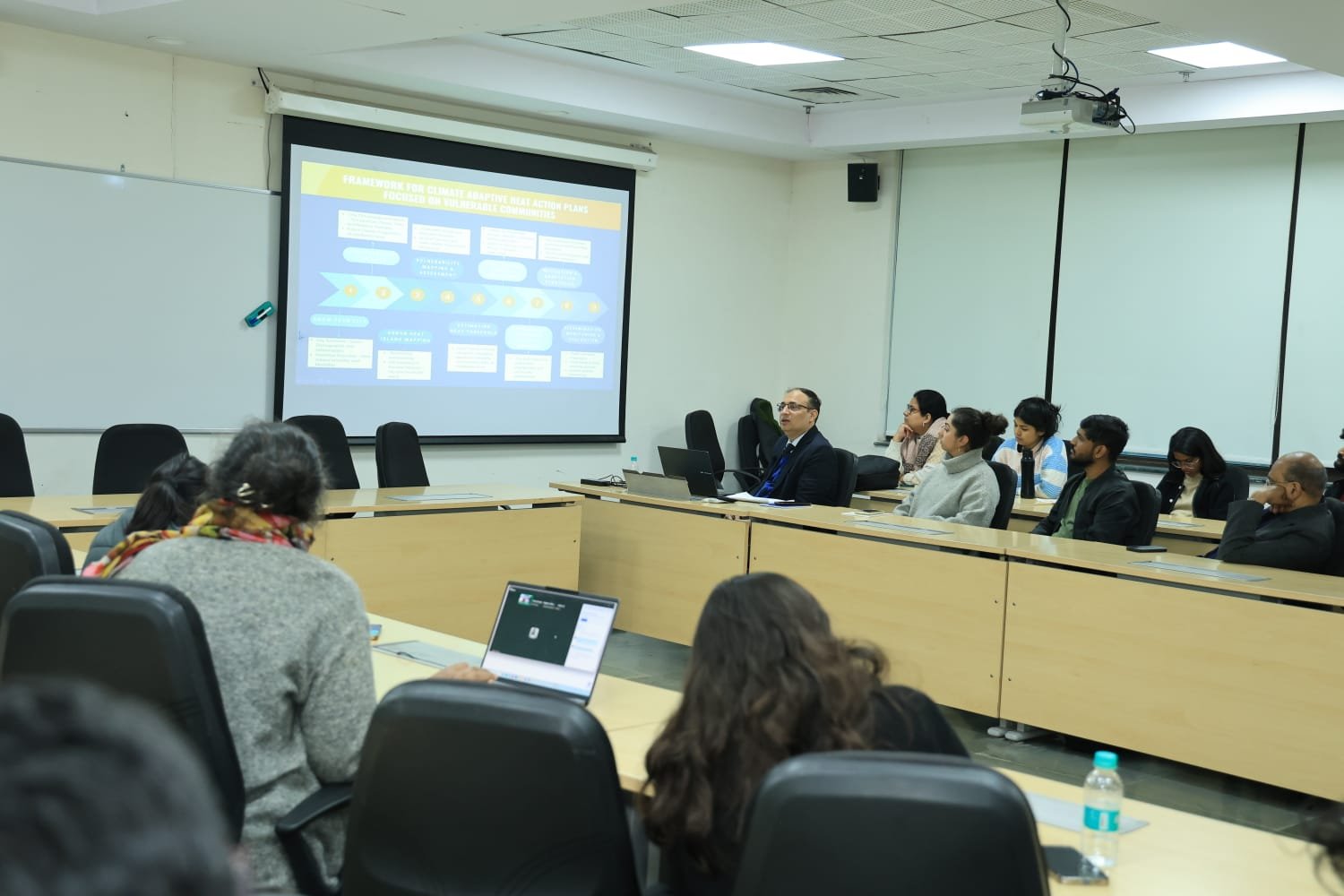
A. I am leading work in thematic area of Climate Change and Environment and Sustainable Urban Development. At IRADe, my work spans climate adaptation, disaster risk, public health and urban resilience, with a strong focus on South Asia. I am also responsible for co-leading and managing IRADe.
Q. Has your learning at IIFM helped in shaping how you approach your professional roles?
A. IIFM provided a conducive environment backed with excellent faculty. The range of subjects that were taught in the course were useful in defining the course of my career. Most important being summer and winter trainings which really helped build the readiness for the workplace. My first summer training with Action Aid with Joy Singhal (PFM 2000) and winter training with Eklavya foundation with Yuvraj M (PFM 2000) was a great experience to remember working in remote locations of Madhya Pradesh.
Q. What would be your advice to freshers and IIFM graduates who are looking to choose similar sectors/roles.
A. Young aspirants intending to work in this space of research based Think Tanks should acquaint themselves with the subject of public policy and governance mechanisms at the national and state level. One should be well acquainted with the key development issues and invest in self-learning through reading national and international journals.
Q. What are your favorite IIFM memories?
A. My favourite memories are around the natural serene location of IIFM campus, field trips which provided exposure to developmental issues in India. I especially cherished our field attachment training in Kerala, which brought a lot of learning, fun and adventure.
Q. What is the biggest contribution or takeaway from IIFM?
A. The biggest takeaway from IIFM was that it provided us with the right knowledge, attitude and a powerful institutional brand that together opened new frontiers for us. The institute’s strong focus on practical, field-based learning – from internships to intensive field visits is unparalleled.
Q. Who were the best buddies, seniors and faculty from IIFM?
A. We enjoyed our regular get-together sessions with my roommates – Vijay Pratap Singh and Amit Gupta and our neighbouring room batch mates – Rajni Prasad, Joy Singhal, James, Angshuman Majumdar, Ashish Agarwal and Yuvaraj M.
On the faculty side, all faculty were great support, to name a few Prof. P. K. Biswas, Prof. Chinmaya Rathore, Prod Madhu Verma, Prof. Ravi Sundar, Prof. B. P. Pethiya, Prof. Suparva Patnaik and then Director Mr. Ram Prasad were a remarkable support to us. Our senior batch was always approachable, and many of them later became my colleagues at EDA Rural Systems and were always ready to lend an ear when needed – including Tanmay Chetan (95–97), Swetan Sagar (97–99) Nishant Teerth (97–99) and Rajiv Kumar Gupta (96–98).
Q. What is your advice to young IIFM’ites?
A. Do not go after the highest salary, go for learning and exposure you are likely to get. Keep chasing your dreams. It is you who makes something out of a job – it is not the job that makes you. Your commitment is defining factor for your growth and impact. Prepare yourself well for opportunities you are looking for and it will hit you in no time!
Q. What would be your advise for recent graduates who look for changing their sector after working for couple of years?
A. Have a positive mindset towards teamwork and remain genuinely committed. Acquire the right technical knowledge and be a good learner. Keep pushing yourself, and do not stay in your comfort zone if you want to achieve career and personal growth. The desired ‘sectoral’ change will happen smoothly.
Q. What is your typical day at the work? And how does it look like while you are on a break?
A. My typical workday at IRADe, a specialised policy research think tank, is centred on managing and steering its research and institutional agenda. I work with an interdisciplinary team on technical research and project administration, while also overseeing fund raising, organisational management and finance.
Taking a long break is unthinkable, as we function under tight schedules and deadlines. A large part of my work involves bringing evidence-based integrated multidisciplinary perspectives on climate adaptation, energy and sustainable urban development into the policy space in South Asia. Much of our work informs government decisions and on-ground action at National and sub-national level.
Q. How about weekends?
A. My weekends are devoted to my family. They never feel like they have enough hours, and we usually like spending time outdoors when the weather and air quality in Delhi are favourable – a window that unfortunately is shrinking every year.
Q. Favourite books & authors?
A. I am voracious reader and have no single book to mention. I enjoy reading the writings of Sri Aurobindo and books on behaviour design.
Q. IIFM is driven by alumni’s passion and commitments towards its goal. How would you like to contribute to IIFM or IIFM alumni, students?
A. I have volunteered to be mentor for IIFM students. In the past, we have hired interns from IIFM, and now scoping placements as well.
Q. What do you think is different at IIFM now vs when you studied there? When was the last time you visited IIFM?
A. I last visited IIFM way back in 2007. I have heard that new blocks have come up for student hostels and faculty accommodation, and that several new courses and degrees have been added since my time. It is high time to visit and relive the memories!
Q. Who should be profiled next?
A. I would like to see Tanmay Chetan, Maneesha Chadha, Joy Singhal, Ashish Sinha, Swetan Sagar, Moni Sinha and Radhika Agashe.