
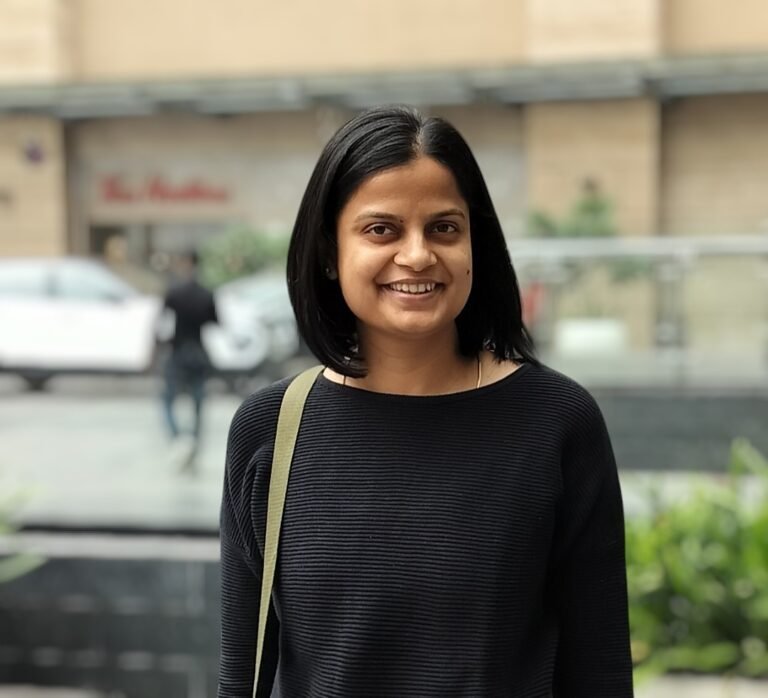
I am a development management professional with over 12 years of experience across impact investing, financial inclusion and education, working at the intersection of capital, policy, and public systems. My work has spanned advisory, credit risk, structured finance, ecosystem development, and philanthropy, focusing on how capital can be aligned with institutional incentives to deliver measurable development outcomes.
Currently, as Philanthropy Lead at Khan Academy India, I work with governments and institutional funders to mobilize philanthropic capital and embed evidence-based learning solutions within state education systems.
Previously, at Intellecap, Northern Arc Capital, Yubi (CredAvenue), and ACCESS Development Services, I worked on credit underwriting, institutional debt mobilization, and sector-level engagement supporting microfinance institutions, MSME lenders, and women’s economic empowerment initiatives.
Across roles, I have worked with both commercial and philanthropic capital, engaging with investors, governments, and implementers to design financially sound and impact-aligned solutions. My career reflects a consistent focus on strengthening institutions and using capital as a lever for long-term systemic change.
Location: New Delhi, India
LinkedIn: www.linkedin.com/in/aryasilpa-adhikari-660b264b/
Q. Tell us about your College before you came to IIFM. How was your experience there? And how did IIFM happen?
A. I completed my B.Tech in Information Technology from Odisha University of Technology & Research (erstwhile College of Engineering and Technology) and began my professional journey at TCS as Android developer, at a time when mobile application development was just emerging. It was an exciting space to be in. I worked on premium accounts on their mobility function catering to high-value customer segments for Singapore Airlines, Standard Chartered, and Citibank. The exposure was cutting-edge, fast-paced, and technically enriching.
Yet, somewhere along the way, a quiet discomfort began to grow. I felt that the app I was building was largely serving a very small, affluent segment. I began asking myself whether my technical skills were contributing to solving broader problems, or merely optimizing convenience for those already well served. At the time, I did not fully have the vocabulary for these questions, but they stayed with me.
A turning point came when I had the opportunity to work on a project for the Government of Andhra Pradesh through TCS, the mKrishi app, supporting what functioned as a program management unit within the department. For the first time, I was able to see how large public systems operate from within – how policy, technology architecture, administrative processes, and field realities intersect. The scale was different. The constraints were different. The beneficiaries were different. Technology here was not about premium features; it was about solving real problems for large populations with limited resources.
That experience stayed with me. It shifted my lens. I began to think more seriously about how private sector players, and governments could be structured to serve underserved communities more effectively, and what role technology could play in that process. What began as a technical career gradually evolved into a deeper curiosity about development and technology.
This interest was shaped not just by academic exposure, but also by my home environment growing up. I had the opportunity to listen to many conversations around society, equity, and public issues through my parents and their friends and colleagues. Those discussions made social questions feel real and immediate. It planted an early curiosity about how policy and institutions affect everyday lives.
As I began exploring a transition beyond IT, I appeared for conventional MBA entrance processes and interviews. While I received a few calls, I did not convert them into final selections, which was deeply disappointing at the time. In hindsight, however, I am grateful those outcomes did not materialize. That phase of uncertainty pushed me to reflect more honestly on what I truly wanted from management education.
Around this time, an IRMA alumnus from TCS, someone who had navigated a similar transition, spoke to me about the Indian Institute of Forest Management and its strong alumni network, its grounding in development and environmental systems, and the meaningful roles its graduates were taking up. His perspective prompted me to explore the institute more seriously.
I also reached out to Shivin Shakya (PFM 2011–2013), who generously took the time to answer my questions about the curriculum, campus culture, and career pathways. While I did not fully grasp every nuance of the program at that stage, I distinctly remember the feeling I came away with that IIFM was a balanced institute with a thoughtful, interdisciplinary course structure. It did feel very specialized, but more importantly, it felt grounded, rigorous, and values-driven.
The interview interactions further reinforced this impression. My conversations with Prof. A.K. Dharni & Prof. Bhaskar Sinha during the Bangalore interview interaction left a strong impact. Their clarity of thought, depth, and openness in discussion resonated deeply with me. Those interactions gave me confidence that this was a space where critical thinking was encouraged. The conversations felt warm and welcoming, which gave me a quiet sense of comfort and belonging even before I joined IIFM.
Between evaluating other private B-schools, and reflecting on my own interests, IIFM happened. In hindsight, it feels less like a fallback and more like “universe’s plan” for my deliberate alignment with the kind of professional and personal journey I wanted to build.
Q. How has been your journey from IIFM So Far?
A. Post IIFM, my journey has evolved across advisory, credit risk, capital mobilization, ecosystem development, and philanthropy. While the roles have changed, the underlying thread has remained consistent in understanding how capital flows, how institutions behave, and how incentives can be aligned toward meaningful impact.
I began my career at Intellecap, where I had the opportunity to work under the mentorship of Manish Shankar (PFM 1992-1994). This phase introduced me to the broader impact ecosystem – education, microfinance institutions, MSME lenders, and inclusive finance players.
A significant turning point came when Ashish Thekkekara (PFM 2007–09 batch) referred me to Northern Arc Capital at a time when I was keen to move closer to the core of capital markets. That referral meaningfully shaped my trajectory. At Northern Arc, I worked in credit underwriting and monitoring, engaging deeply with financial institutions serving low-income households. Working alongside IIFM alums such as Deepak Goswami (PFM 2007-09), Arjun Subramaniam (PFM 2011-13) and Saurabh Khodke (PFM 2013-15) sharpened my analytical discipline and strengthened my understanding of risk, portfolio quality, and structured debt. It was here that I developed a strong appreciation for the rigor required in deploying capital responsibly.
Subsequently, at Yubi (CredAvenue), I worked on mobilizing institutional debt at scale, engaging with investors and financial institutions across the country. This phase deepened my understanding of negotiation, investor expectations, and the importance of credibility, data integrity, and structured processes in unlocking capital.
My transition to ACCESS Development Services marked a shift from finance-first roles toward ecosystem building and policy engagement. Working closely with Radhika Agashe (PFM 1998-2000) was transformative in shaping how I approach collaborative sector work with patience, clarity, and long-term thinking. During this period, Puja Gaur (PFM 1997-99) was also a bedrock of support. Though senior to me, she became a steady guiding presence. She brought warmth and authenticity into every interaction we had. In moments of ambiguity or difficult choices, conversations with her often helped me distinguish between what was expedient and what was right. Her influence reinforced the importance of values-led decision-making in professional life.
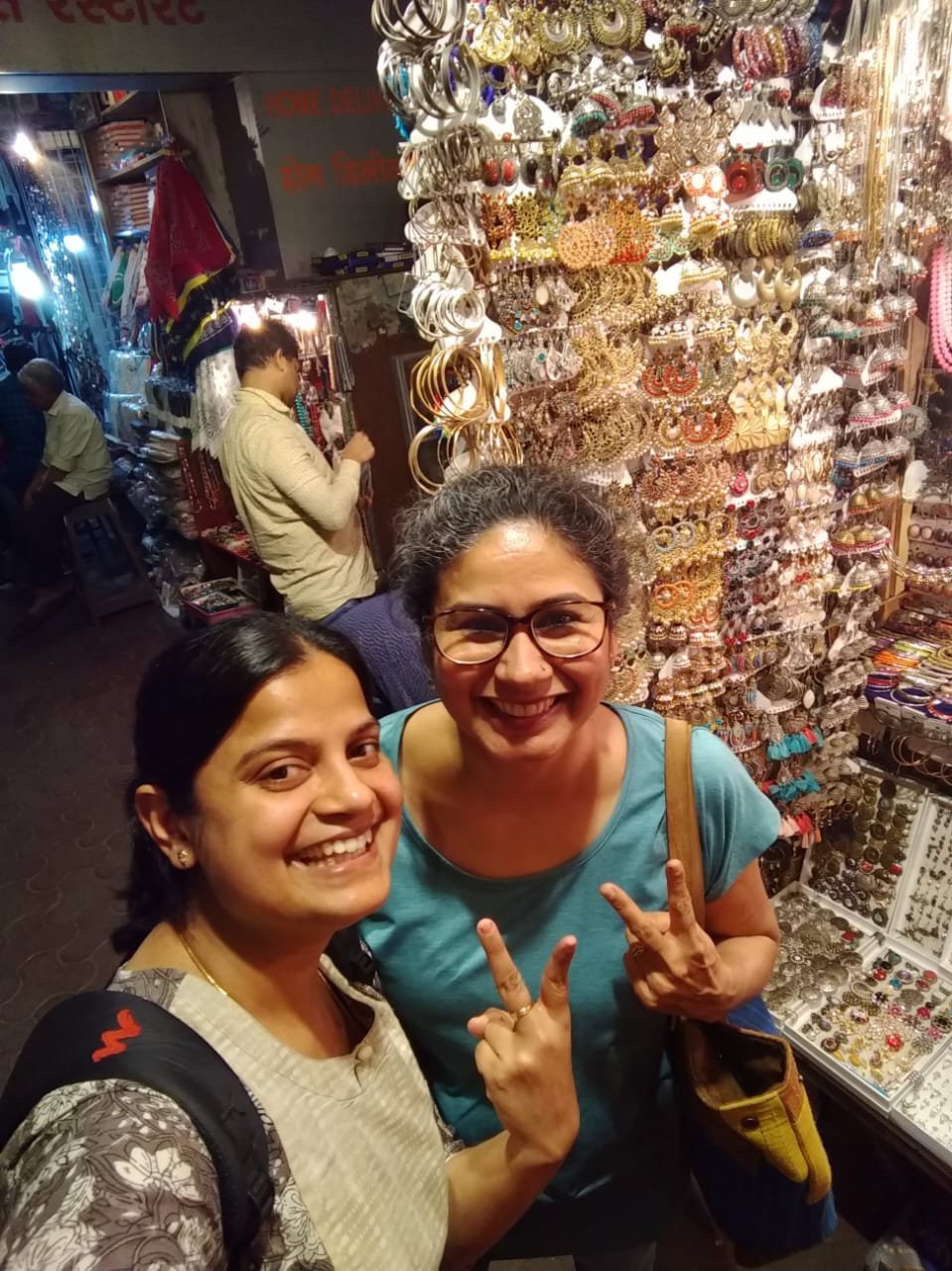 With Radhika Agashe post Jury Meeting on a shopping spree
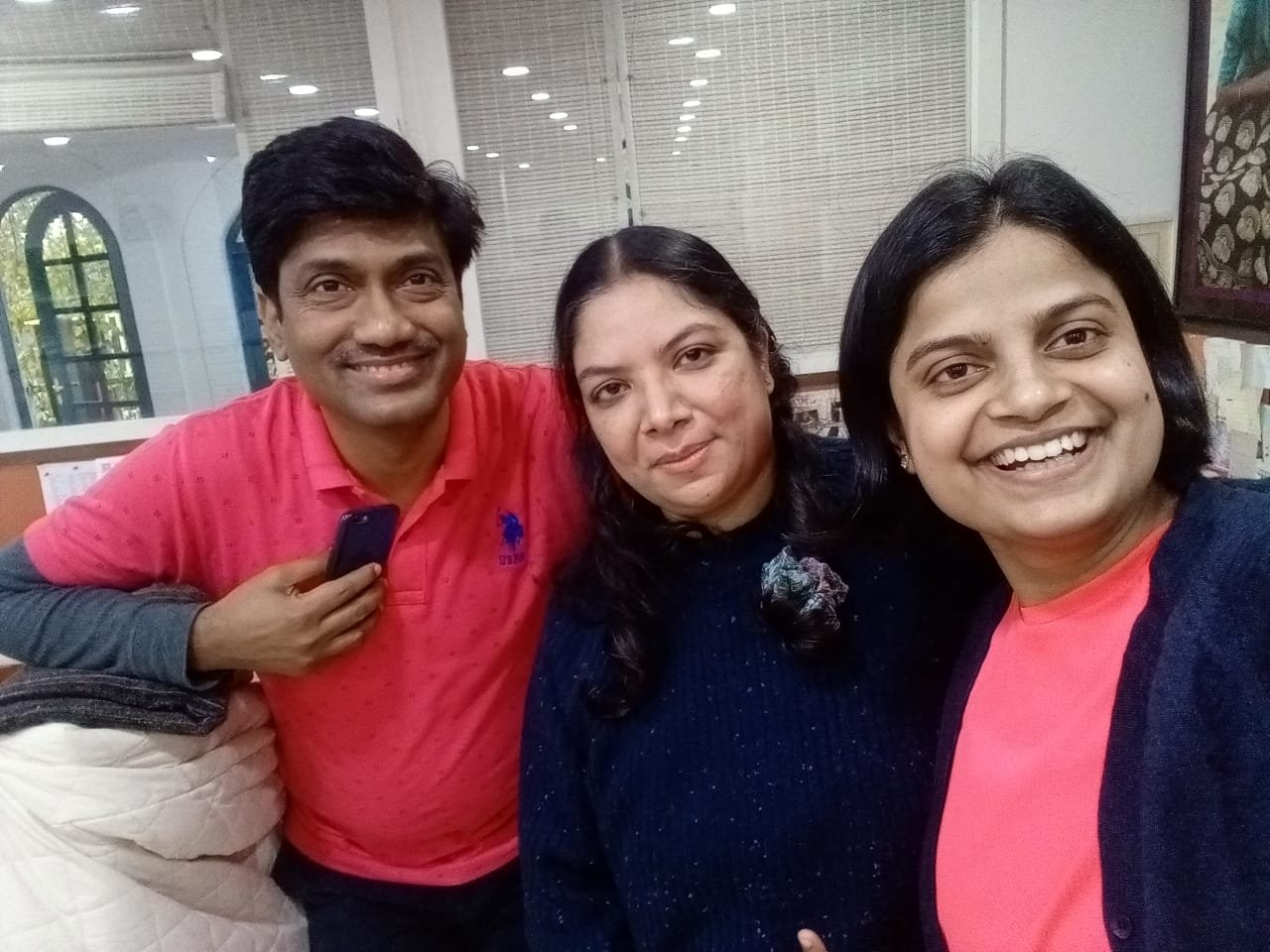 With Puja Gour
Today, at Khan Academy, I work at the intersection of philanthropy and public systems, mobilizing funding and aligning it with state education partnerships to improve learning outcomes at scale. While the sector focus has shifted from financial inclusion to education, the foundational lens remains the same – capital as a lever for systemic change.
Looking back, the role of alumni support in my journey stands out strongly. From early mentorship (Rewasa Nischal during internship) to a pivotal referral into Northern Arc, and through continued informal/formal guidance across roles (thanks to Parvej Sheikh and Gyan Prakash), the IIFM alumni network has been more than a professional resource; it has been a source of intellectual grounding and shared values. My journey reflects a gradual evolution across sectors, but it remains deeply anchored in the interdisciplinary foundation that IIFM provided.
Q. What were some of the Key Learnings?
A. Some of the most important learnings from my journey have been more personal than technical.
First, I learned the importance of speaking my mind and confidently putting forward my ideas, even in rooms with far more experienced voices. Over time, I realized that clarity of thought and respectful dissent are essential for better decisions, and that credibility often comes from being thoughtful and consistent rather than simply agreeable.
Second, I learned to be bold and audacious, to test my own limits and place myself in new contexts and unfamiliar roles. Some of my steepest learning curves came from moving across functions and sectors, from consulting to risk, from finance to programs, and from private sector to public systems. Each transition felt uncomfortable at first, but that discomfort became the biggest source of learning and growth.
Third, I learned the importance of building and owning my own narrative. Careers in the impact ecosystem are rarely linear, and being able to clearly articulate why I made certain choices, what I bring to the table, and how different experiences connect has been critical for both career progression and personal confidence.
Finally, I realized the power of networks and relationships, and equally, the value of staying authentic while building them. Many of my opportunities came through people who had seen my work and trusted my intent. In the long run, relationships built on genuine curiosity, integrity, and shared purpose matter far more than transactional networking.
Q. How has been your experience in Current Organization? What are your areas of work?
A. At Khan Academy India, I lead philanthropy and partnerships, with responsibilities spanning corporate and institutional fundraising and working at the intersection of philanthropy and government partnerships across states such as Punjab, Odisha, Uttar Pradesh, Telangana, Karnataka and Maharashtra. My role also involves structuring MoUs, designing reporting frameworks, and governance & compliance processes, along with program budgeting, forecasting, and developing outcome frameworks to ensure funder confidence and effective capital deployment.
Additionally I led the rollout of AI-enabled learning tool Khanmigo in classrooms in UP KGBV which was a great learning experience.
I work closely with program, product, government, and global teams to ensure that funding and partnerships translate into measurable and scalable learning outcomes in public schools.
Q. What is the most satisfying part in your Career?
A. The most satisfying part of my career is knowing that the work I do touches lives in tangible ways. Sometimes that means enabling students in government classrooms to access high-quality learning content and supporting teachers to feel more confident using technology. At other times, it has meant working in financial inclusion, supporting institutions that help low-income households build resilience, access credit responsibly, and manage financial shocks more securely. The contexts have differed, but the underlying thread has remained the same: contributing, even in a small way, to systems that improve real outcomes for real people.
I also find deep satisfaction in working at the intersection of funders, governments, and implementing partners. Bridging these worlds, aligning incentives, clarifying expectations, and translating vision into execution, requires both analytical rigor and patience. Seeing capital move responsibly toward measurable outcomes, and watching partnerships mature into long-term collaborations, is fulfilling.
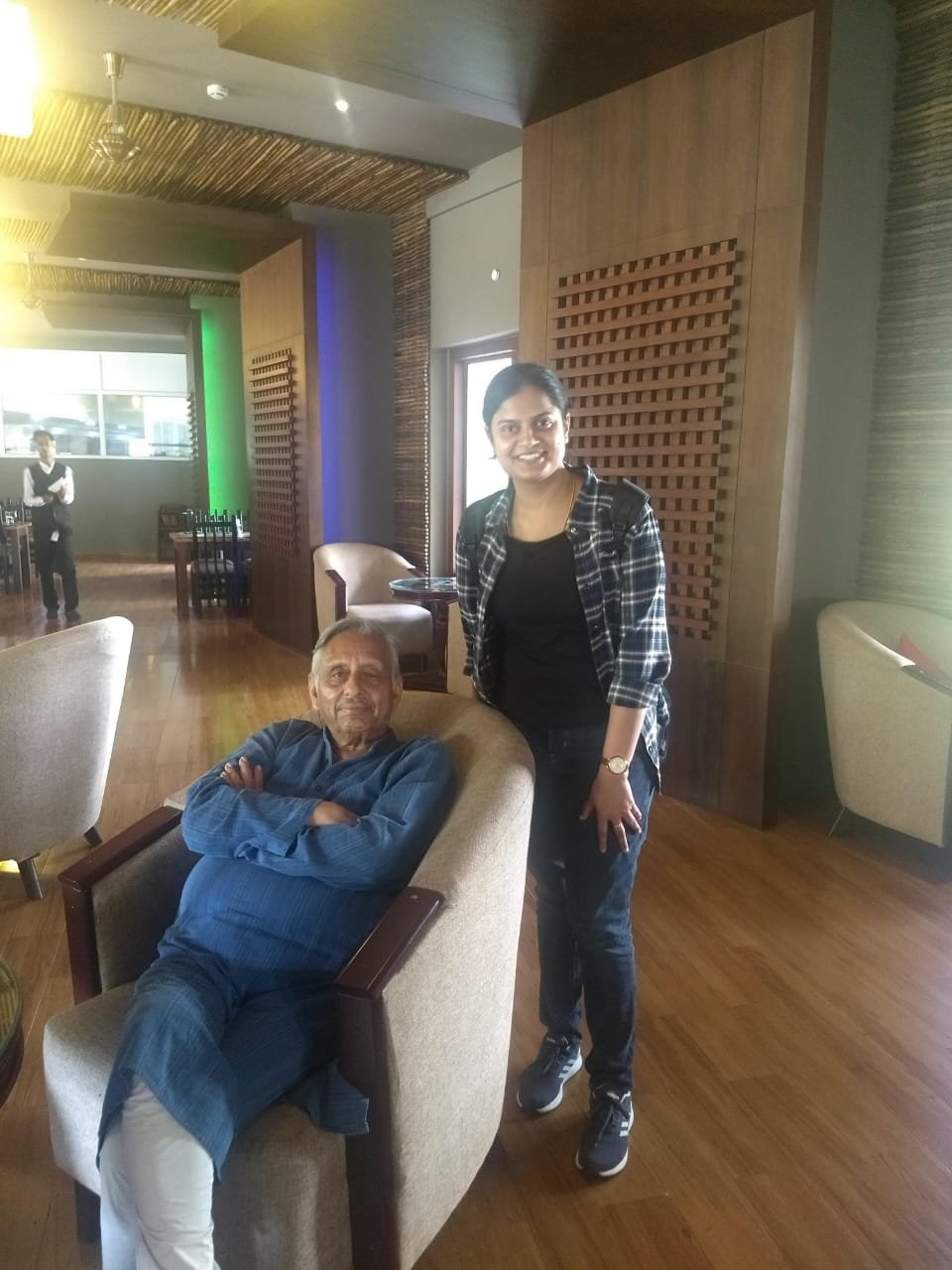 Chance encounter with Mani Shankar Aiyar at on offsite in 2015
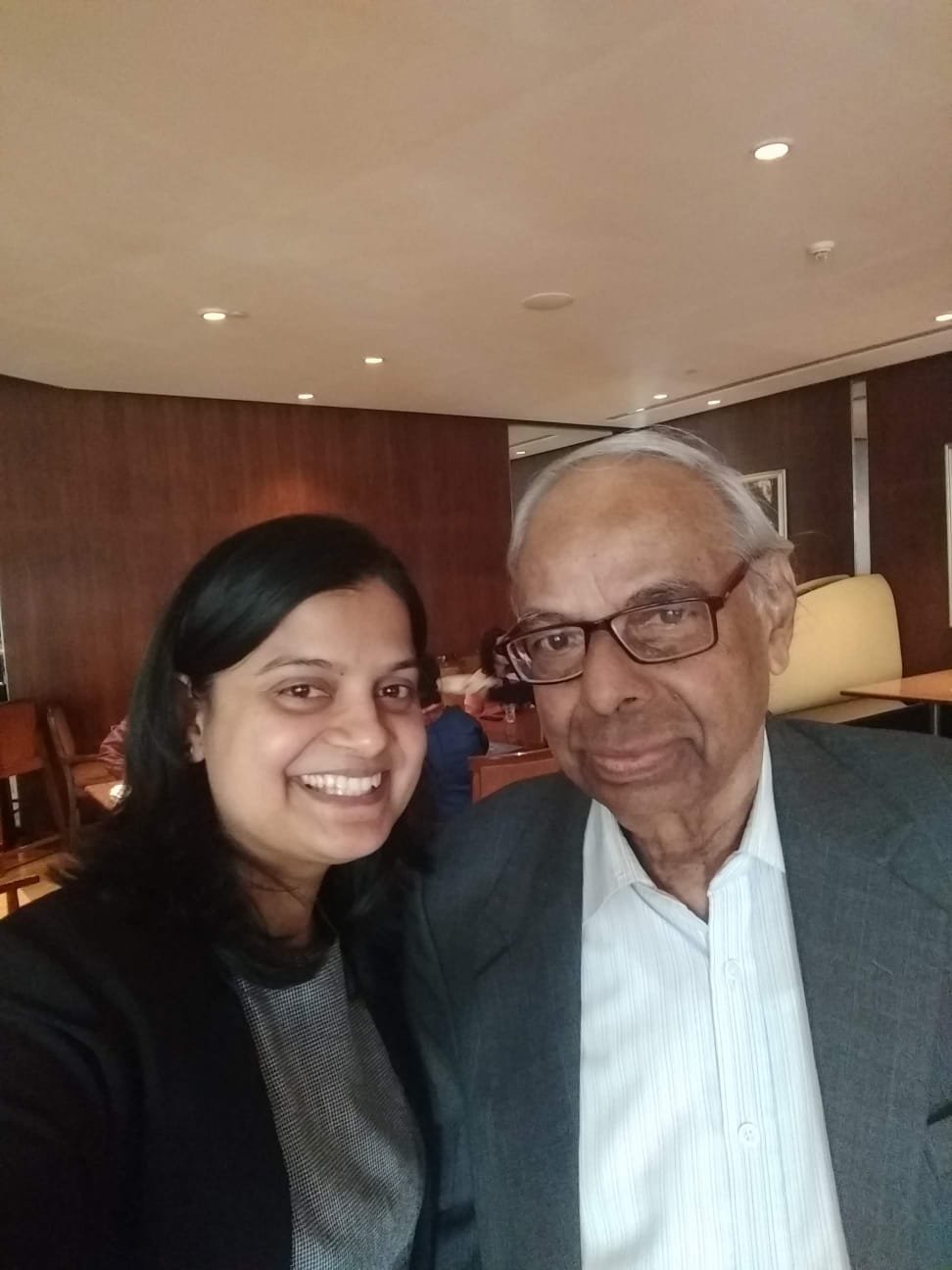 With C Rangarajan at a conference
Over the years, I have often compared notes with friends from engineering who chose more conventional MBA paths and are now partners at firms like McKinsey or leading high-value verticals in banks and corporations. Their trajectories are impressive, and materially, they are far ahead. In the early years of my own career, that comparison felt tormenting and deeply unsettling. There were moments of doubt and restlessness.
With time, however, I have reconciled with my choices. I may not be as materially well off as some of my peers, but I feel a sense of contentment and steadiness about the direction I have taken. The work is intellectually stimulating, constantly evolving, and rooted in purpose. I end most days feeling at peace with the effort I have put in and the systems I am contributing to strengthen. That quiet alignment between values, work, and personal conviction is, for me, the most satisfying outcome of this journey.
Q. Has your learning at IIFM helped in shaping how you approach your professional roles?
A. IIFM did more than equip me with frameworks across environment, development economics, finance, and policy. It fundamentally reshaped how I see the world. In many ways, it altered my thinking at a very core level. The way I understand systems, inequities, privilege, and institutional responsibility today is very different from how I viewed them before joining the institute.
Before IIFM, many structural inequities in society were either abstract concepts or simply invisible to me. Classroom debates, field visits, peer discussions, and faculty interactions slowly made those invisible layers visible. They pushed me to examine not just policies and markets, but also power dynamics, access, and fairness. I became more conscious of privilege, my own and that embedded within systems and more attentive to how decisions affect different groups differently.
Beyond academics, IIFM helped shape my value system. It gave language to questions I had long carried around equity and responsibility. It strengthened my commitment to fairness and respect, and it gave me the confidence to speak up or step back, when something does not feel aligned with my values. At the same time, it taught me to remain balanced and practical, to engage respectfully with differing perspectives, and to recognize that change within institutions often requires patience as much as conviction.
For that shift in awareness and orientation, I remain deeply grateful. The institute did not just prepare me for a profession; it shaped how I think, decide, and engage with the world. That grounding continues to guide my interactions with partners, institutions, and the choices I make in my career.
Q. Who are the biggest influences in your careers? What would be your advice to freshers and IIFM graduates?
A. My biggest influences have been strong mentors and the organizations I have worked with. Field exposure has also consistenty reminded me that systems are not abstract; they shape real lives.
When it comes to advice, I hesitate a bit. I am not sure I am great at giving advice, largely because in my early years I did not always follow the advice I received. I was, in many ways, a bit of a rebel and chose to learn through my own experiences. So I would avoid being overly prescriptive. Careers are personal, and each person’s path will be shaped by their own context, choices, and reflections.
If I were to leave just two thoughts. First, build strong fundamentals in whatever you choose – finance, data, policy, technology. Depth creates credibility and confidence. Second, understand how money flows in your sector. Capital is a powerful lever, and understanding it often helps you understand the system itself.
Beyond skills and strategy, I would say something simpler: be a good person. Be reliable. Be someone others can trust – as a colleague, as a friend, as a professional. Competence matters, but character compounds over time. In the long run, people remember how you showed up.
Q. Did you go for higher studies post IIFM?
A. After IIFM, I did not find the time, opportunity, or flexibility to pursue formal full-time higher education, as I was deeply engaged in building my career across different roles and sectors.
However, during the COVID period, I took the opportunity to pursue a few executive education programs at Harvard Kennedy School focused on policy design and evidence-based decision-making. These programs helped strengthen my understanding of how public systems function and how policy and financing interact, which has been extremely useful in my current government-facing role and in engaging more effectively with public institutions.
Q. What are your favorite memories during your IIFM days?
A. Field visits, late-night group work, and long hours in the hostel and library are among my most vivid memories of IIFM. What I remember most fondly are the endless conversations—about development, policy, politics, careers, and occasionally about life’s bigger questions. Learning alongside people from diverse backgrounds made those discussions richer and often more challenging in the best way.
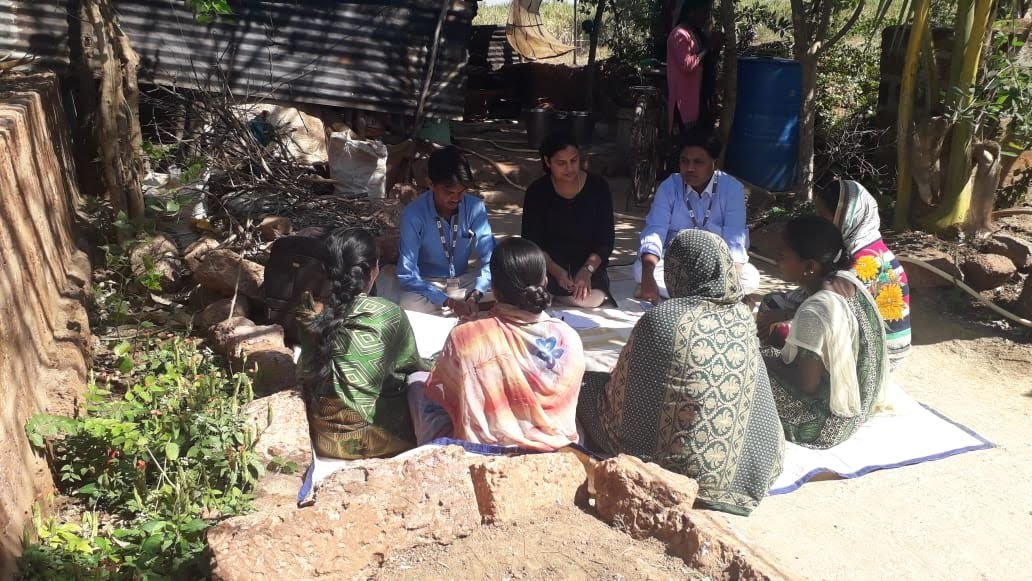 Field visit – centre meetings VAYA finserve
As an introvert, I did not have a very large circle. In fact, I was probably not among the most socially visible or widely popular people in the batch and I was quite comfortable with that. I had a small, close-knit group of friends, and that felt more than enough. That little circle became my safe space for debates, laughter, occasional disagreements, and mutual support through exams and uncertainties.
In hindsight, that small group turned out to be quite consequential. One of those friends eventually became my partner. So I suppose IIFM did not just shape my professional journey; it quietly shaped my personal life as well. Looking back, those friendships and shared moments remain some of the most grounding and meaningful parts of my time on campus.
Q. In hindsight, what was the biggest contribution or take away from IIFM that you think played a critical role in shaping you as an individual or professional?
A. The interdisciplinary curriculum and peer learning were important, of course. The faculty consistently encouraged critical thinking – Prof. Advait Edgaonkar, Prof. Ashish David, and Prof. M.M.Y., among others, pushed us to question assumptions and look at development issues from multiple lenses. That academic grounding has stayed with me.
However, if I were to reflect honestly, one of IIFM’s biggest contributions to my life has been its people, especially the alumni network. Over different phases of my career, I have reached out to alumni for guidance, clarity, referrals, or simply perspective. Each time, the conversations have been generous, thoughtful, and unhurried. The support has never felt transactional or orchestrated. It felt real.
There is a certain ease in speaking to fellow IIFMites. I have often felt that I could call someone up, speak candidly, admit confusion, seek advice, and be completely myself without having to posture or impress. That sense of authenticity is rare in professional networks. The connections feel grounded in shared values and shared formative experiences.
For me, that is one of the institute’s greatest contributions, not just the degree, but the community that continues long after campus life ends.
Q. The best buddies / seniors /faculty at IIFM?
A. Over the years, several IIFMites, across batches have quietly shaped my journey. Some through formal mentorship, others through friendship and honest conversations.
Among peers and juniors, Ashok B (PFM 2019) and Rajaneesh (PFM 2015), whom I am especially fond of, have been sounding boards at different stages. Those cross-batch friendships have often felt refreshingly real, less about hierarchy, more about shared grounding. There are also a few bright stars from junior batches who continue to impress and inspire through their clarity and drive.
Faculty-wise, Prof. M.M.Y. continues to hold a special place for the intellectual rigor he instilled in us. Prof. A.K. Dharni’s depth and insistence on clarity of thought left a lasting impact. I remain deeply grateful for that grounding. Prof. Advait Edgaonkar‘s analytical approach to teaching was equally formative; the structured thinking and discipline I learned in those classrooms continue to have practical utility in my professional life.
And of course, beyond professional networks, my partner Parasuram, also a fellow IIFMite, has been a constant through every phase of this journey.
If I reflect honestly, the common thread across all these relationships is not just mentorship, but authenticity. The ability to reach out, speak openly, and engage without pretense has been one of the most enduring gifts of the IIFM community.
Q. As an alumni, what’s your advice to freshers or those are joining IIFM to get best out of the 2 years there?
A. I would hesitate to offer rigid advice, because every journey unfolds differently and often in ways we do not anticipate. But looking back, there are a few things that I found valuable.
Use your summers and live projects thoughtfully. They are not just resume fillers; they are low-risk spaces to test what genuinely interests you and what does not. Pay attention to how you feel in those environments.
Build depth – both technical and interpersonal. Strong analytical skills give you credibility, but the ability to work with people, listen well, and communicate clearly often determines how far you can go in complex, multi-stakeholder spaces.
Engage actively with alumni, not only for opportunities but for perspective. Many of them are generous with their time and insights, and those conversations can broaden your imagination of what is possible.
Finally, do not box yourself into what seems like a “typical” development role. Finance, consulting, technology, policy, and capital markets all intersect meaningfully with impact. The sector is broader than it appears from campus and your path may lie at those intersections.
Above all, stay curious and allow your thinking to evolve. IIFM gives you a foundation; what you build on it will be uniquely yours.
Q. What is your typical day at the work? And how does it look like while you are on a break?
A. A typical workday is a mix of partner calls, proposal reviews, coordination with program and product teams, and internal strategy discussions. A significant part of my time also goes into navigating alignment, clarifying expectations between teams, managing priorities, and occasionally de-escalating escalations that did not need to escalate in the first place. In roles that sit at the intersection of funding and programs, you often become a translator, mediator, and gentle negotiator.
No two days are identical. Some days are deeply strategic; others are intensely operational. There are moments of urgency, moments of ambiguity, and many moments where patience becomes a professional skill.
During breaks, I try, sometimes successfully, to disconnect. I enjoy reading and I used to write more regularly, though the past year has been incredibly full. With a one-year-old daughter at home, life has taken on a different rhythm. I have always considered myself a multitasker, but parenting has made me far more intentional and efficient with my time. It has sharpened my ability to switch contexts quickly – moving from a strategic funding discussion to assembling a tiny car, and then back to reviewing a proposal with renewed focus. That constant practice of prioritizing, structuring time, and being fully present in each moment has, surprisingly, strengthened my professional discipline.
I still love to paint and enjoy cooking comforting meals drawn from the home kitchens of my Odia-Bengali family and my Tamil in-laws. Evenings often involve relearning the basics of coloring with my little one, enthusiastically playing peekaboo and hide-and-seek, and accepting very honest food reviews from my daughter, who is both my toughest and most enthusiastic critic. Seeing her enjoy a simple meal I’ve prepared is often the most satisfying moment of the day. In many ways, home has become the perfect counterbalance to work – equal parts chaos, grounding, and joy.
Q. And how about weekends, hobbies, family and anything else you want to add?
A. Weekends are mostly about slowing down. Since I travel often for work, I genuinely value unplanned days at home – no agenda, no rush. Family time anchors those days.
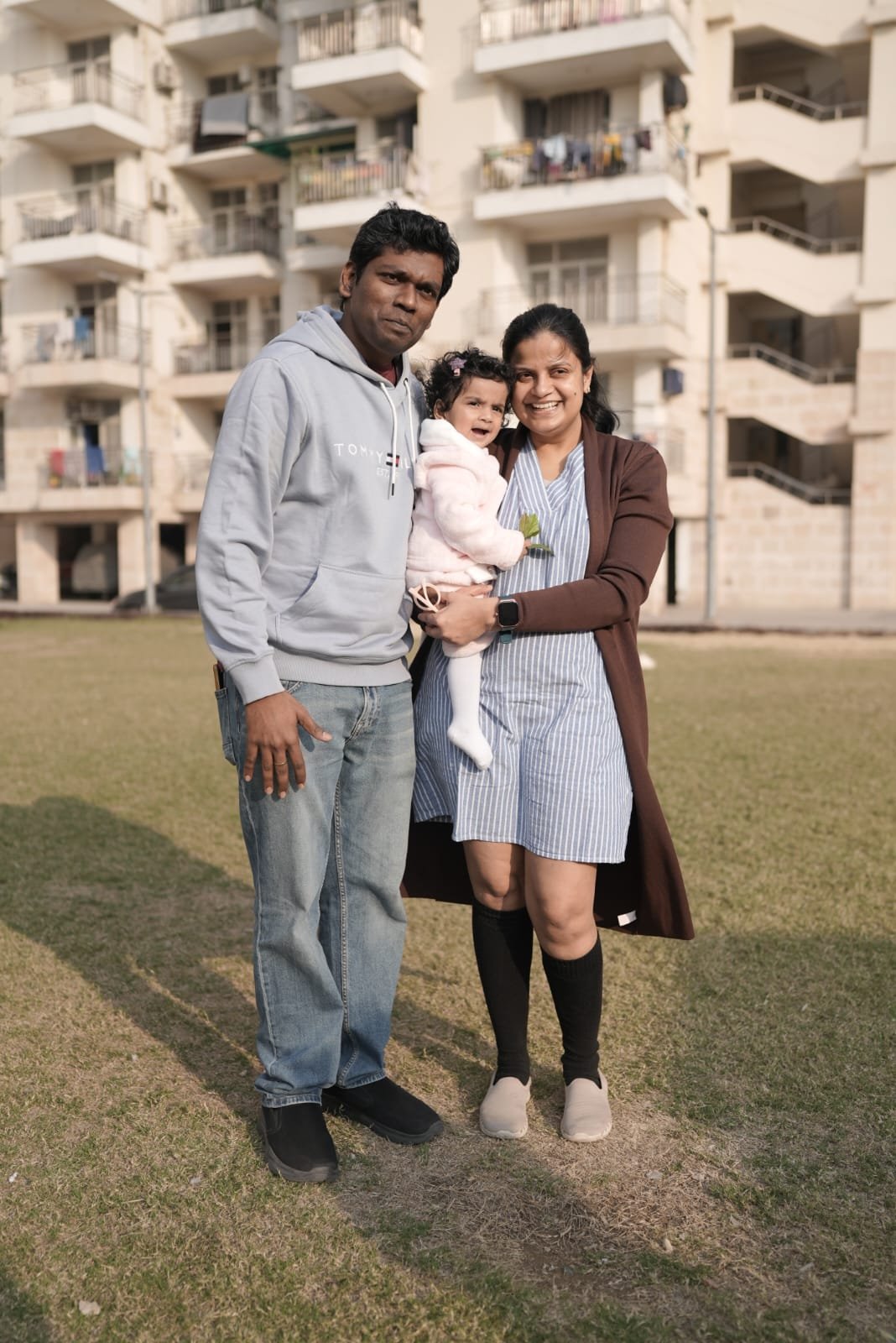 With Daughter Charuvi Mira and partner Parasuram
In my free time, I support small, system-level innovation efforts, especially early-stage tech ideas and proof-of-concepts. I contribute to the ideation of MiraHub.app with a couple of engineering friends and fellow IIFMites – a simple, free public resource designed to reduce information gaps in CSR, sustainability, and ESG. Inspired by open-access platforms like Khan Academy, it is our small attempt at ecosystem-building.
I enjoy reading non-fiction, though more selectively now. I also love watching films, especially food films. There is something deeply comforting about the way food stories unfold on screen – how kitchens become spaces of conflict and healing, how characters reveal themselves through what they cook, and how meals quietly carry memory, identity, and emotion. I find those narratives grounding and joyful.
At times, I paint Pattachitra, which helps me slow down and stay connected to my roots. And most weekends include long conversations and friendly debates on current events with my partner. Our dinner table discussions occasionally resemble extended work sessions, just with comfort food, more laughter, and greater honesty.
Q. Favorite Books / Movies / Authors?
A. I am especially drawn to books on storytelling and communication. My current reading ranges from trying to understand why stories resonate with people through books like The Science of Storytelling and The Anatomy of Story, to picking up simple, practical insights on how to communicate better, whether through presentation skills or learning from how studios like Pixar craft engaging narratives. I find this mix helpful because in the work I do, strong ideas and solid evidence matter, but being able to communicate them clearly and compellingly matters just as much.
When it comes to films, I find myself increasingly drawn to food-centered stories. There is something deeply moving about how food becomes a medium for memory, healing, and self-discovery. I particularly enjoyed Little Forest, the quiet beauty of a young woman returning to rural life and cooking simple, seasonal meals felt deeply comforting. I also loved The Taste of Things for its tender portrayal of food, patience, and understated emotion. Food films, for me, are about character, belonging, and the small rituals that shape our lives.
Q. How would you like to contribute to IIFM or IIFM alumni, students?
A. I would be happy to engage with learners through mentoring especially for roles in partnership and resource mobilization.
Q. Any suggestions on who you want to get profiled/interviewed here?
A. I would love to feature alumni working in climate finance, public policy, large-scale government/multilateral programs, and impact entrepreneurship. These sectors offer diverse and meaningful career pathways for students. Broad representation across these areas would add strong value.
Few names: Ashok B (PFM 2019), Parvej Sheikh (PFM 2013), Rewasa Nischal (PFM 2009), Dharmendra (PFM 2014), Manjeet Singh (PFM 2014).